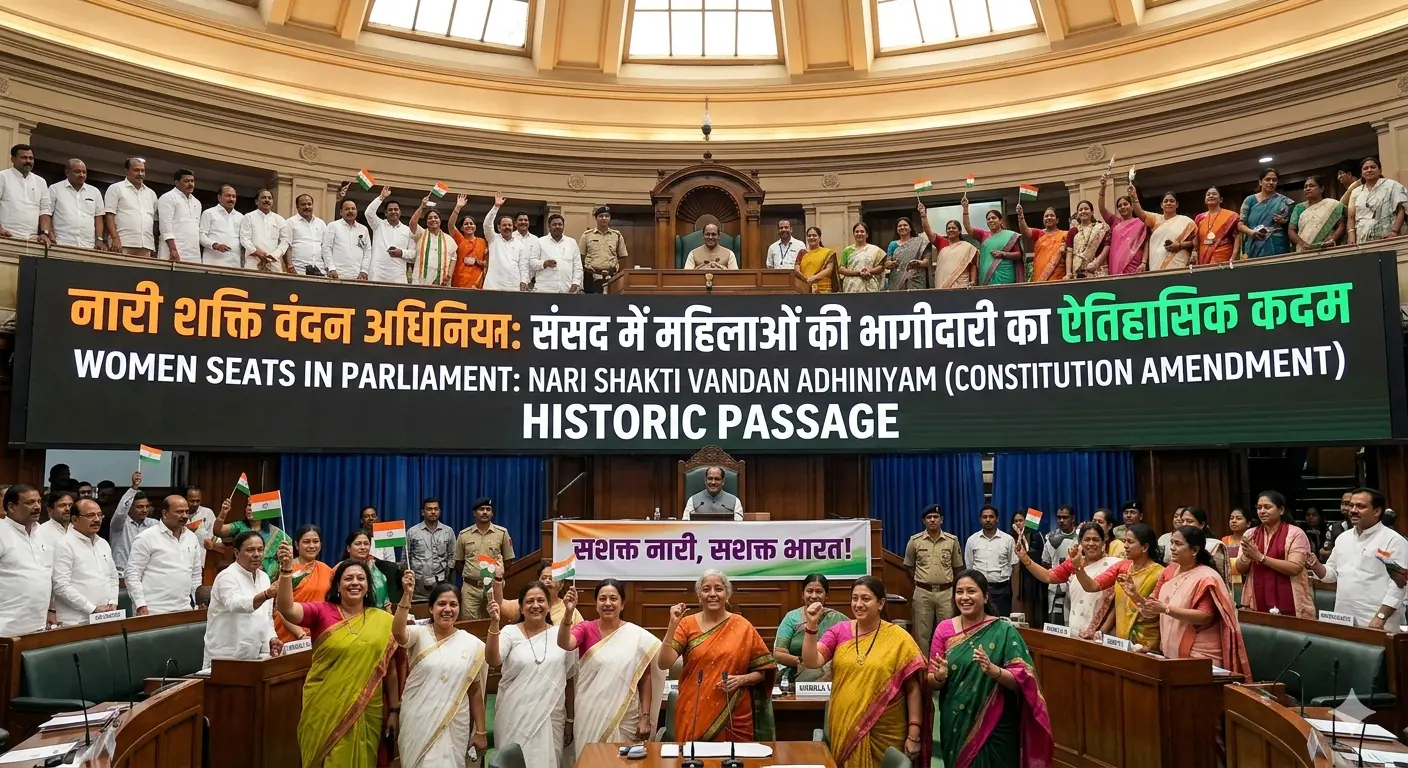
The Women seat reservation in parliament has made a historic step after the Nari Shakti Vandan Adhiniyam, 2023, popularly known as Women Reservation Bill was passed. This amendment to the constitution aims at reserving a third (33) of the total number of seats in the Lok Sabha, State Legislative Assemblies and the Delhi Assembly to women, which will see a significant increase of women in the elected institutions of India. It has the formal name of the Constitution (One Hundred and Sixth Amendment) Act, 2023, and is typically thought to have been a historic step in the right direction of gender equality in Indian politics.
The way the reservation will operate among the women.
With the introduction of Nari Shakti Vandan Adhiniyam approximately 181 out of 543 seats in Lok Sabha will be allotted to women once the rule becomes effective, by the next delimination exercise on the basis of census. The formula of 33 percent will be applied in the direct election of seats in each State Assembly and in the Delhi Assembly where there will be reserved seats announced under the delimitation process and which will be rotated among constituencies after the delimitation process done after every one or two delimitation exercises. The reservation lasts 15 years since the time it comes into force but Parliament has the power to extend the reservation where necessary.
The law also guarantees sub-reservation of women in Scheduled Castes (SC) and Scheduled Tribes (ST) in the 33% quota and hence the women of these communities will have their own quota of reserved seats. The rationale behind this two-layered effect is to safeguard both gender and caste based representation without making the space allocated to women candidates any smaller.
Why the timing is important
The introduction of the bill is associated with the delimitation and the following Census, which should occur after 2026, thus the real reservation will probably come into effect only circa 2029 or later. Until then the legal system is ready and will not be applied with 33 percent seats in elections. Proponents believe that the postponement is not in vain as it puts the policy squarely on record in the near future and indicates India is officially making a commitment to at least a minimum number of women in the legislatures.
Critics are however worried that a 15-year term and potential extensions will entrench the quota as an inseparable part without a substantial parallel initiative to strengthen the independence of women, their education and their access to non-reserved political networks by admitting them to political networks instead of having reserved constituencies. Even amidst these controversies, the Nari Shakti Vandan Adhiniyam is the first instance of Parliament legally guaranteeing one-third of seats to women, and no longer is the reservation of women’s seats in Parliament merely an old-time goal, but a constitutional requirement.