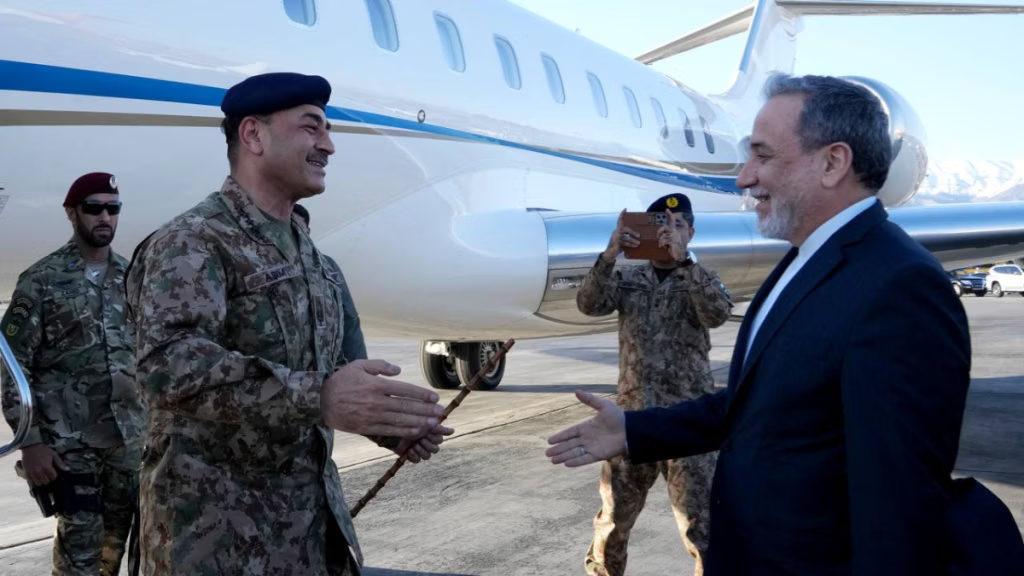
Pakistan quietly allowed Iranian-military-aircraft to stay at one of its major airbases. This happened during the recent conflict between Iran and the United States. American officials shared this information with CBS News. At the same time, Pakistan publicly presented itself as a peace broker between Tehran and Washington. The report raised fresh questions about Islamabad’s real role during the tense regional crisis.
US officials familiar with the situation said Iran shifted several aircraft to Pakistan after the ceasefire announcement. US President Donald Trump announced the ceasefire in early April during rising regional tensions. Iran reportedly sent military aircraft to Pakistan Air Force Base Nur Khan near Rawalpindi. Officials said the aircraft included important military and surveillance assets. One aircraft was reportedly an Iranian Air Force RC-130 reconnaissance plane. The RC-130 works as a surveillance version of the Lockheed C-130 Hercules transport aircraft.
The officials spoke anonymously because of serious national security concerns surrounding the sensitive military information. They said Iran likely moved the aircraft to protect important aviation and defense assets. Officials also believed Iran feared possible American strikes during the growing regional tensions. The aircraft movements showed Tehran’s effort to secure its remaining military strength during the crisis.
Reacting to the report, US Senator Lindsey Graham shared a strong message on X. He said the claims could seriously change Pakistan’s role as a mediator. Graham said the United States may need to fully review Pakistan’s diplomatic position between Iran and other countries involved in the conflict.
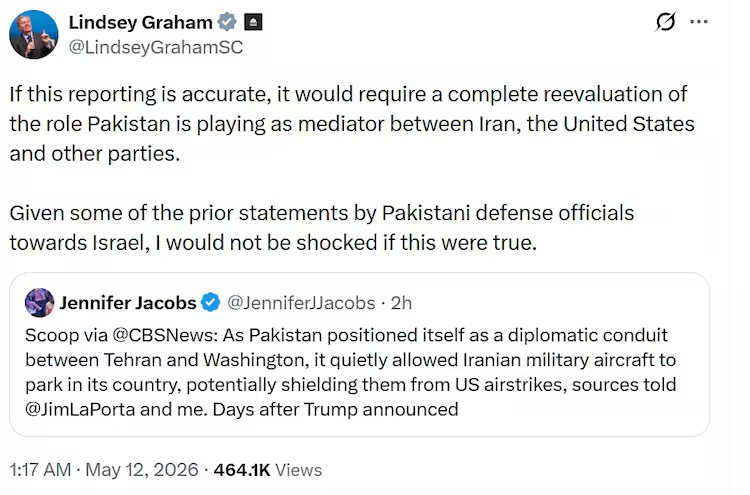
Lindsey Graham also pointed to earlier statements made by Pakistani defence officials about Israel. He said those past remarks made the recent report easier for him to believe. Graham added that he would not feel surprised if the claims eventually proved true.
Iran also reportedly shifted several civilian aircraft to neighboring Afghanistan during the tense regional situation. Two US officials said authorities still could not confirm military aircraft movements. Officials also said they remained unsure whether those flights carried any military assets.
However, a senior Pakistani official strongly denied the claims linked to Nur Khan Air Base. The official told CBS News that people could not hide such aircraft activity there. He said the airbase stands inside a crowded urban area with heavy public movement. The official argued that local residents would quickly notice any unusual military operations.
An Afghan civil aviation official told CBS News that a Mahan Air aircraft landed in Kabul before fighting started. The aircraft stayed there after Iranian authorities closed the country’s airspace during the crisis. Later, officials moved the aircraft to Herat Airport near the Iranian border. Pakistani airstrikes inside Afghanistan increased fears about possible attacks near Kabul airport. Officials reportedly shifted the aircraft to avoid any risk during the tense security situation.
Taliban spokesperson Zabihullah Mujahid rejected reports about Iranian aircraft staying inside Afghanistan. He said Iran had no reason to move aircraft into Afghan territory during the crisis. Mujahid also suggested that the reports did not match the actual situation on the ground.
The recent developments showed Pakistan’s difficult position during the growing Iran-US regional crisis. Islamabad continued maintaining close relations with the United States during the tense situation. At the same time, Pakistan avoided actions that could upset Iran or China. China remains Iran’s important global partner and Pakistan’s largest supplier of military equipment.
According to the Stockholm International Peace Research Institute, China supplied most of Pakistan’s major weapons imports between 2020 and 2024. The report said China provided nearly 80 percent of Pakistan’s large military purchases during that period. Beijing also publicly appreciated Pakistan’s efforts to support indirect talks between Tehran and Washington.
Meanwhile, tensions between Iran and the United States continued even after the ceasefire announcement. Iranian state media said Tehran presented several conditions to fully end the conflict. Iran reportedly demanded war reparations from the United States during the ongoing negotiations. Tehran also asked for recognition of its control over the Strait of Hormuz. Iranian leaders additionally demanded the removal of American sanctions as part of the proposal.
US President Donald Trump publicly rejected Tehran’s counteroffer during the ongoing conflict discussions. He described the proposal as “totally unacceptable” while addressing the situation. However, Trump did not explain which specific Iranian demands the United States refused to accept.
Fresh clashes reportedly erupted around the Strait of Hormuz on Sunday during rising regional tensions. The United Arab Emirates accused Iran of launching drones toward its territory during the latest confrontation. Reuters also reported that Iranian drone attacks targeted the UAE after several earlier strikes this week.
Last week, CBS News reported attacks targeting three US Navy destroyers near the Strait of Hormuz. The destroyers were reportedly moving through the strategic waterway during the tense regional conflict. After the incident, the United States launched strikes on two Iranian ports near the area.