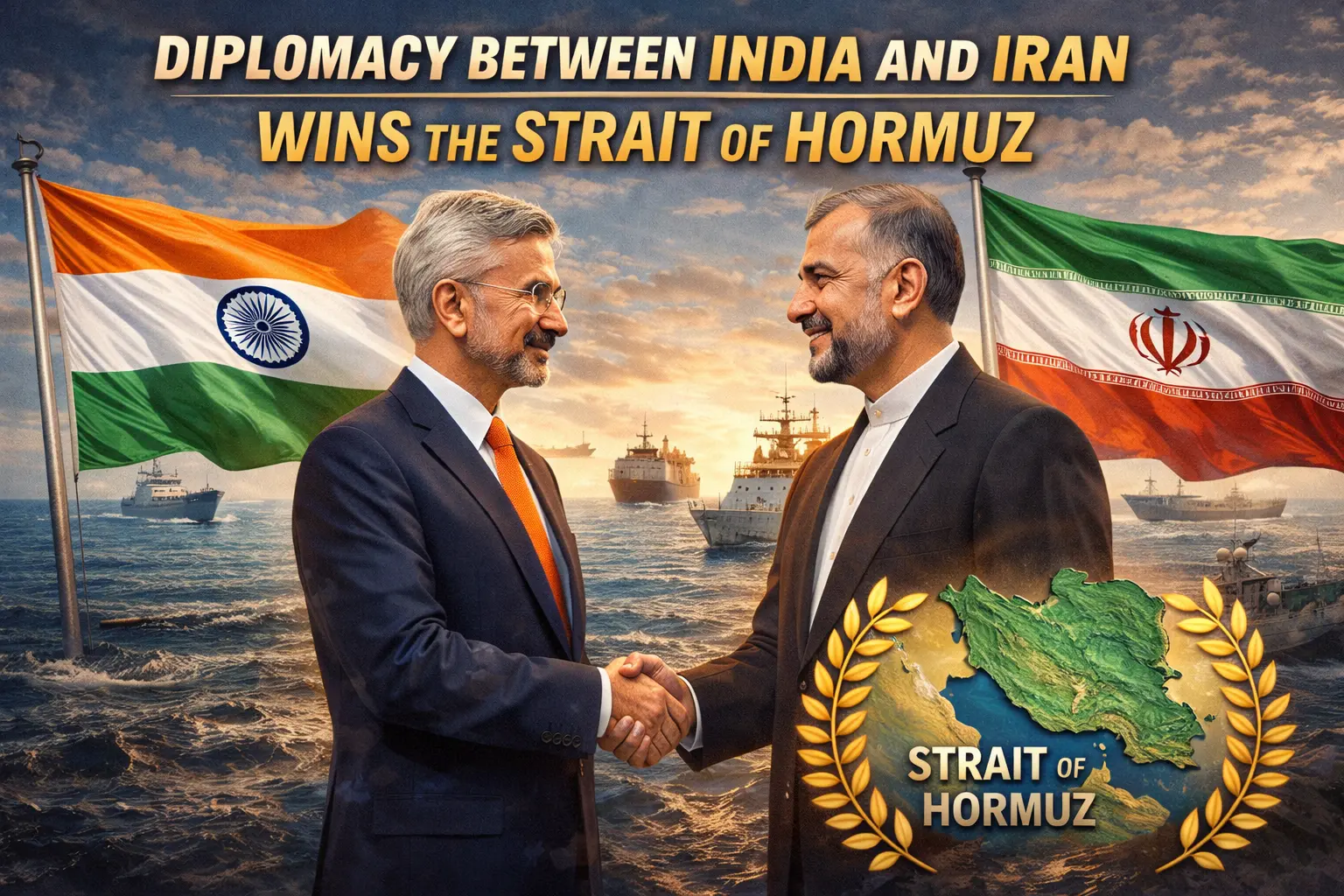
The Financial Times recently noted that India hailed diplomatic negotiations with Iran that at least allowed Indian tankers to pass safely through the Strait of Hormuz due to the efforts of India External Affairs Minister S Jaishankar. The latest innovation comes at a time when the Persian Gulf has been experiencing tension and the critical chokepoint has been limited which is threatening the world energy resources. This was the third time Jaishankar and Iranian Foreign Minister Seyed Abbas Araghchi have been involved in dialogue, ever since the conflict between the US and Israel escalated last month.
Hormuz Strait Strategic Importance.
The Strait of Hormuz is a critical oil trade artery in the world, which manages about 20-25 per cent. of crude and LNG shipments by sea. The almost 40-50 per cent of LNG and a good share of crude imports pass through this strait into India, which is energy import-dependent. The disruptions have shot oil prices in the world leading to the worst impact on the economies, but India has taken a proactive diplomacy thus getting its flagged ships such as the Pushpak and the Parimal to sail through unharmed whilst the Western and Israeli vessels are forced into blocks.
Jaishankar has focused on the role of diplomacy in the priority of the security of energy and the citizens of India with the estimate of 10 million Indians in West Asia and students studying in Iran. Spokesperson at MEA Randhir Jaiswal confirmed that the negotiations were aimed at shipping security following attacks on tankers and plants.
Diplomacy Wins Regionally during turmoil.
The move of Iran highlights the long time relationship of New Delhi-Tehran, a situation that balances India with the US, Israel, and the Gulf states. Though Iran requires prior permission on transits, it allowed Indian vessels to pass without delay and this gave an immediate reprieve as more than 20 tankers await clearance. This action prevented an Indian refinery supply crunch, the domestic fuel prices stabilized, although a tanker of Saudi crude that was heading to dock in Mumbai went dark.
Jaishankar was quoted in the financial times where he was proud of the talks as a diplomatic success with the subtle policy India has in West Asia. According to Bloomberg, there is a negotiation on further access, and it is not a one-time occurrence.
Wider Implication on India.
The move enhances the energy security of India when the world faces crude spikes that are putting pressure on budgets. It also defends the Indian diaspora, and evacuations are being made and Iran land exits advised. Nonstop access to Hormuz is also economically crucial to refiners such as Reliance and Indian Oil, without which the refiners cannot grow.
The opponents note that the neutrality of India will lead to a loss of allies, yet Indian shuttle diplomacy conducted by Jaishankar is effective realpolitik. With Gulf wars raging, this episode places India as a realist, interested in protecting interests without taking sides.
Future Outlook
As the talks continue, India looks to safe-passage assurances which would be permanent. Investing in the Chabahar ports would be a diversification of the routes, and this would reduce the dependency on Hormuz. The FT observations of Jaishankar are encouraging: diplomacy is better than confrontation.
The Hormuz success story of India is an illustration of strategic independence, which guarantees the circulation of energy in the state of anarchy. According to FT, it is a victory on bilateral trust and national priorities.