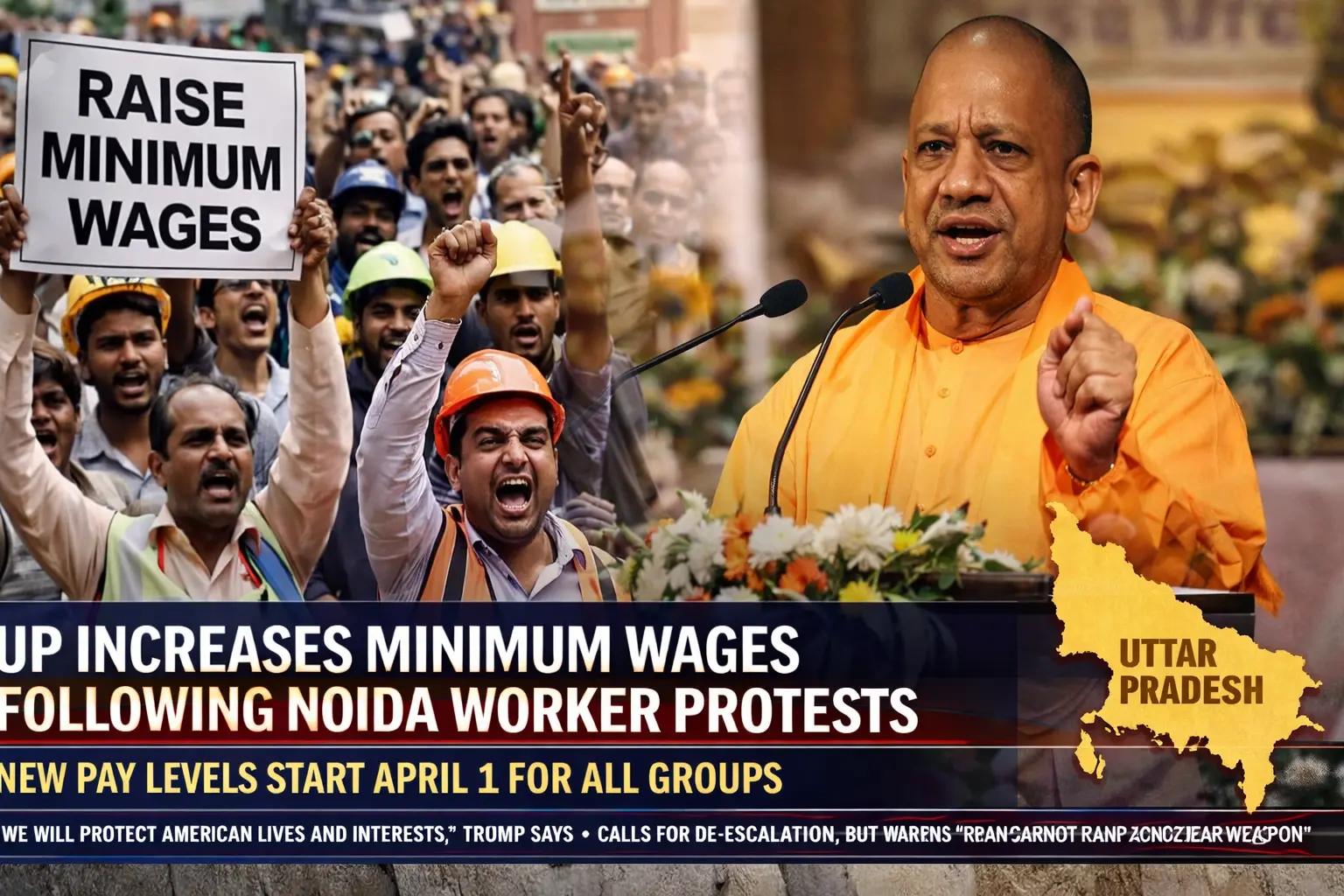
April 14, 2026 brought sudden change when Uttar Pradesh raised its minimum wage fast after workers pushed back hard. Backed by protests swelling through Noida and Greater Noida, the update reached into paychecks starting April 1. Rates now climb 8 to 12 percent for those doing basic, mid-level, and trained work. Rising costs had fueled outcry from factory zones – this move answers that heat. Labor head Anil Rajput framed it as dignity finally catching up with effort.
Noida Protests A Flame Begins
Late Friday, streets near factory clusters in Sector 62 and Greater Noida boiled over. More than fifty thousand laborers walked out of plants making phones, clothes, and electronics, halting traffic on NH-24. Voices rose under banners held high, guided by the Bhim Army alongside worker groups, calling for pay equal to Delhi’s seven hundred rupees a day. With prices climbing fast, one organizer yelled through the crowd: “They give us five to six hundred here – how long must we accept less?”.
Fights broke out near officers, leaving two dozen hurt; phone clips spread fast showing sticks swinging, smoke filling streets. Production stopped at industrial sites, losing money by the hour – two hundred crores each day slipped away. The chief minister called for investigations, pointing fingers at troublemakers without names, yet those on the ground spoke of pay stuck low for years while prices climbed steadily higher. Seven percent jumps in costs ate into budgets, though salaries stayed frozen since the start of 2023.
Updated Rates by Category
A fresh update by the UP Labour Department now outlines revised daily pay rates for an eight-hour workday, replacing earlier figures. Rates have climbed since the last adjustment, reflecting current standards. Workers will see changes effective immediately across sectors covered under this order
Workers without special training – like those doing manual jobs or cleaning – now get ₹525 each day. Last year it was ₹470, so the rise is about 11.7 percent. Around six out of ten people earning informally in Uttar Pradesh fall under this category. That makes up a big chunk of the state’s eight crore unorganised labour force.
Workers who run machines or assist others now earn ₹578, up from ₹520. That is a rise of 11.2 percent. Pay climbed sharply over this period.
Twelve point eight percent higher now stands the price for skilled roles like technicians, drivers, or welders – ₹660 compared to ₹585 before. A jump seen since last year marks this shift clearly.
Skilled workers like supervisors and electricians now earn ₹748, up from ₹660 – that is a rise of 13.3%. Though pay was lower before, the jump marks a clear shift in wages for these roles.
City spots like Noida and Lucknow charge a bit more – about two percent above base. Pay shifts each year follow city price trends, locked to inflation numbers. Rural zones B and C stay flat, no extra cost there. When prices rise, wages nudge up on their own, tied to the index. Moms earn added pay around childbirth, built into the plan. Extra hours work out to one and a half times normal, every time. Base rates shift yearly, matching how costs grow.
Starting April first, companies owe back payments before May fifteenth – miss the date, a ten percent fee kicks in. Insurance and fund withholdings get adjusted numbers. Payments late mean sharper costs.
Why Now? Politics, Economy, and Pressure
Hours after demonstrations hit their highest point, Yogi’s council gave the go-ahead, a move seen as managing fallout before the 2027 elections draw near. Facing pushback from Akhilesh Yadav of SP, BJP took heat for raising prices only after disorder unfolded, he said sharply. Still, worker groups are calling this a win – the biggest adjustment since the pandemic changed everything.
Out here, UP’s factories expanded a quarter thanks to workers arriving from Bihar and Odisha, official data shows. Cheaper paychecks once pushed companies like those in Noida to shift toward Gujarat. Now, higher earnings keep skilled people put. Still, business groups such as CII point at rising expenses – small firms could face costs climbing between five and seven percent.
Broad Effects on Labor and Business
A sudden shift hits hard for four crore workers living day to day. Earning twelve thousand rupees each month, a worker in a Noida plant suddenly sees fourteen thousand land in hand. That extra stretch covers school costs even when rice climbs to one hundred twenty per kilo. Those who moved from villages send larger sums back, quietly lifting entire communities where they came from.
Some carmakers – Hyundai among them – are okay with equal pay for skilled labor. Textile firms, meanwhile, complain about thin profits. Instead of full coverage, gig staff from Zomato or Ola hope to be part of the deal later. On another track, FICCI backs lower taxes as a move forward.
Some folks get training help now. A big money pile – ₹1,000 crore – opens doors for half a million trying out jobs in electric vehicles or cloth-making. Instead of waiting weeks, pay shows up faster through online systems built to move cash without holdups. Help arrives where it’s needed most, quietly.
Challenges Ahead Enforcement and Sustainability
Most workers ignored past increases – figures show 40 percent stayed untouched by changes. Forty percent did not benefit when rules were updated last time around. A fresh batch of five hundred inspectors now walks factory floors. Watchdog gaps still open doors to misconduct during checks. Officials might look away where oversight slips.
Falling short of expectations, inflation sits at 6.5%, according to RBI figures, quietly eating into wage increases. Workers’ groups push back, calling for a minimum pay of ₹800 for those in entry-level jobs. Then comes the weather twist – monsoon-related job cuts might slow things down again.
Still, it starts something new. Over in Haryana and Rajasthan, eyes stay fixed – word spreads quiet about changes to national pay rules. Out on Noida’s roads, inside Sachivalaya gates, marches showed strength. When workers move together, those in charge shift too.
Hope stirs when old wages arrive, a small light in daily grind. Yet keeping promises may stretch Yogi’s will thin over time.