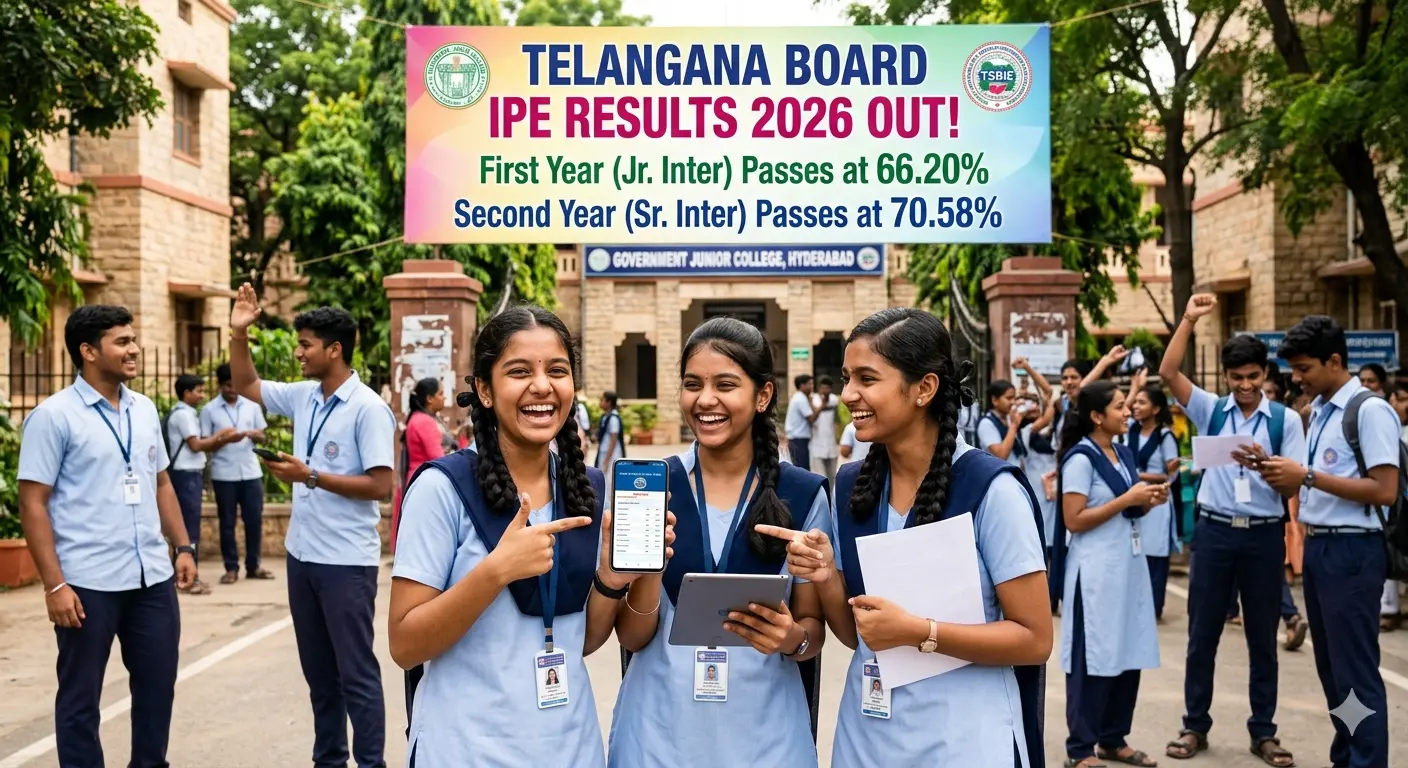
Six in ten who started first year in Telangana reached the finish line by clearing the 2026 IPE. This round, slightly over seventy percent from the second batch crossed that mark. The board dropped results for both groups together, lighting up screens everywhere. Once names popped up online, relief spread among households far and wide. Higher numbers now compared to a while ago. Progress shows more clearly in students finishing round two. Yet gaps remain – seen in gender, location, city versus rural. A few rooms see stronger chances. Challenges stay stuck in others.
What people achieved is shown by the results. Success levels come through in percentage form. Key figures catch the eye when going over details
That first round saw around 666,000 students take the entry exams, yet only roughly two-thirds passed. Attendance dipped later on, but passing scores climbed close to 71%, hinting at better prep or simpler grading. In Telugu booklets, figures unfolded by subject clusters – math linked to physics and chemistry; biology grouped nearby; commerce woven through economics, civics, while math reappeared alongside business topics – a layout tilting toward science and commercial streams rather than arts.
Oddly enough, those who tried again despite failing before improved their scores now. Not just schools but also test prep courses may be making a difference. Details about individual subjects should appear shortly. Tutors along with university workers will watch closely when it drops. What’s inside that analysis might change classroom methods down the line.
How and where to check results
After typing your exam ticket ID and date of birth, results pop up through the primary board website or an alternate portal. Scores display fully – total marks, position, pass status – all visible right away. Individual subject grades come into view along with complete result breakdowns shortly after. A separate link reveals first-year performance. The following page holds records for second year. Information becomes available once login steps finish. A printed copy saved after review can come in handy when signing up or sorting out funding. One unique document lands in each learner’s hands, set for what comes next.
Problems with grades or lost files? Support is active in major zones right now. If names appear incorrect, marks look strange, or attendance logs are empty, contact your school before anyone else. District help hubs wait for students needing quick corrections. Getting help sooner makes a difference – delays can slow down reviews or updates. Every zone offers support spots; locate the nearest based on where you are Performance by stream and gender
From thin air, MPC students surged forward, topping science rankings while BiPC classmates nipped at their heels, rising sharply from where they stood a year ago. A leap showed up in BiPC performance when stacked against 2025 numbers. Over on the humanities side, CEC and MEC learners cleared 70% together, though standard liberal arts routes lagged slightly behind – suggesting momentum still flows toward job-linked subjects.
Girls usually outperform boys in their first two academic years, especially within BiPC and CEC streams. Their success tends to link with consistent routines – like attending class daily, focusing on work, following timetables – observed among female students across many junior colleges in Telangana. Yet dropout rates climb higher for male learners from rural areas and smaller urban centers. In response, remedial sessions and retention initiatives have become central pieces in the state education council’s ongoing efforts.
Regional and rural–urban gaps
Out here, where test numbers look solid statewide, town classrooms still stretch ahead of rural spots. Places such as Hyderabad, Warangal, or Khammam see over seventy-five percent of kids clearing exams in several topics. Yet farther north in Telangana, along patches of Rayalaseema, marks drop way below the official averages. Leaders blame uneven reach – skilled teachers, usable school structures, gear for digital learning – things that fade fast beyond urban edges.
Word is out – the TSBIE plans changes to its “Pragati” support effort, guided by this year’s results. Not passing key subjects? Learners get free coaching, catch-up classes in Math, Physics, English. Conversations are already moving forward, working with MPDOs, school teams across districts, trying to touch more students. Teaching events on weekends could become more focused. A fresh tool for teaching might help in spots that lag behind. Outcomes steer choices, quietly guiding what happens after.
What comes next for students
By 2026, students who pass IPE will start aiming straight at college paths built around degrees and careers. Anyone chasing engineering, medicine, or pharmacy needs solid marks in MPC or BiPC for Telangana EAMCET or NEET-UG entries. On a different track, those in CEC or MEC streams turn their focus to tests linked with commerce, management, law. Because timing plays a big role, institutions have to finish evaluations well ahead. This helps pupils avoid last-minute stress when it comes time to apply.
Oddly enough, higher marks by 2026 drew soft nods from educators and curriculum designers – pass rates climb yearly, suggesting sturdier teaching grounds. Yet ahead lies not just clearing a bar but pushing large numbers into the upper range, roughly eighty to ninety per cent, especially in math and science realms, since missing that lift could dull a school’s shine within India’s education scene.