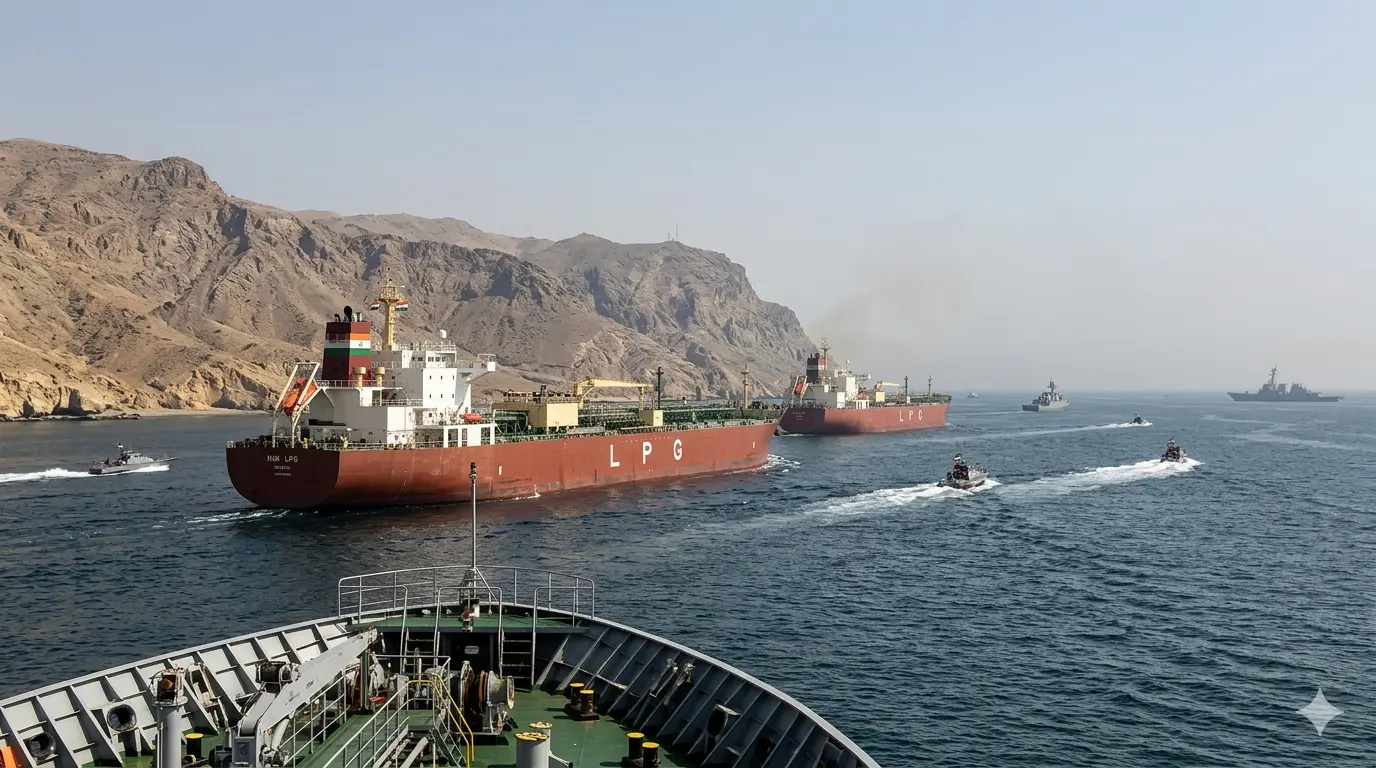
Two additional LPG carriers are sailing the unstable Strait of Hormuz off the coast of Iran, which confirms the energy lifeline of India. The ships, Jag Vasant, and Pine Gas, which were extremely huge gas carriers, were heading towards the Iranian Qeshm and Larak islands early on Monday, in a Tehran-sanctioned coastway. This is in the backdrop of the herding up of the U.S.-Iran standoff in the West Asian region where over 30 tankers loaded with cooking fuel, which is an essential requirement of the Indian households, have been held up.
These transits are a diplomatic victory of New Delhi. Iran as threatened has made an exception and has been allowing Indian ships that are friendly as explained by the Ambassador Mohammad Fathali. In January this year, the same route was successfully traversed by MT Shivalik and MT Nanda Devi that brought more than 92,000 metric tonnes of LPG following Iranian clearance. Shivalik, which was last seen in the Gulf of Oman, arrives in India by March 21, and releases shortages encountered in stopped imports through the Gulf.
The Strait of Hormuz which processes 20 percent of the world oil and major LPG routes became a choke point following the conflicts in February. The hostilities brought to a standstill 22 Indian vessels, and a crisis was in the offing–LPG prices shot 15% in the domestic market, and reached 30 crore users of subsidized cylinders. India increased imports (x2) of Argentina and local production, but Gulf cargoes are critical to affordability.
Directorate General of Shipping arranged liaison with owners and missions, and got escorted passages- one tanker with the assistance of Iranian Navy. Several ports provided charge waivers on quick processing. These actions are signs of wary thaw given that Jag Vasant has been loaded in Kuwait prior to the escalation.
In the case of India, it is important to strike a balance between Quad and Iran trade. The LPG requirements are on the top of 28 million tonnes/annually, failure to which disruption can cause inflation and a strain on welfare. With 22 ships looking 72-hour arrivals, relief sets in–but observers call for diversification.
This coastal navigation skims around the coast of Iran to avoid disputed waters, a strategic prerogative based on blackouts and drone attacks. The backchannel diplomacy of New Delhi works but the shadow of Hormuz is massive. Are further clearances to come or will tensions start up again?