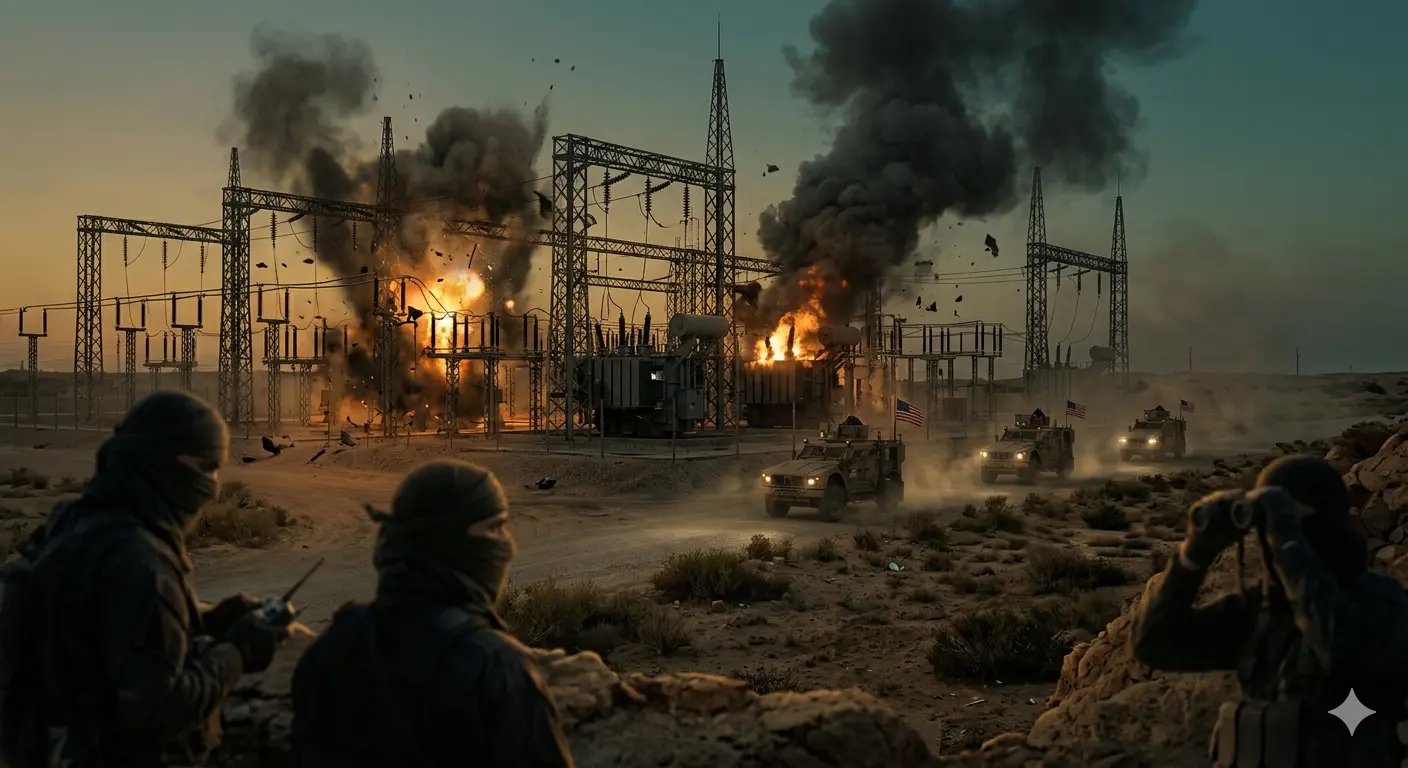
The situation in West Asia has become even more tense, because Iran gives a very clear threat: the country can strike at electrical plants providing power to military bases of the U.S. in the region. This is a shocking threat, spread by the Iranian military leaders in the state media, at a time when the shadow wars between Tehran and Washington are increasing due to proxy wars in Syria, Iraq, and Yemen. Iranian Revolutionary Guard commander Brigadier General Amir Ali Hajizadeh announced that critical infrastructure used to sustain American aggression will be counter-targeted in case U.S. attacks are escalated particularly that of Saudi Arabia, UAE, and Jordan grids to which U.S. installations are humming.
The setting is the anger of Iran regarding the recent drone surveillance of its territory by the U.S. and the alleged computer attacks in its nuclear plants. As the American bases such as Al Udeid in Qatar and Al Asad in Iraq have become deeply dependent on regional power networks, analysts fear that any such attacks would put these bases in the dark, paralyzing logistics, communications and air operations. According to the Delhi-based Institute of Defence Studies, geopolitical analyst Dr. Fatima Rahman says that power grids are the covert front of the contemporary warfare. It is better to disrupt them to get time and create chaos but not to confront them.
The rhetoric of Iran is not wishful talk. Tehran possesses a history of guerilla warfare – recall the 2019 Abqaiq-Khurais oil attacks on Saudi Aramco infrastructure cutting half the output of the kingdom in a single night? The attacks on those strikes, which were mostly blamed on Iranian-supported Houthis, revealed the weakness of the Gulf energy infrastructure. At this point, as U.S. troops stand on the alert following increased activities of the Israelis against the Hezbollah (a proxy of Iran), the mullahs are telling Israel that they are willing to strike back asymmetrically.
U.S officials brushed off the threats by claiming they were desperate posturing but intensified the defenses. CENTCOM declared the fortification of the backup generators and cyber shields of its most vital locations, and the use of additional Patriot batteries to secure the grids allied. Saudi Arabia, which plays a key role in U.S. logistics, threatened to retaliate with ironclad vengeance and hasten its diversification to eliminate oil-based power in its Vision 2030.
This powder keg is important to India. It has $20 billion of oil imports per annum in the gulf and strategic relationship with the U.S. and Iran so when the oil imports are hit by a blackout, global energy prices will shoot up and hit rupee stability and inflation. The balancing act of New Delhi is seen through its quiet diplomacy, which compels restraint through BRICS vehicles.
West Asia is on the verge of collapse as drones buzz and hackers creep. Will the Iran threat blow out like saber-rattling, or does it spark off an escalation based on blackouts? the world is looking, and lights are flickering.