Now tensions climb between Israel and Iran, Tehran fires back with sharp words, calling Washington’s upcoming move against ships tied to its trade nothing short of piracy. Should American forces block access to Iranian harbors, then safety at any port across the Gulf cannot be guaranteed, officials warn. This surge in tone follows a shaky pause in fighting, while a new U.S.-backed restriction on maritime routes kicks off Monday night. With each step, chances grow for broader conflict spreading fast beyond borders, shaking oil movements flowing through Hormuz waters every day.
Iran labels US blockade as illegal piracy
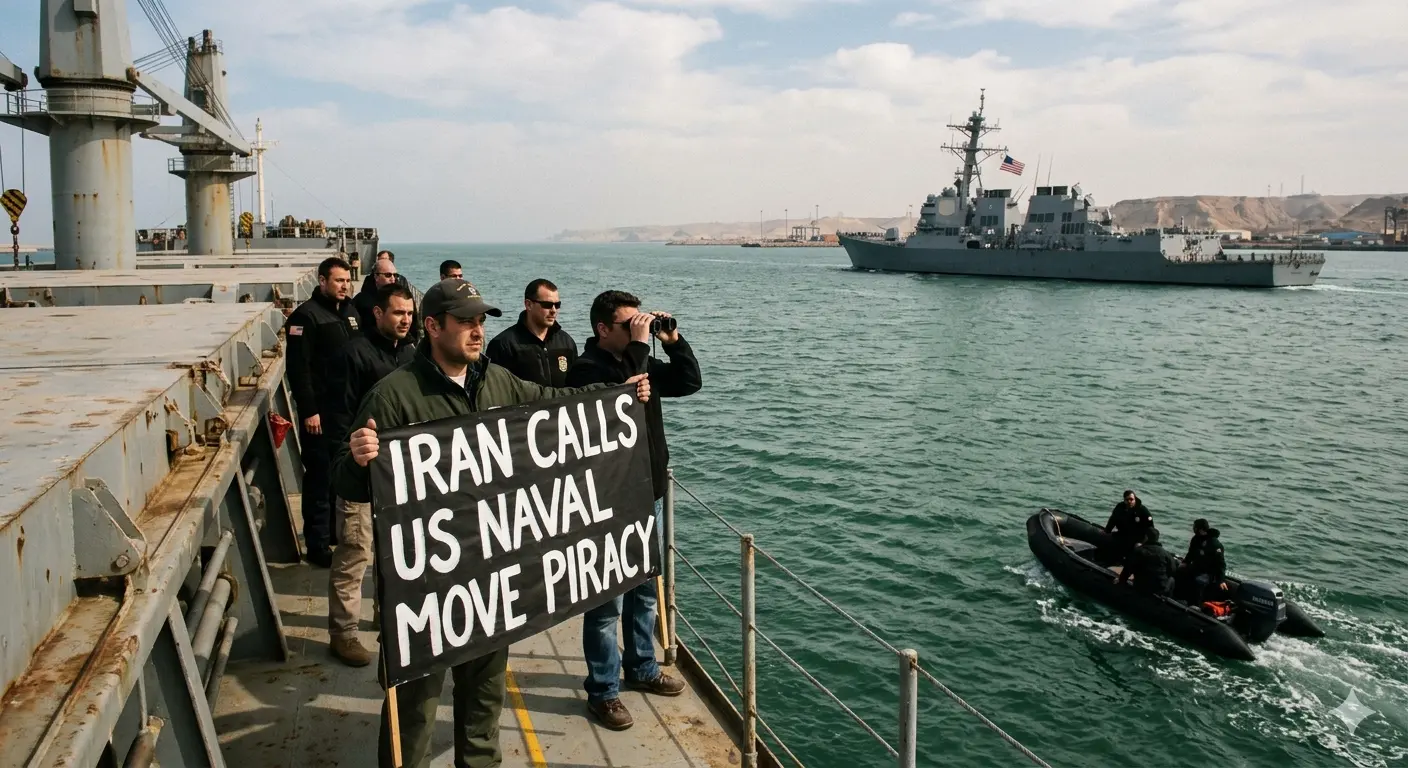
From a broadcast issued by Iran’s main military hub, Khatam al-Anbiya, senior commanders called Washington’s latest move against ships tied to Iran an unlawful act – comparable, they said, to sea robbery. Speaking for the group, Ebrahim Zolfaghari stated the U.S. is breaking global rules by limiting ship movement in open seas. His tone held firm: these moves will face resistance. State-run outlets inside Iran portrayed the shipping clampdown as part of a longer pattern – a nation labeled “criminal” using ocean routes to pressure Tehran economically.
The logic out of Tehran hinges on calling the Strait of Hormuz and nearby sea routes standard global trade paths, so when one nation moves alone to halt cargo ships, that move breaks rules and counts as illegal pressure. Calling the closure piracy lets Iran paint it less like politics, more like a deep violation of worldwide sea conduct – shaping views before things could worsen.
Threat to Gulf Ports and Strait of Hormuz
Not just words on paper, Iran’s armed forces went further. A sharp message came through – endanger our ports because of America’s blockade, then expect every harbor across the Gulf to become unstable. Security might vanish fast for any dock near those waters, especially where UAE or Saudi Arabia stand aligned with U.S. policy. Officials quietly added foreign-linked ships could lose passage rights into Hormuz altogether. Passage may narrow, maybe close completely, depending who sails it. One wrong move from Washington and routes long trusted begin breaking down.
A fifth of all oil shipped by sea moves through the Strait of Hormuz – so trouble there pushes fuel costs up fast, shaking markets worldwide. Missile attacks could come without warning, say experts, alongside drone swarms and speedboats targeting docks or trade routes, much like past covert clashes in the Gulf waterways.
U.S. stance and regional security fears
Monday brings a new phase. From 14:00 GMT, Iranian port access halts – so says the Pentagon. Its reason? Stopping weapon flows to allied groups counts as essential. Maximum pressure now shapes policy toward Tehran. Legal grounds support the action, claim American authorities. Naval forces from the Fifth Fleet take point. Partners nearby join them. Together they examine ships. Any found with arms might get rerouted. This step fits into wider moves meant to uphold peace. A ceasefire technically exists among Israel, Iran, and the U.S. Yet stability wavers. Fighting lingers in places like Lebanon.
Nowhere is Tehran’s claim of piracy viewed as anything but a move in a broader messaging struggle. To paint Washington as careless fuels efforts aimed at swaying unaligned countries – particularly those in Europe – toward resistance or quiet withdrawal from backing the blockade. Certain capitals, like Paris, already declared refusal to join fresh combat actions. This hesitance reveals how strongly many nations resist stepping into yet another flare-up across the region.
Here is what happens next between Israel and Iran
Nowhere is tension more visible than around shipping lanes, where the old rhythm of missiles and drones gives way to cargo delays and fuel shortages. Each Israeli raid into southern Lebanon adds pressure, while Tehran’s warnings hang like heat over Gulf waters. Suddenly, tankers hold position far from shore, waiting. Not bombs but bottlenecks define the conflict today. Movement slows. Supplies thin. The ocean itself turns restless under silent standoffs. Ports breathe shallow amid unspoken threats. What once exploded in fire now tightens through routes and schedules.
Should the blockade take hold, while Iran strikes back through major assaults on ships or port hubs, chances grow fast that a wider conflict drags in several Gulf nations alongside their partners. With markets watching closely, heated words from Tehran, American warships nearby, and Israel’s continuing operations mix into an unstable scene – where just one spark near Hormuz might set off reactions strong enough to shift who holds sway across the region.