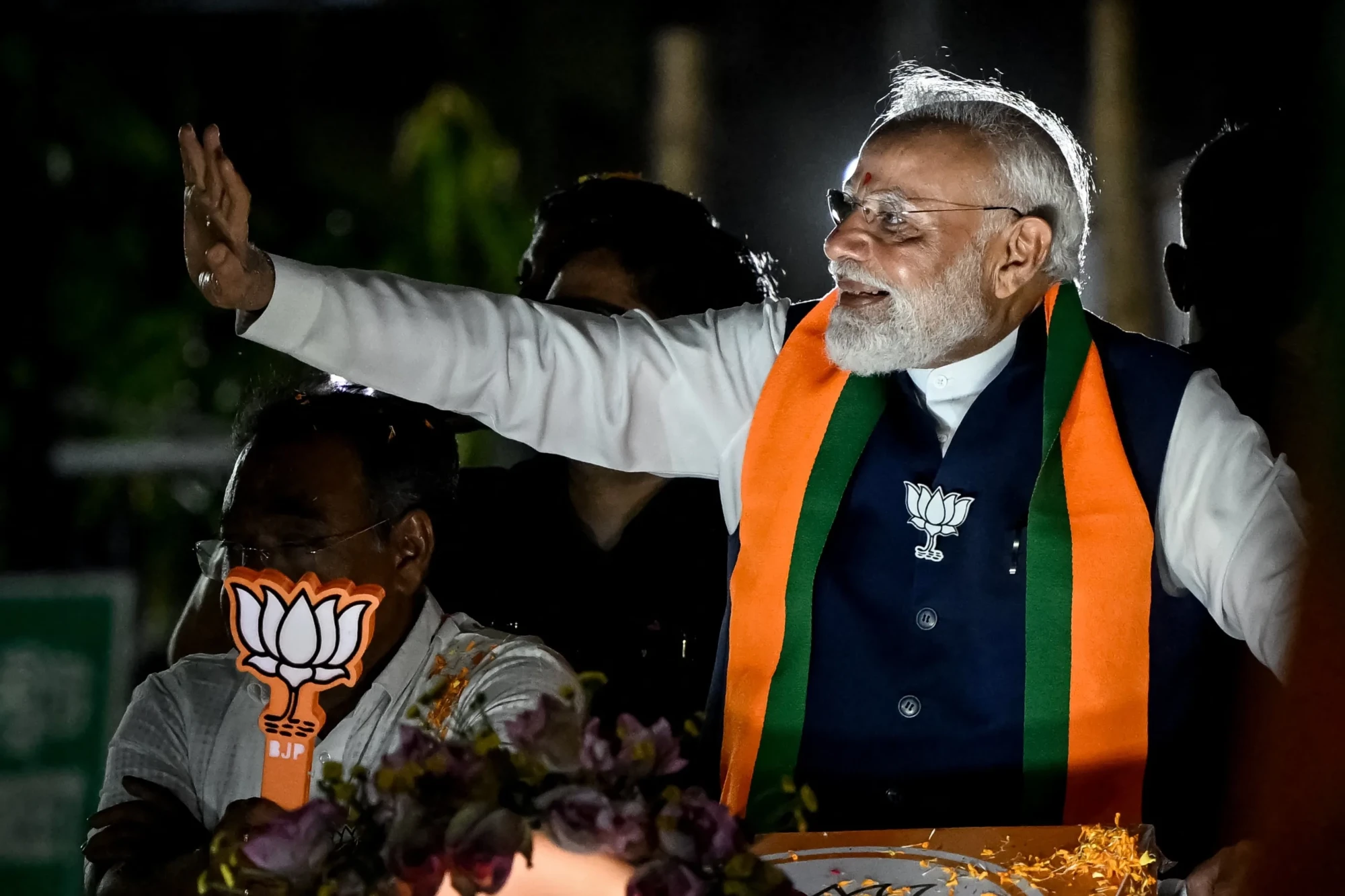
The Bharatiya Janta Party (BJP) has won elections in Bengal for the very first time, scripting history in a state that had long remained an impenetrable fortress of the Trinamool. For years, West Bengal was the great exception to Narendra Modi’s political advance. But this victory would rank among the most significant breakthroughs of Modi’s 12-year reign. In a double shock for TMC, Mamata Banerjee has also lost her Bhabanipur stronghold to her former lieutenant Suvendu Adhikari, now a BJP leader serving as the Leader of Opposition in the state assembly. The party is ahead in 207 seats while Trinamool Congress is leading in 80 seats. The victory in West Bengal completed BJP’s long march into eastern India. Mamata Banerjee had been ruling the state for 15 years.
In the evening speech by PM Narendra Modi he said, Bengal has been freed from fear and will now progress. On the other hand, Mamata accused the BJP of looting seats.
This was the first election after a record deletion of 90 lakh voters in Bengal under the Special Intensive Revision (SIR).
Bengal has seen only one change of government in nearly half a century: the Communist Left Front ruled for 34 years before the Trinamool Congress (TMC), led Mamata Banerjee, dominated the next 15 years until now.
In Tamil Nadu, Tamilaga Vettri Kazhagam (TVK) led by actor-turned-politician Vijay secured victory, marking the dramatic return of film-star politics to the state. TVK defeated MK Stalin’s DMK government. Vijay, despite an earlier controversy involving a stampede at a rally in September 2025 that resulted in more than 40 deaths, now stands positioned as a new force in the state’s politics.
In Kerala, the Congress-led United Democratic Front (UDF) defeated the Left Democratic Front (LDF) after two consecutive terms.
In Assam, CM Himanta Biswa Sarma is set to lead BJP towards a third consecutive term
The BJP focused on youth and welfare messaging in Bengal. Initiatives like the Narendra Cup football tournament saw participation from hundreds of teams and young players. Programmes such as “Bangal Wants Jobs” and “Bharosa Cards” were aimed at addressing employment and welfare concerns.