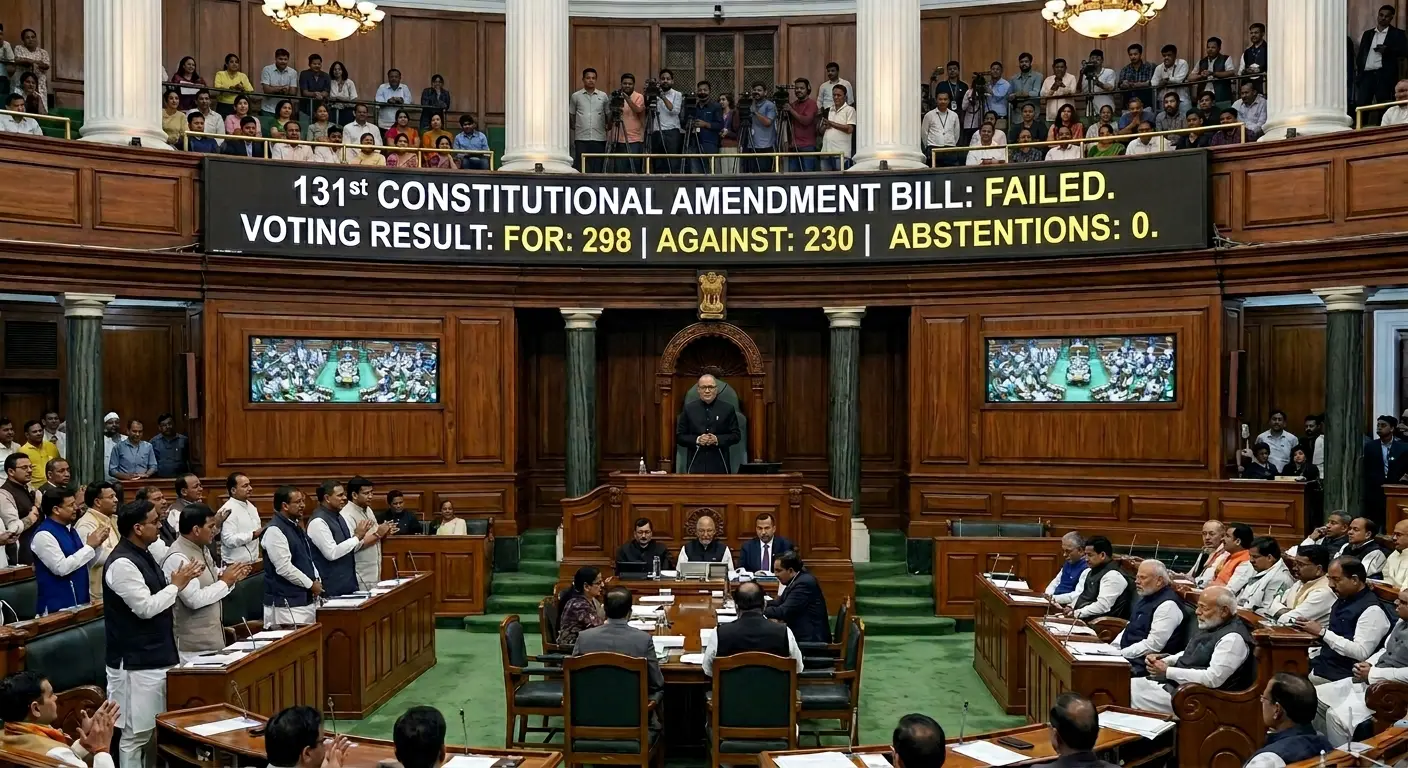
Out of nowhere, the Constitution (131st Amendment) Bill, 2026, tumbled through the floor of the Lok Sabha on April 17. Pushed forward to speed up women’s reservation in Parliament, it pulled in 298 yeses but faced down by 230 opposing voices. Falling short wasn’t just bad luck – two-thirds support under Article 368 slipped away. Hardly seen before, such an outcome stung the Modi government right where amendments matter most.
Bill’s Core Objectives
Midway through the special session, lawmakers unveiled a proposal aiming to separate the Nari Shakti Vandan Act from the upcoming census and boundary changes after 2026. Instead of waiting, it suggested growing Lok Sabha membership – from 543 to 850 – with 815 seats tied to states, another 35 assigned to union territories – so that by 2029, one out of every three MPs could be a woman. Supporters said acting now might uplift nearly 700 million female citizens, sidestepping holdups caused by halting the 2021 population count.
Surprisingly, some saw the move as lifting women up – Amit Shah and Kiren Rijiju framing it that way while linking seats to population shifts between regions. Still, critics pushed back hard, calling the timing suspicious since boundaries would rely on decade-old counts. Instead of fairness, they sensed a strategy: reshaping districts where support already runs deep. While officials spoke of balance, others heard political math dressed as progress.
Voting Drama Unfolds
Half of Parliament sat in attendance, yet more than half support was missing by a wide gap. Not enough stood behind it – even pushing hard failed to shift the numbers. Every group on that side, names like Congress down through TMC, SP, DMK, stayed locked in place. The chair said words into the chamber: two out of three required, not met – measure falls. Noise rose fast from every corner once spoken.
Federal balance questioned when seat shifts favored north over south – that was Rahul Gandhi’s take, calling it a blow to constitutional fairness. Voices rose fast. One said the government’s time was clearly running short; another saw borders shifting on the political chart before anyone noticed.
Opposition’s Key Grievances
South of the country, places such as Tamil Nadu and Kerala grew uneasy. Their progress in balancing families now counts less when drawing political lines. When boundaries shift using numbers from 2011, regions like Uttar Pradesh, Bihar, and Rajasthan stand to gain more than two hundred new spots. These areas already back the NDA tightly. As a result, power slips away from the south – from one fourth down below one fifth. Numbers change who holds sway.
Still hanging, the OBC split inside women’s quota stirs memories of Mandal’s loud shadows. Called a stealth move by TMC’s Saket Gokhale, he sees votes – never empowerment – at its core. From the south, leaders such as MK Stalin tighten ranks, saying fairness won’t be rushed. What began as policy now feels like old battles wearing new masks.
BJP’s Fierce Counterattack
Outrage erupted from the BJP, calling the move a deep insult to every woman. A wave of pain, said Prime Minister Modi, has struck 700 million mothers and sisters – he begged for reflection. Rijiju turned toward history, pointing at Congress’s past silence on similar laws. Support held firm among allies such as Nitish Kumar of JD(U), though support alone wasn’t enough to change outcomes.
Out of nowhere, the loss stops the women’s seat plan, freezing boundary changes without a timeline. This first failed tweak under Modi highlights how shaky the alliance has become since last year’s vote, when the NDA fell short of three hundred seats.
Federalism and Its Political Consequences
Back then, worries about the central government overpowering state power start creeping in again. Leaders down south call it unfair – doing better on population control backfires when other regions gain more seats. From a money angle, tension builds in how funds are shared; taxes from southern states flow into big national plans but bring smaller political voice in return.
Hope grows among rivals nationwide before 2029. The rare agreement within the INDIA coalition after voting ends hints at new strategies forming. Though BJP wants to bring back Rajya Sabha without needing Lok Sabha approval, numbers in the upper chamber still reflect those below, pushing leaders toward compromise instead.
Road Ahead for Reforms
Still waiting, the promise of women’s seats hangs in air. Yet doubt slows everything down. Some say count people first, only after that redraw lines using fresh numbers. Adding OBC voices might help, so would talking with states early. While arguments go on and on, one thing stands clear – the stalled law shows how lawmakers keep power balanced across branches, especially here where differences run deep.
One thing stands clear for UPSC hopefuls – Article 368 means more than just numbers, it demands broad agreement across chambers, plus approval from states when powers shift. Seen another way, the political scene shifts too, nudging the NDA toward talks instead of top-down moves amid rising divides.