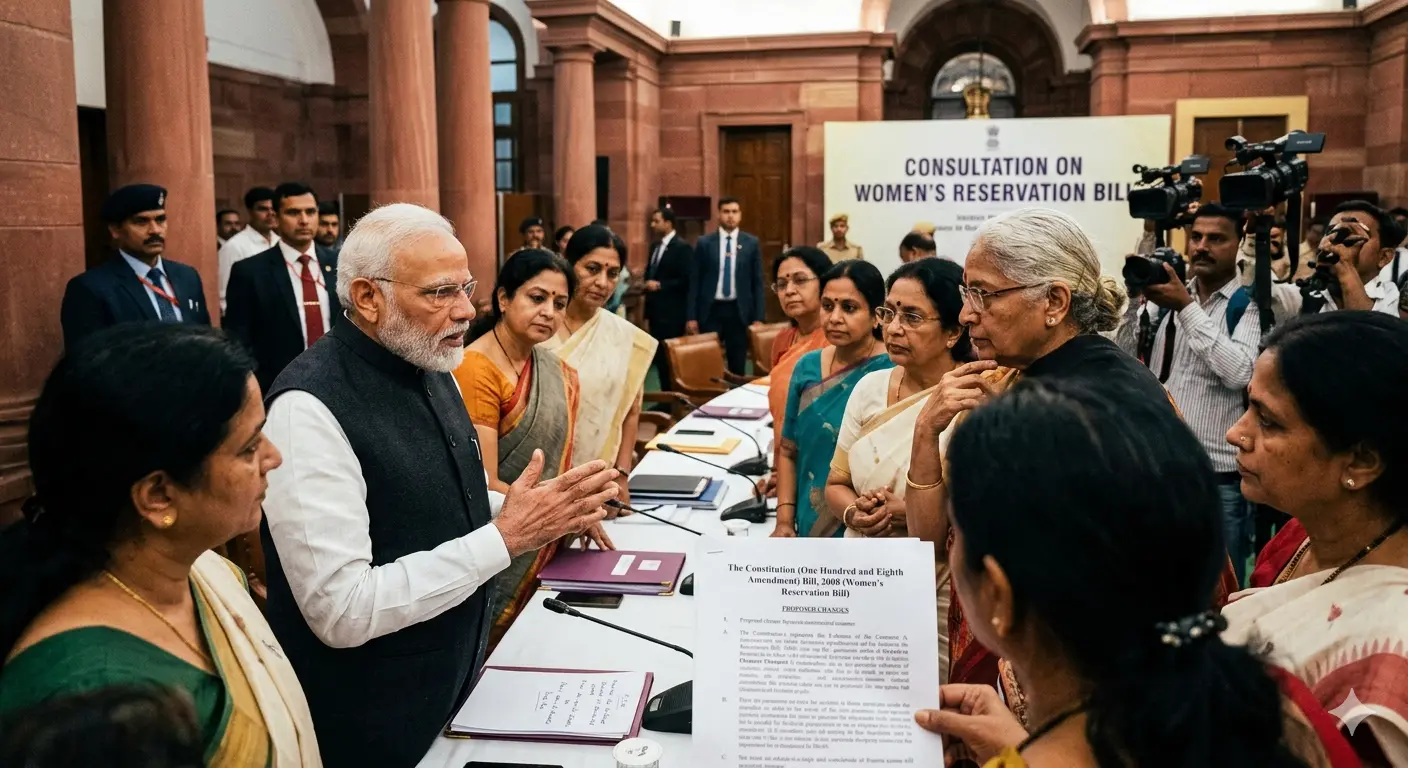
That Sunday morning in April of 2026 brought sharp words from Prime Minister Narendra Modi. One voice, he said, must carry changes to the Women’s Reservation Bill through this parliamentary stretch. Gathered in Varanasi, crowds heard him frame unity not as choice but condition. Delays have weighed too long on progress meant for women. The law named Nari Shakti Vandan Adhiniyam could shift realities – provided roadblocks vanish fast. Passed three years earlier, its path stays blocked by census holds and boundary redraws stuck in limbo.
bill’s journey and where it gets stuck
Seats for women, set at one third in India’s lower house and regional councils, come through what is formally known as the 106th change to the constitution. After nearly three decades of debate, approval arrived though timing slipped past initial hopes – new population data must arrive first. Even so, fresh proposals surfaced by spring 2026 suggest splitting the rules apart – one part moving ahead without waiting. Implementation could then begin with voting rounds starting in 2029, regardless of boundary adjustments still under discussion.
One third of seats now set aside, a move that once faced chaos when rivals left parliament halls. Women from backward classes will see smaller shares inside the bigger slice, something leaders from Bihar pushed hard for. A leader stood firm, saying fairness matters more than who shouts loudest during debates. Some parties called it too little, even as others celebrated quiet wins behind the numbers. What started as tension turned into structure, shaped by pressure from eastern states. Not every group agreed, yet the plan moved forward, carried by compromise rather than cheers.
Political Reactions Spread
Only if truth matters would silence follow such bold claims, thought Rahul Gandhi, hitting back at BJP motives after their recent appeal. Hidden plans often wear honest faces, he implied online, where timing exposes real intent behind promises delayed. Passing laws needs no extra conditions, just will – something missing so far, according to his post. Agreement spreads wide, yet Akhilesh Yadav ties support to one hard demand: count every caste first. Leadership wins nods when action matches speech, which is why Nitish Kumar stands beside Modi this time, ready to move as one bloc.
Out of nowhere, female lawmakers began speaking up together. From the BJP, Annapurna Devi pointed to progress made by village women through small local collectives. Instead of staying silent, Supriya Shrinate from Congress pushed to remove certain caste-based rules for wider reach. On social media, Trinamool’s Mahua Moitra tossed in a remark: “Unity sounds nice – just not when louder voices crush it.” Still, an unusual moment unfolded as leaders found brief common ground. Even Chandrababu Naidu from TDP stepped forward, promising steady backing.
Amendments Shape Today
Among big democracies, India’s Parliament counts only 14% women lawmakers – fewer than any comparable nation by world standards. Reaching Rwanda’s level of 61% female representation might now happen thanks to the new legislation. Changes made during revisions address concerns about constitutionality after recent Supreme Court decisions on EWS reservations. These adjustments let caste-based quotas work without disruption alongside newer provisions. Specialists point out that skipping full boundary realignment shaves off roughly twenty-four months, timing it right before the 2029 elections.
Later that year, Modi’s move followed voting patterns in Maharashtra and Haryana – places where female voters tipped outcomes in 2024. Behind closed doors, party files revealed about five crore women had gained from programs such as Ujjwala, turning welfare into a campaign thread. Yet some voices pushed back, saying caste-based reservations might blur goals, echoing privileged-group gains seen during Mandal-era flare-ups decades ago.
Women Gaining More Influence
Beyond quotas, Modi pointed to the end of triple talaq, helping around one crore Muslim women. The shift also saw Beti Bachao lift sex ratios – now 930 girls for every thousand boys, up from 918. He spoke of power moving from village councils to national halls, naming Savitribai Phule as a spark. Progress like this, he said, grows stronger when rooted in justice. Half of all local council seats reserved for women? That rule already runs in twenty-six states. Expansion at higher levels may follow.
Most women grabbed seven out of ten Mudra loans, fueling about 200 million jobs. Still, hurdles remain – India lands at position 129 worldwide on gender equality by 2026, behind Bangladesh. Corporate diversity targets might rise, suggests NITI Aayog, if changes take root.
Parliamentary Road Ahead
Monday brings the Lok Sabha talk back to life, while the Rajya Sabha waits its turn behind. Word is, Om Birla pushes motion through a shortcut called special mention. Should everyone agree without objection, the rule could land by May, just before rains start. Any stumble might spark marches, led by groups like WomenReservationNow.
Backed by more than 300 MPs, Modi’s push for unity echoes a gathering from 2023 that the INDIA alliance skipped. While success looks possible, changes might still surface during debate. Protests led by female party members aim to keep pressure high – silent sit-ins are already being mapped out. Talks once stalled could find new breath through these actions.
LIVE Updates From Parliament
Evening light still bright when Modi speaks after Cabinet meeting. Deadline given for unity effort by week’s end. Media gathered, questions waiting. Tone firm but calm throughout address. Clock nears six as words land across screens nationwide.
By four in the afternoon, BJP’s floor managers gathered with coalition partners. Thirteen percent reservation for OBCs got locked in during talks. Decisions took shape after hours of back-and-forth between party reps. Numbers were confirmed late, just before sunset. Agreement came through quiet negotiation, not grand announcements.
Later that afternoon, Sonia Gandhi sends a letter to Modi. Her note holds no strings attached. Congress stands ready to back him without demands. The gesture arrives at two in the day.
Casualties none, but verbal volleys fly.
Close to a hundred years since freedom began, Modi’s voice echoes what the Constitution stands for. Whether leaders listen – or old rivalries take over – remains unseen. The country waits, eyes open.