Early this year, India’s Petroleum Ministry stepped up efforts to clear hurdles blocking natural gas infrastructure. On March 25, 2026, new steps came into view – aimed at delays slowing down expansion goals. Getting things moving again means untangling permit processes while tackling issues stuck for years. Cleaner energy options could spread further once these fixes take hold. Success depends entirely on how well actions are carried out.
Guidelines Cover Main Concerns
A new batch of guidelines showed up, focused on quicker approvals, smoother cash movement, along with hidden systems meant to accelerate processes. Officials point at stubborn bureaucracy slowing everything down, particularly when land is needed for pipelines or liquid gas terminals.
A fresh group now handles ventures above ₹1,000 crore, cutting red tape that once dragged on for 18 months – now done in six. One office signs off on environmental permits, streamlining what used to scatter across departments. Land assessments move quicker too, thanks to drones snapping precise maps from the sky. For city gas lines, companies get into the network without long waits – even entry slots are locked within weeks, not seasons.
Early approval pressures hit bank lending for infrastructure bonds under fresh ministry guidelines. Where green targets get cleared, rates dip by half a percentage point. Instead of waiting, gas network investments rise as state-owned oil firms must redirect a chunk of their budget – exactly 15 percent. Coverage stretching across the country hopes to touch twenty percent ahead of the decade’s close. Movement becomes visible once pipes extend past old boundaries.
Delays Persist After Attempts
Things started falling apart, exposing flaws. When farmers in Uttar Pradesh demonstrated, progress on the 1,500-kilometer Jagdishpur-Haldia pipeline dragged – two years vanished, costs swelling by twenty-five percent. In Kakinada, a six-thousand-crore gas terminal stalled due to coastal regulations, delaying launch beyond 2025.
A third of power lines collapsed under heavy rain not long back. Since global prices went up, electricity costs have climbed too. Local rules clash with federal ones, dragging out repairs. Over summer, hackers hit operations systems in multiple places. Where watchdogs overlap but no one takes charge, issues spread easily.
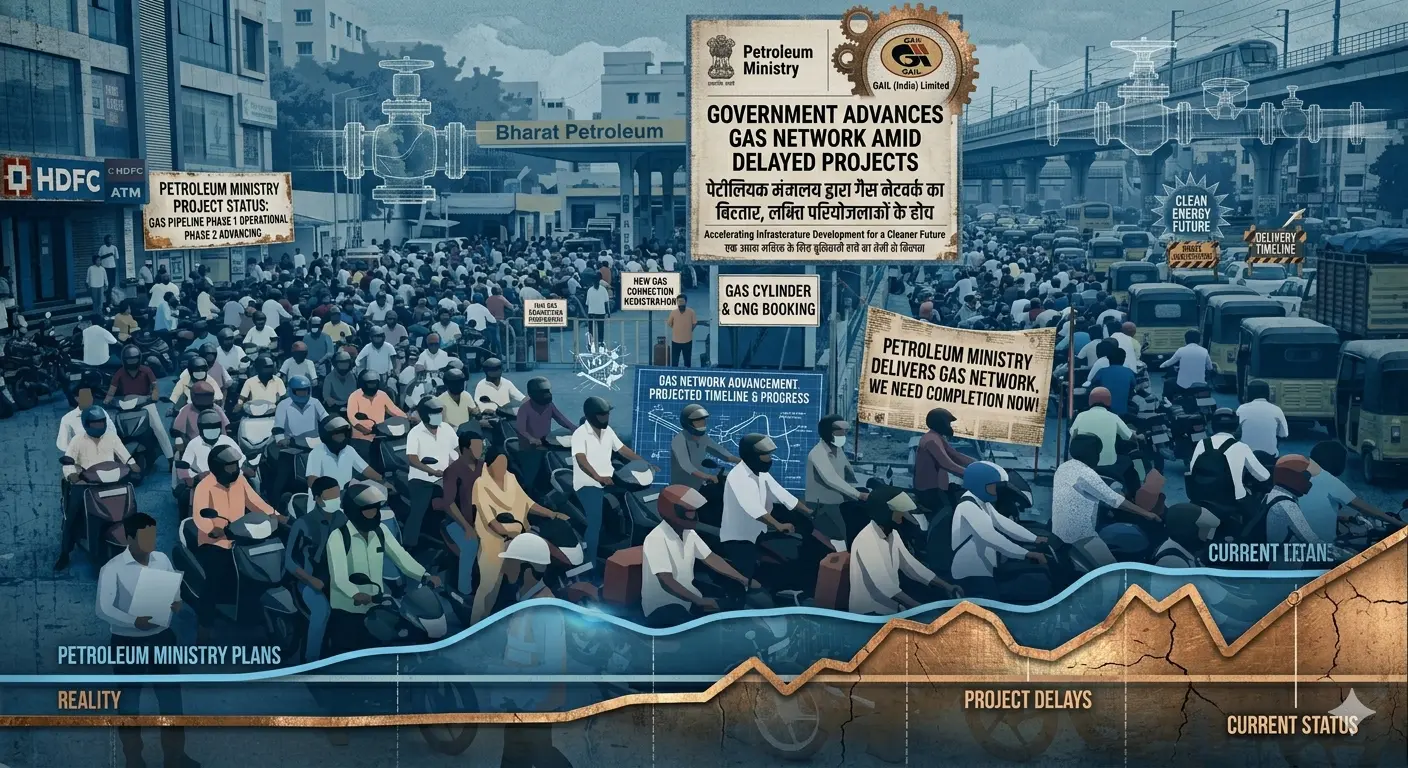
Heavy clouds hang low over Hyderabad’s streets as fuel problems deepen across Telangana. Long lines at petrol pumps stir frustration rooted in months of uneven supply. Without enough gas pipelines reaching neighborhoods, families go without clean cooking options nearby. Just under half of city homes connect to the compressed natural gas network today. Progress crawls forward while rickshaw drivers keep burning diesel each morning. Crowds surge toward stations whenever rumors spread, making order harder to hold
Strengthening Measures Explained
Farther stretches of pipe become possible once GAIL joins forces with local firms rather than sit through bidding rounds. From next month onward, a new fund – worth ten trillion rupees – fills the gap in low-demand areas, covering 40 percent of costs on routes that cannot survive on revenue alone.
Does it show? Better technology. Yearly, artificial intelligence scans fifty thousand kilometres of pipes, slashing leaks – thirty percent fewer now. Then comes blockchain. Every shift of gas gets logged in public view, ending theft that used to wipe out two and a half billion rupees each year.
Though accidents lead to tighter safety steps, every six months outside teams check things anyway – drones watch pipelines too. Training grows by linking with Petroleum University, pulling in fifty thousand workers slowly. Rules tighten after each event, yet progress shows in quiet ways across sites.
Economic Ripple Effects
Fifteen percent gas in the energy mix by 2030 pushes these changes – right now it stands at just 6.7. Thanks to faster pipeline work, compressed natural gas costs less for twenty million vehicles using roads. This move cuts annual oil spending abroad by five billion dollars. Behind the scenes, three hundred thousand people find work putting up and managing fresh setups.
First off, Gujarat and Maharashtra might gain most – close to sixty percent of households already on cleaner gas. Instead of big cities only, Telangana spreads further, reaching small towns, lowering urban fumes, linking to broader lines once supply shrinks.
Progress noted amid persistent industry challenges
Right off the bat, leading oil executives nodded to fresh orders announced in Delhi. A shift happened when GAIL’s chief labeled additional funding a clear milestone. Elsewhere, IOCL set aside fifteen thousand crore rupees for eastern power infrastructure. At the same time, business councils like FICCI urged incentives that cover biogas production.
Yet wetlands stir concern among activists demanding stronger assessments rather than shallow evaluations. Even so, steady pricing draws investors especially when global LNG rates hover around 12 dollars per million BTUs. Though quiet, these issues linger beneath the surface.
Energy Shift Path Ahead
By mid-2026, test phases kick off in Andhra while Odisha follows close behind. Full deployment wraps up toward year’s end. Joint progress shapes each state’s next steps – weather shifts hold equal weight. If conditions align and outcomes stay steady, India could surpass China in gas infrastructure near 2030.
Right away, India’s oil division pushes forward with focused intent. As obstacles shrink, gas rises through quiet momentum as a sharper pick for cleaner power change. Progress continues unfolding beyond the mess lately hitting pumps across Telangana. Watching closely, players pause to learn whether promises grow legs. Yet faith only builds slowly, one careful move after another.