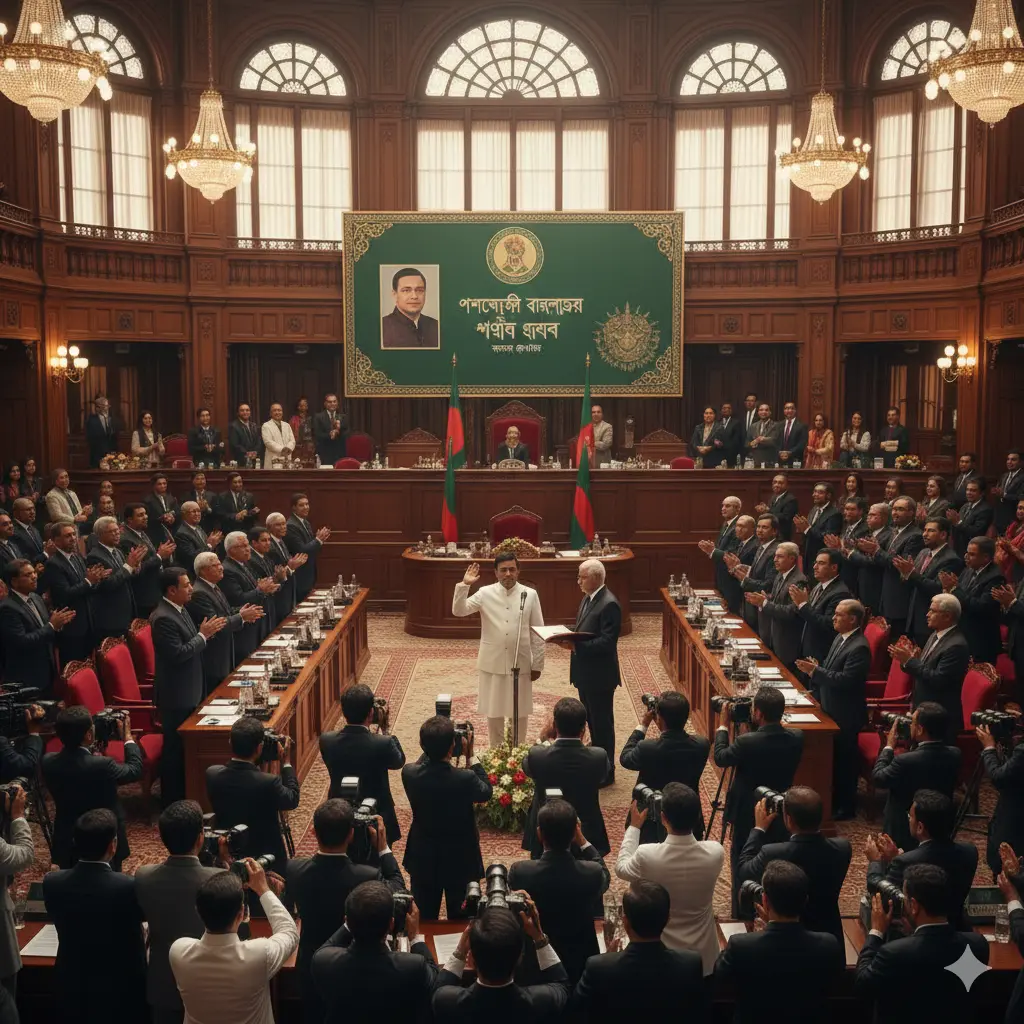
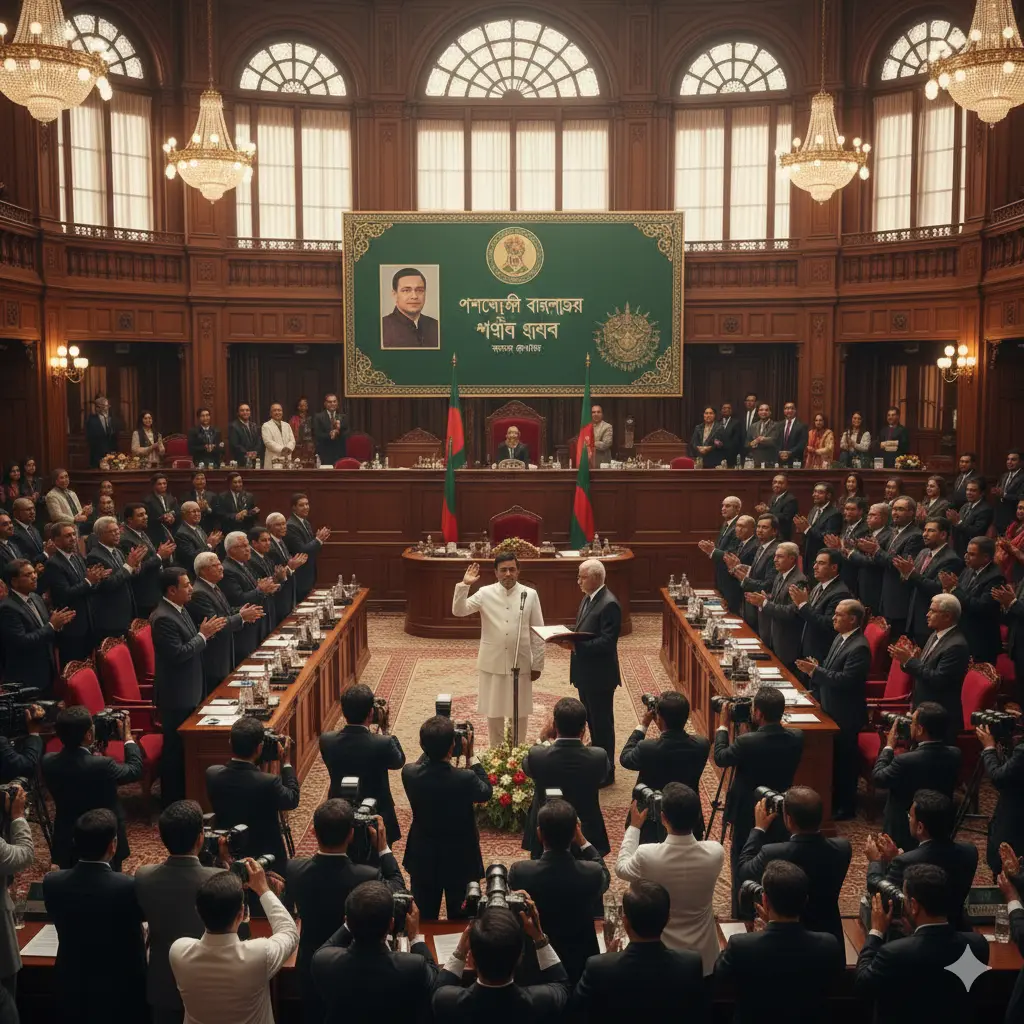
A new Prime Minister of Bangladesh and a replacement of Khondker and Roby took power on February 17, 2026, as the leader of the Bangladesh Nationalist Party (BNP). This historical scene was experienced a few days after his party swept his party during the national elections that were the end of months of interim rule.
Circumstance and Success in the Campaign.
BNP had already acquired two thirds 209 out of 300 seats in Jatiya Sangsad against 212. Ally Jamaat-e-Islami party won 68 seats and awami league under the leadership of Sheikh Hasina was not provided with a chance to contest. It was the inaugural post 2024 student uprising to have left Hasina, 15 years after the Awami rule in Bangladesh.
Rahman, a 60 years old son of the previous prime Minister Khaleda Zia and late president Ziaur Rahman returned after 17 years in exile to lead the campaign. His accomplishment would represent the triumph of female leadership in the country of 35 years. One of the ways through which people were worsened with economic misfortunes, oppression and uncertainties in the Hasina government was the landslide.
Oath Ceremony Highlights
The then president Mohammed Shahabuddin took this as an oath at the South Plaza, Jatiya Sangsad Bhaban, dhaka and the first president to take the oath outside Bangabhaban. At one of the aired events, Rahman had said that he would be subservient to law and carry out PM duty, before civil and military authorities and a representative of India, China and Pakistan.
It also has 25 cabinet ministers and 24 state ministers that were sworn-in during the ceremony. India had even sent Lok Sabha Speaker Om Birla who happens to be an augur of closer relationship since Hasina had gone into exile. The legislators once appointed Rahman the representative leader of BNP in the parliament.
Challenges Ahead
The country that Rahman is succeeding is yet to come out of the repercussion of eighteen months of the caretaker government led by Muhammad Yunus. The most important things that ought to be taken into consideration are maintaining sanity in the scenario, restoring the garment business and regaining the investor trust destroyed by riots and unrests. The majority of the Bangladeshis are hoping that his leadership would be changed to oppression to economic development.
The critics note that a BNP-Jamaat-e-Islami alliance is among the areas of concern because of the force of Islamists but to the electorate, it is a democratic re-launch. Rahman is having troubles finding friendliness among the neighbors in the geopolitical transformations of the region.
Regional Implications
The BNP returning to India mollify the situation once the Hasina toppling occurs but augments the border security and the trade alert. The new power in Dhaka considers amicable relations with Delhi, Beijing and Islamic world. It is this new era of Bangladesh where the party of Tarique Rahman can re-introduce in a new form politics of South Asia with vehement spirit of revivalism to be followed with promise of reforms.