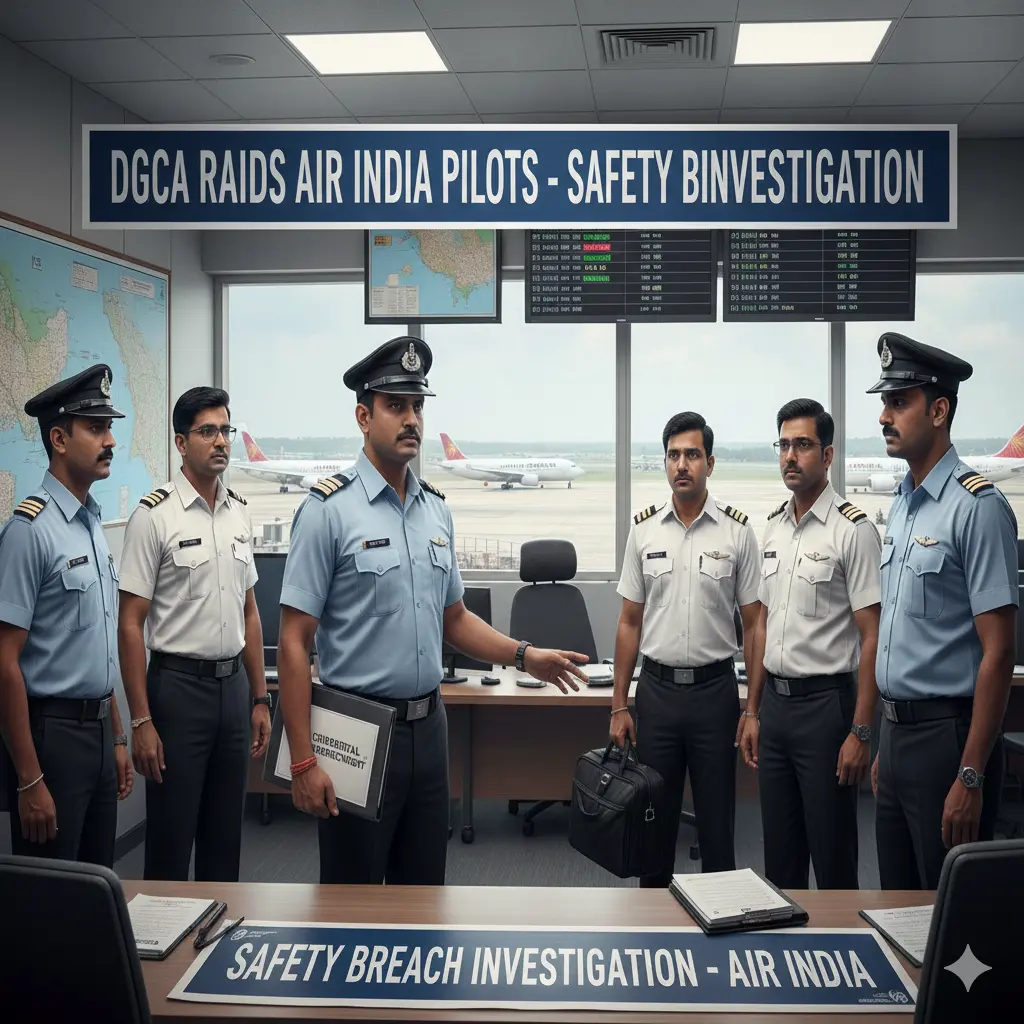
The aviation watchdog of India, which is the Directorate General of Civil Aviation (DGCA) issue the show-cause notices to the four Air India pilots have raised serious safety issues since they were aware of the technical faults that were known and drove the planes anyway.
What Went Wrong
The flight AI-357 and AI-358 involving Boeing 787-8 Dreamliner VT-ANI was carrying pilots Nishant Tholia, Rishi Kumar Badole, Arun Mehra and Priyank Bainsla on the Delhi-Tokyo flights at the end of December 2025. The plane already had many ills; recirculation fan issues and a smoky odor near the door, which was reported during five flights before takeoff.
However, the plane was passed by the crew in contravention of Minimum Equipment List (MEL) rule and combinations risks were not considered, which also is a breach of Civil Aviation Requirements (CAR).
DGCA’s Stance
The notices are released on December 29, 2025, and the explanation must be made within 14 days, otherwise the threat of the suspension of the license in the case of the failure. DGCA highlighted that the flight safety is compromised by the omission of various flaws in the flights, especially in the long-haul international flights.
It would be similar to other Air India crashes, including the mid-air turnaround of AI-887, on a post-privatization inspections.
Air India’s Response
Air India accepted the notices with the reevaluation of the compliance to the safety process and the cooperation with the regulators. No passengers were injured and the event shows the strains of operating an expanding fleet.
The most frequent reasons that are cited by the pilot unions are fatigue and scheduling, yet DGCA is more worried about compliance.
Bigger Picture to Indian Skies.
Due to this boom in the aviation industry where there has been a growth in passenger traffic to 15% per annum, the regulators are tightening their belt to ensure that the industry matches the international standards. Such an incident is a lesson to the airlines that time is not more important than safety. The proactive enforcement would provide the passengers with hope since accountability is ensured on all levels.