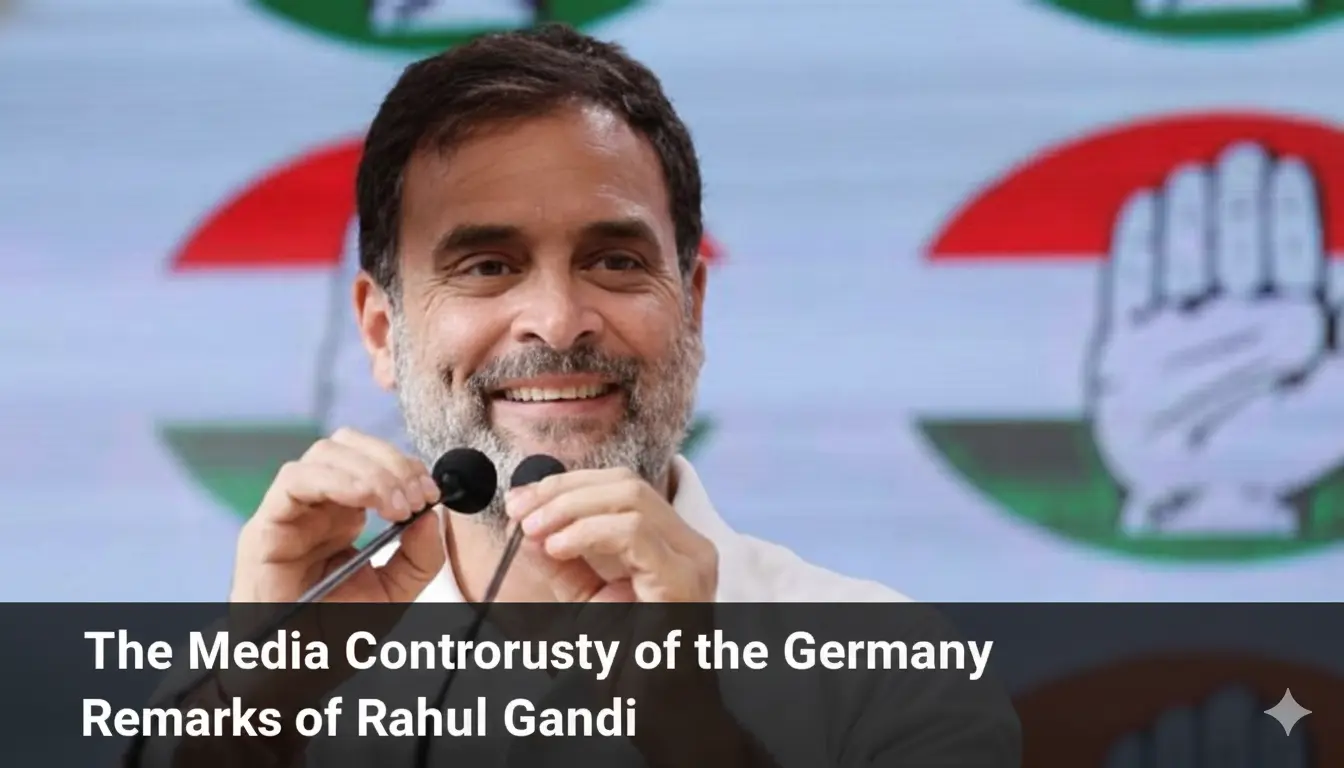
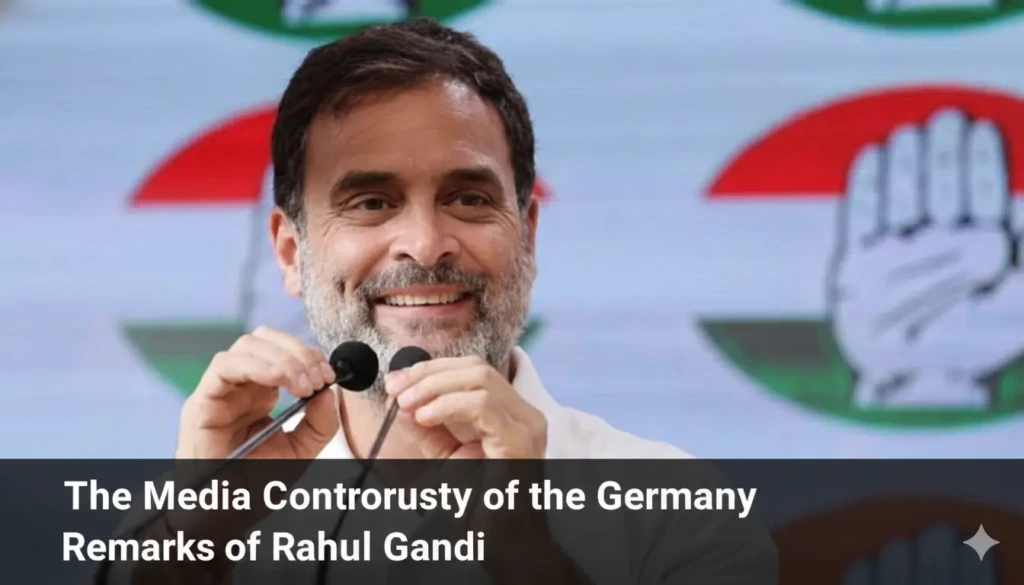
The latest words of the Congress leader Rahul Gandhi in Germany has created a new political debate wave in the country with the ruling Bharatiya Janata Party (BJP) sharply responding and political observers equally ambivalent. It is during this visit to Berlin that Gandhi delivered an address at an interactive conference that he pointed out what he referred to as issues of democratic backsliding and economic inequality in India which critics described as an effort by the man to defame the country abroad.
The Controversial Remarks
In his speech at a university conference in Berlin, Gandhi is quoted as saying the narrowing of the freedom of dissent, and the problems of minorities in India. He has also mentioned the issue of unemployment, freedom of the media, and institutional independence, in which he said that the democratic arrangement in India was at stake. As much as he claimed to be proud of the legacy of democracy by Indians, he encouraged the young people to stand by the spirit of constitutional values and reclaim the spirit of inclusiveness.
His words immediately hit the headlines, and the global media accentuated on his threats of economic inequality and political polarization. In India, the social media was inundated with discussions, as hashtags both in his favor and against his words were trending at the same time on X (formerly Twitter).
BJP’s Sharp Reaction
BJP did not take long to retaliate. The party spokespersons said that Gandhi was disrespecting the national image and weakening the Indian image in the world. Senior BJP leader Ravi Shankar Prasad said that he goes overseas and strikes against our democracy and this is what is flourishing exactly because of the faith of our citizens. He described the statements of Gandhi as irresponsible and reckless because he said that the Congress leader was trying to undermine the institutions of India to gain political advantages.
The timing of the speech was another issue that the ruling party raised given the fact that India was in the process of increasing its diplomatic reach and gaining more prominence in the international community. BJP MP Tejasvi Surya remarked on the comment by Rahul Gandhi by saying that when the Prime Minister leadership is making India shine in the world, the desperate son of the Nees should question the very base of our democracy in the rest of the world.
Congress Defends Its Leader
Congress party has been in solid backing of Rahul Gandhi arguing that he was only speaking on behalf of millions of Indians. Jairam Ramesh, spokesperson of Congress, mentioned that what Gandhi said was patriotic, factual, and needed in order to add that it was not criticism of the government but rather the nation. The party holds the view that the international activities of Gandhi are geared towards creating awareness of the domestic issues in India yet enhancing the discourse of democracy.
Ramesh also explained that criticism must be considered as a method of reform and not being disloyal in an authentic democracy. Congress hawks also stressed that Gandhi comments found an echo among a large number of young Indians who were concerned with such issues as unemployment, inequality, and divisive politics.
Analysts Weigh In
There is still a dispute between political analysts over the matter. Others consider the statements of Gandhi as a valid practice of freedom of expression and a transparency of politics in the world arena. Political scientist Suhas Palshikar added that it is normal healthy political dialogue between opposition parties the world over to question their respective governments overseas.
Nonetheless, others suggest that the words of Gandhi gave weapons to those that criticized India. According to former diplomat Vikas Swarup, airing internal criticism internationally would roll back the India story as a unified democracy. He said that domestic matters should be discussed not in other capital cities, but at home.
Broader Implications
The scandal again shows how close the expression of international politics and nationalism can be. The earlier foreign visits that Gandhi has made to the United States, the United Kingdom and Singapore have usually resulted in similar responses particularly when the Mahatma discussed the governance issues and rights of the minority. His proponents argue that these interactions demonstrate his interest in international dialogue, whereas opponents have found the reason behind his foreign visits to be the need to obtain foreign approval.
Another theme that comes out in the episode is the hyper-polarized state of Indian politics whereby almost every word of major leaders is subject to partisanism. With an election year near by, the remarks of Gandhi have become new meat on both fronts; his followers present him as a fearless person who tells the truth, and his critics call him a politically irresponsible individual.
Public Response
There is a division in the opinion of citizens. The urban youth and civil society organizations have, to some extent, supported the comments made by Gandhi, interpreting them as a call to self-introspection. In the meantime, a significant part of conservative voters consider the statements unpatriotic. This polarization was echoed in a number of television debates that saw some participants make a point that criticism and contempt needed to be differentiated.
The Road Ahead
The episode can be a challenge as well as an opportunity to Rahul Gandhi. Although his words have awakened people to talk about democracy and freedom once again, it has given the BJP another opportunity to question his judgment and loyalty.
With the political storm going on, however, one thing is certain, and that is that there is more under the surface of the controversy in the Indian democratic discourse. His comments regarding the same and how it will yield political mileage or be subject to more criticism will be evaluated as time goes by, however, his speech to Germany has placed him back in the centre-stage of political and ideological debate in India.