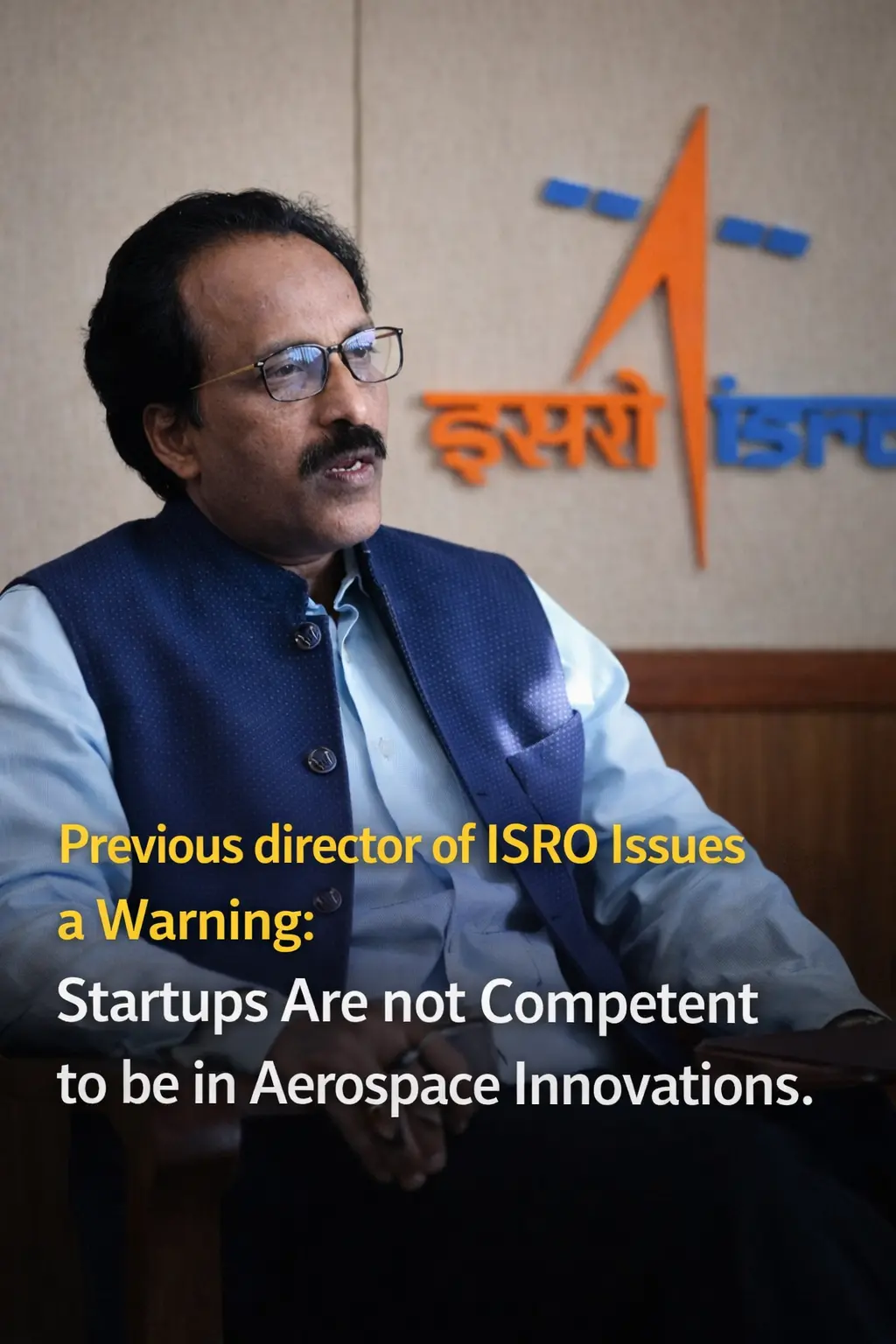
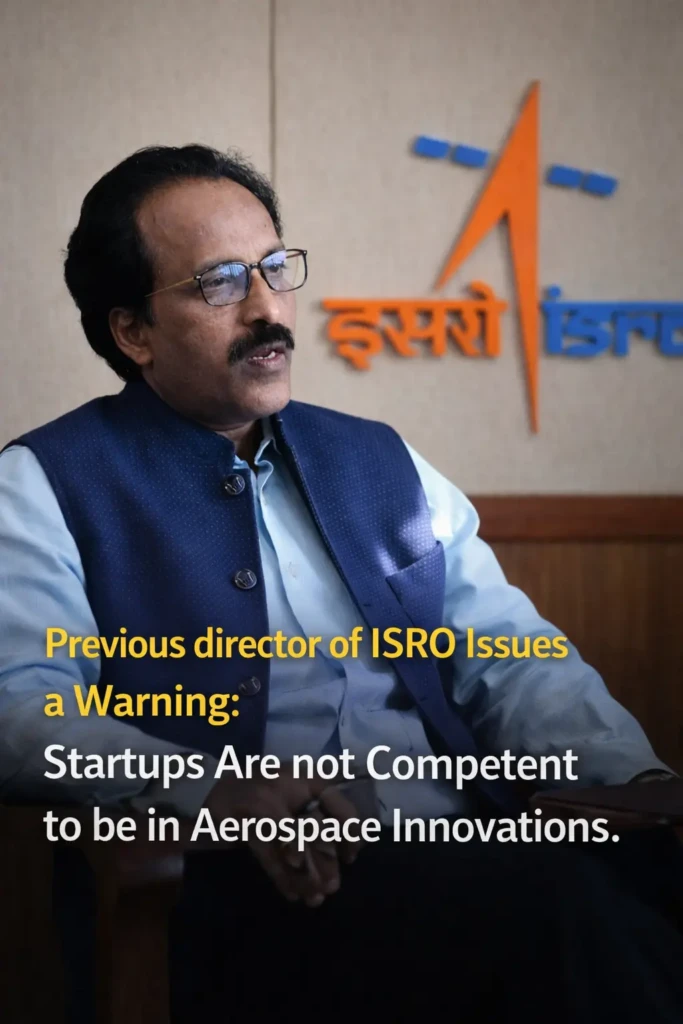
The competency and capability of startups within the thriving Indian aerospace industry has been questions of grave concern by K Sivan who is the former chairman of the Indian Space Research Organisation (ISRO). Talking at a recent industry conference, Sivan has cautioned that a significant number of the private players do not have the background knowledge to advance actual innovation, and threatened to jeopardize national desires in space technology.
The Competency Gap Exposed
Sivan pointed out that aerospace requires strict scientific skills, engineering accuracy and years of experience in the field, which startups lack. Innovation is not really about ideas, it is about performing under extreme conditions, he said, citing the failure in recent private launches and satellite launches (Jake 2010, p. 25). This is unlike the decades-developed processes of ISRO whose startups put speed over reliability, a factor that results in costly setbacks.ndtv.
He was critical of the hype regarding the private space boom in India, pointing out that there are more than 100 startups created since 2020, however, only a few of them have proven track records. The Skyroot Aerospace and Agnikul Cosmos were in headlines due to a sub orbital tests, which Sivan doubted that they could scale to orbital missions without further research and development.
Issues in Talent and Infrastructure.
One of them is drain of talent and skills shortages. Aerospace startups are staffed with few engineers because the top engineers are taken to well-paying tech companies. Sivan encouraged the elimination of academia-industry barriers by enhancing specific training, also simulating the ISRO experience of internship. This is aggravated by infrastructure problems: there is still no significant access to testing facilities, clean rooms, and launch pads, and the use of government support is a necessity.
Finance strains are also an essential factor, given that venture capital requires rapid payoffs, which are incompatible with long gestation cycles in aerospace. Sivan gave the global examples such as SpaceX, which made it because of huge, long-term investment, not the disjointed Indian ecosystem.
Call for Strategic Reforms
Sivan proposed to overcome these obstacles by the idea of public-private partnership, according to which ISRO mentors start-ups, sharing IP and facilities. He offered policy changes: tax breaks on research and development, compulsory competence quality and a national aerospace innovation fund.
The space economy of India which is expected to reach 13 billion dollars by 2025 can not afford to rest. Sivan is an alarmist warning that in the absence of the establishment of actual capabilities, startups will be footnotes in the cosmic race.
His lines are echoed when Chandrayaan-4 preparations are underway and in the bids of Gaganyaan privately. Startups have to become reliable innovators rather than disruptors in order to compete with the global leaders in India.