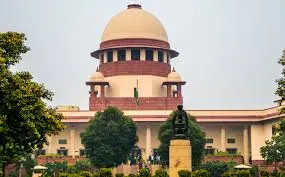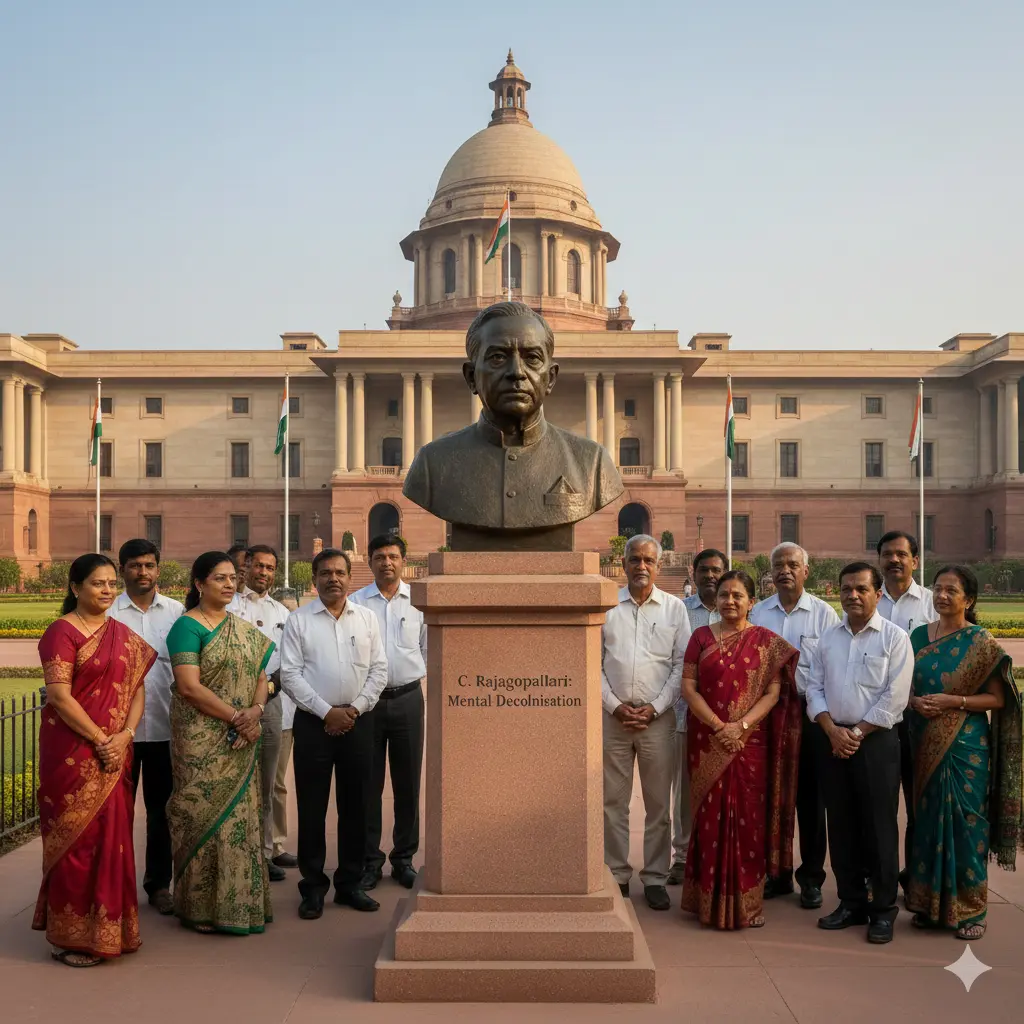
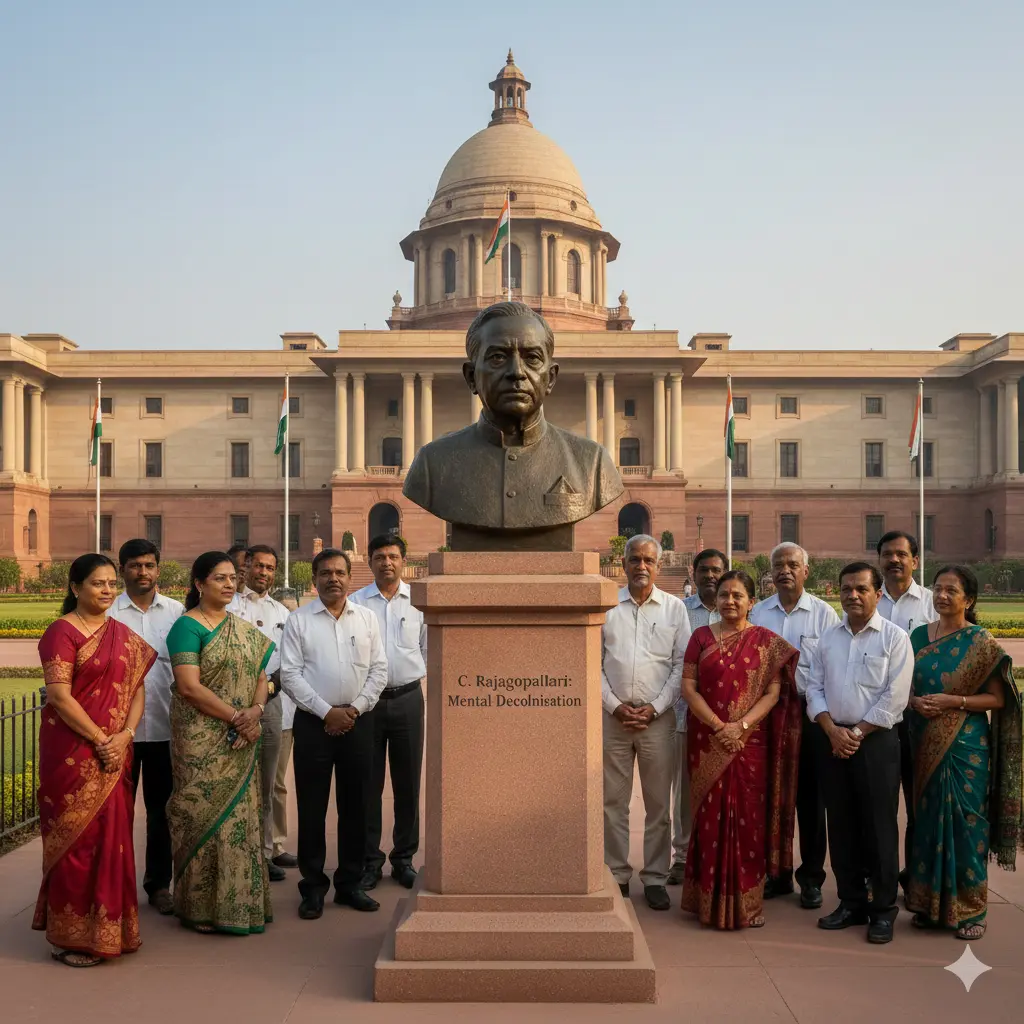
Rashtrapati Bhavan has substituted the statue of British architect Edwin Lutyens with the statue of Chakravarti Rajagopalachari (Rajaji) as a sign of Indian suffering under the colonialism. The move, entitled Rajaji, the last Governor-General and freedom fighter, as a patriot over Lutyens, designer of the great Viceroy House (now Rashtrapati Bhavan), was unveiled by President Droupadi Murmu, on February 23, 2026. This action is consistent with the overall discourse of government restoration of spaces occupied by imperial symbolism, and leads to national pride.
Historical Background of the Change.
The bust of Edwin Lutyens was a piece that was set up decades ago and this displayed colonial splendour in the building which he designed together with Herbert Baker in the year 1931. A building that was erected as the home of the Viceroy during the independence struggle of India reflected the dominance of the British under its Delhi Order columns and Mughal domes. Rajagopalachari who became Governor-General on January 26, 1950, India’s first Republic Day, was a short-term successor to Mountbatten, between the end of the colonial era and the beginning of the republican era.
President Murmu named it mental decolonisation, in line with the demands of PM Narendra Modi to forget subconscious colonial influences. The exchange of the Central Foyer, a busy ceremonial location, puts an emphasis on the importance of native symbols. Involvement in Quit India, swatantra Party, and the Bhakt Vijayam are some of the legacy of Rajaji, an amalgamation of Gandhian spirit and free-market ideologies.
The Legacy of Rajagopalachari.
Rajaji was a lawyer-activist who was born in Hosur, Tamil Nadu in 1878 as a follow-up of Gandhi and his Dandi Salt March (1930). He was the first Madras Premier (1937), who allowed Dalits to enter temples, and banned alcohol. After independence, he attacked Congress socialism, creating Swatantra Party (1959) -the first major opposition in India, which won 44 seats in Lok sabha in 1962.
His Hindi imposition warnings (1965) and nuclear foresight are still applicable. Rajaji was a champion of federalism, education (through Rajaji schools) and ethics in governance which was rooted in Tamil Nadu. The substitution of Lutyens commemorates the unselfish service of this guy compared to the brick and mortar impression of an alien designer.
Importance of Mental Decolonisation.
The concept of mental decolonisation became popular after 2014 and aimed at names, statues, and mindsets of the colonial era. Examples: Ajmeri Gate has been renamed Mahakavi Subramania Bharati Marg; Queen Victoria statues have been moved. The change in Rashtrapati Bhavan is such that it enhances Ambedkarite-Marxist criticism of internalized inferiority.
Opponents believe that it will erase history, but those in favor of it believe it will be empowered (lifting leaders who are ignored by Rajaji spotlights). Worldwide, countries such as Zimbabwe took down Rhodes statues; India burns in line with the shift of the national memory.
| Aspect | Lutyens Legacy | Rajagopalachari Legacy |
| Position | Colonial architect (1931 building) | Freedom fighter, final Governor-General (1950) |
| Symbolism | Imperial power, exploiting | swaraj, ethical governance, anti-colonialism |
| Achievements | House design of Viceroy | Salt Satyagraha, Swatantra Party, social reforms |
| Relevancy Today | Architectural tourism | Federalism, debates on economic liberty |
.
This table shows the ideological turnaround.
Greater Cultural and Political influence.
BJP allies cheered at the installation which was also attended by the Vice President Jagdeep Dhankhar and the ministers. Tamil parties such as AIADMK celebrated Tamil pride of Rajaji; DMK remained neutral during his departure out of the Congress. Opposition raised timing in elections but was agreeable to symbolism.
The power center of India, Rashtrapati Bhavan, now takes a visual lead in favour of the desi heroes, including the Ashoka pillar to Rajaji bust. It fills the young with hope: decolonise school syllabuses, rename roads, glorify satyagrahis and not sahibs. Viksit Bharat vision of PM Modi combines this kind of gestures by harmonizing the past and the present.
Communal Response and Subsequent Interventions.
Social media went off: Trending hashtag, #MentalDecolonisation with 2M+ posts, images adding the opulence of Lutyens to the simplicity of Rajaji. The factual accuracy was valued by historians; activists sought a lot more e.g. Aurangzeb Road to APJ Abdul Kalam was complete.
The same change in education, media was urged by President Murmu in his connections with Azadi ka Amrit Kaal. Future intentions are in museum remodeling with freedom fighters in the frontline. The bust of Rajaji was made of bronze, sculpted by the artist Ram Sutar, and looks straight forward–in keeping with his oracular stature.
This is not obliteration; this is lifting. In his tribute to Rajagopalachari, Rashtrapati Bhavan states: The Indian nation is a nation of sons and daughters, not colonial draftsmen. One bust at a time Mental decolonisation is here to stay.