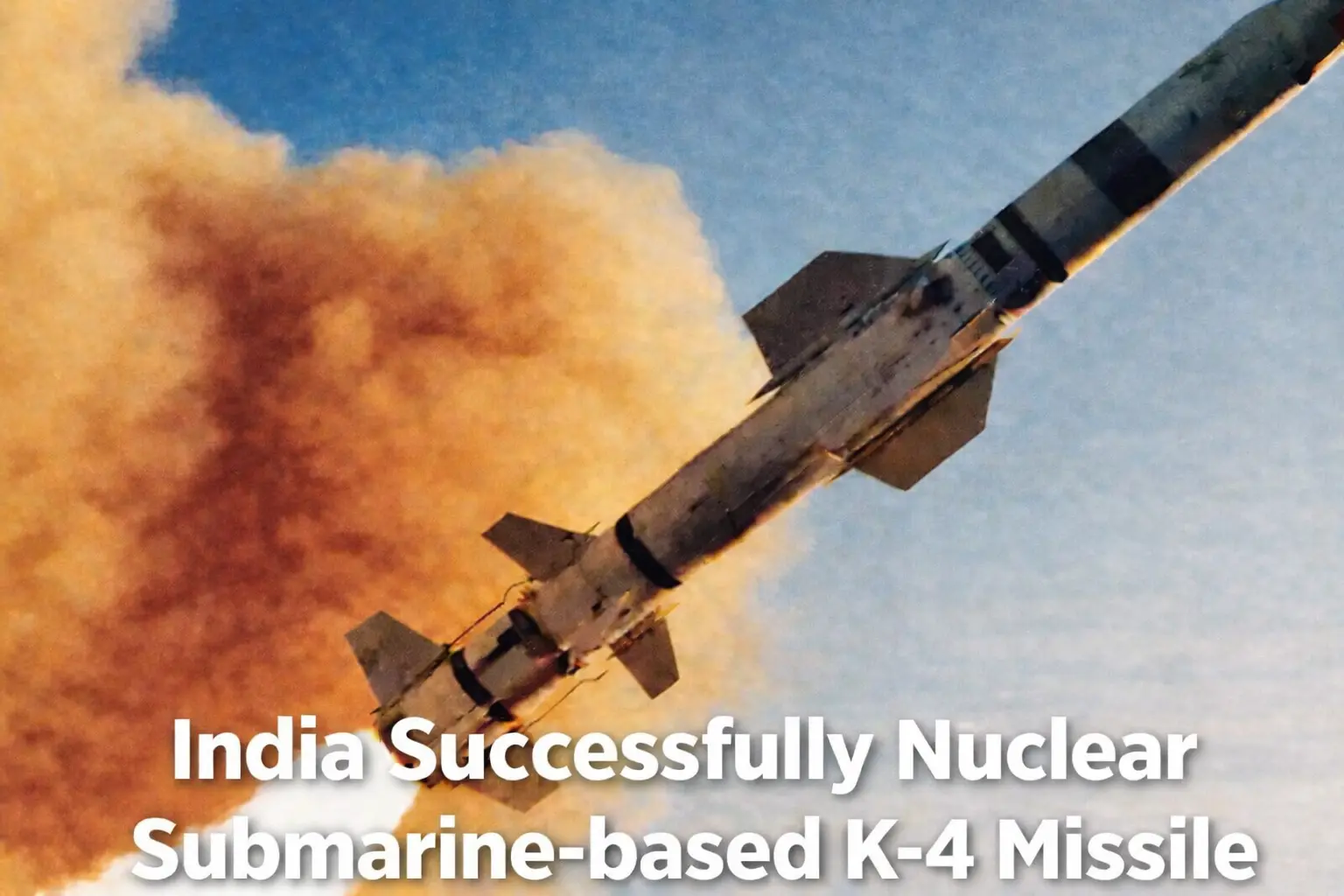
The other breakthrough that has been noted by India in strengthening its defense is the successful under water testing of the K-4 submarine-launched ballistic missile (SLBM). The test, that was invented by the Defence Research and Development Organisation (DRDO), is a pointer to the augmented capacities of India in the area of high technological missiles and under water protection.
India had also introduced a K-4-type of missile, one of the weapons of the K-series, home-grown strategic missiles, after the successful launch of the home-grown nuclear-powered ballistic missile submarine (SSBN). The test was conducted following the high degree of operational secretiveness in the Bay of Bengal. According to the defense sources, the missile achieved all the targets in the mission, which substantiated its range, accuracy and stability under the submerged condition.
The K-4 has the capability of striking a target at a range of 3,500 kilometers and the second strike capabilities of India are highly enhanced by it and hence, the K-4 is a significant component of the nuclear triad of India. This means that India can now fire nuclear weapons on the land, air, and sea- therefore a credible deterrence to the potential aggressors. The missile is also equipped with the current navigation and guidance systems which make it very precise even under the intense oceanic conditions.
K-4 is designed to be able to carry both traditional and nuclear warheads and it is extremely small in size therefore it can easily fit in the launch tubes of the sub without interfering with its stealth. It was also launched in the water and it emerges out of the water and emits its main rocket engine thereby causing it to comfortably transition into the atmospheric flight.
The other important result of this successful test is the implementation of the indigenous nuclear submarines of India headed by INS Arihant. Such submarines and the creation of the K-4 missile are one of the historic dates in the history of the Indian Navy and DRDO, years of research and innovation and development of technologies.
Defense analysts believe that this is a positive development that upgrades the posture of India regarding maritime security and offers credence to its No First Use nuclear doctrine due to its capability of retaliatory forces being survivable. It has also put India in a category of few nations like United States, Russia, China and France which possess an effective SLBM that is launched by nuclear submarines.
The success of the K-4 SLBM trial is one step in the evolution of India acquiring the independence and technological expertise in its policy towards world security in the shifting environment of the world security challenges. Not only does it increase national pride, it also increases the credibility of the country as a responsible and capable nuclear power that wants to provide stability within the region.