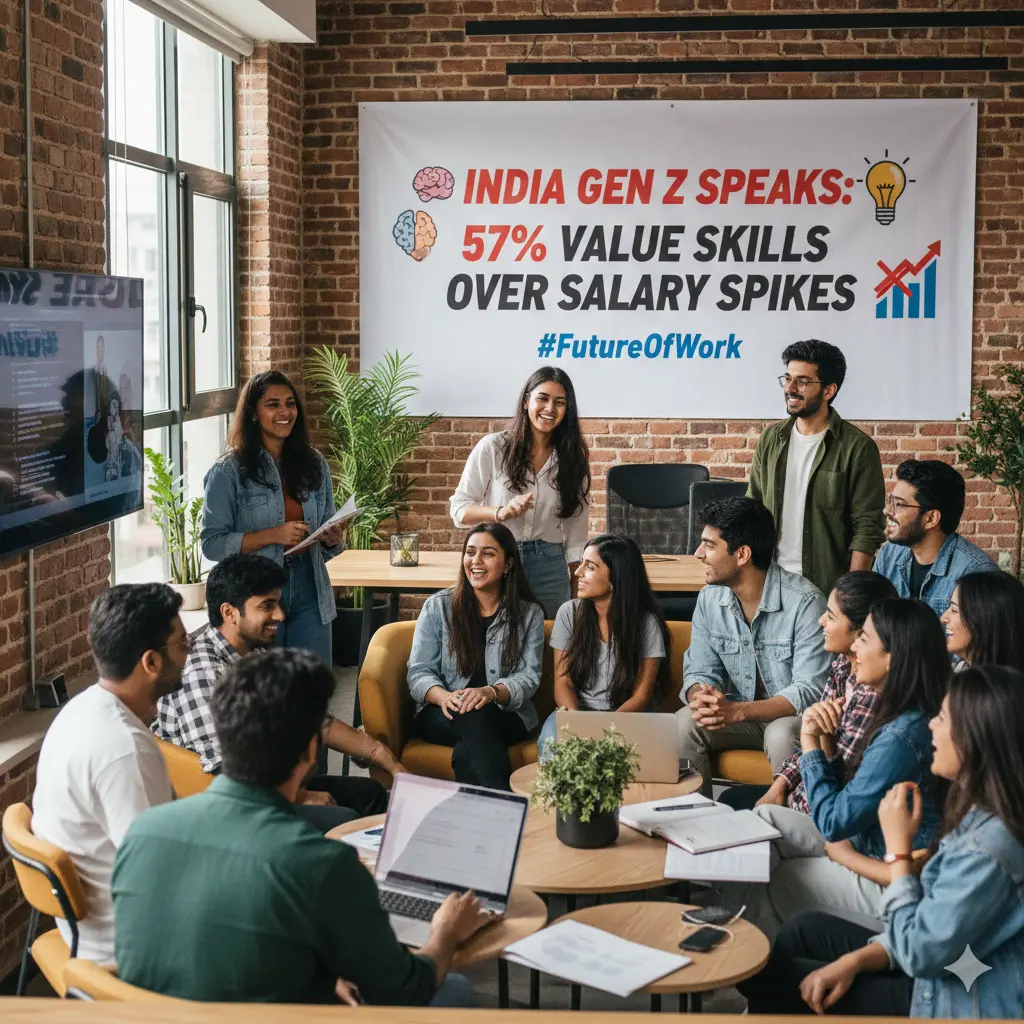
In a radical Naukri report, it is shown that 57 percent of Gen Z professionals in India focus more on acquiring new skills rather than on increased pay or promotions to grow their careers. This article is called The Gen Z Work Code and it polled more than 23,000 young employees in 80+ industries, disproving the stereotype of a generation obsessed with money. These 1997-2012 births were born during a period of economic instability, increased educational expenses and booms in the gig economy, and they led to a new definition of success because of their ability to adapt in an AI-forced job market.
Trump Pay Competencies in Growth Hierarchy.
The data forms a no doubt pecking order: 57% associate progression with on-job upskilling, and overshadows 21 percent looking at salary increases and 12 percent looking to promotions. The creative industry such as design and advertising is a high skill level of 78 percent with portfolios making the paychecks pale. Although experience increases, tastes do not change- 25% of 5-8 year veterans would still prefer an increase, but learning takes over. This change is driven by layoffs and propaganda of automation among millennials, leading Gen Z to the future-proofing concept through coding, data analytics, and soft skills such as AI ethics.
Employment Decisions are Sealed by Work-Life Balance.
On top of skills, work-life balance takes the lead in both job searches, at 50 percent, and mid-career Gen Z, at 60 percent, with flexible hours, reasonable workloads and time to family or side hustles to ensure sustainability. Half view 9-5 rigidity is a relic; hybrid models that have protected downtime increase retention. Stress poll confirms: 34 percent complain of imbalance as misery, 31 complain of growth stalls, which is much higher than 16 percent about micromanagement and 19 per cent about toxic colleagues, as millennials did.
Being Noticed is Equivalent to Being Given a Chance.
Remarkably, 81 percent lust expansion like training programs like training nods compared to verbal pats (9 percent) or cash bonuses (10 percent). Income earners (Rs 15-25 lakh) creep to 28 percent monetary interest; however, the entry level clings to 8 percent. Public shoutouts have an appeal of only 7 and 2 respectively. This is being misunderstood at one’s own risk by the employers — Gen Z shuns prefer performative perks to career-growing capabilities. In content creation or technology-based startups, bonuses are less important than mentorship due to a sense of loyalty brought about by physical achievement.
Financial Realities Stroke Mentality.
Gen Z joined the workforce after COVID and has 8 per cent graduate unemployment and 70 percent hires with skill mismatches. Online education providers such as UpGrad, Coursera are themed with 300% enrollments; LinkedIn estimates 40% of profiles are displaying certifications instead of degrees. Side hustles You-Tube, freelancing, yield incomes of 20-30% that confirm the concept of multi-skilling. The stagnant wages in the SMEs due to inflation standing at 6, enhances the fears of single job dependency. Women Gen Z, 45% workforce, are twice as concerned with balance in the face of the glass ceiling to gain equitable flexibility.
Stressors Work as Indicators of Necessary Reform.
Lack of balance (34%) and growth (31%) are the primary drivers of burnout, and 25% reported mental health decreases. However, there is hope: 65 percent believe that skilling will have a place to go in the face of AI employment change. Firms such as Infosys and TCS implement skills passports, increasing engagement 22%. Naukri encourages formal education, open career, flexible policies instead of increments.
Retention strategies by the employers.
In a bid to court this generation, companies also incorporate micro-credentials, AI bootcamps, and sabbaticals to study. According to Deloitte, 70% Gen Z job-hop without growth; retention depends on the development indexes. Budget 2026 BUD 26 looks at skilling funds and mental health. Gen Z wants accountability too. The startups are at the forefront with equity, unlimited PTO and the corporations are at the back in that they are at risk of losing half of their workforce.
Long-Term Workforce Shift
This spirit reinvents India Inc.: skills-first recruiting through platforms such as Naukri Skills. In 2030, 40% of the workforce is Gen Z; disregarding indications will drive work away to international telecommute positions. Their realist approach- learning as money- is also like the Singaporean approach and offers strong talent pools. The brains over bucks of Gen Z foretell the professionalism of the future. Organizations that adapt succeed; oppositionists perish. Competencies make empires; increases just cover rent.