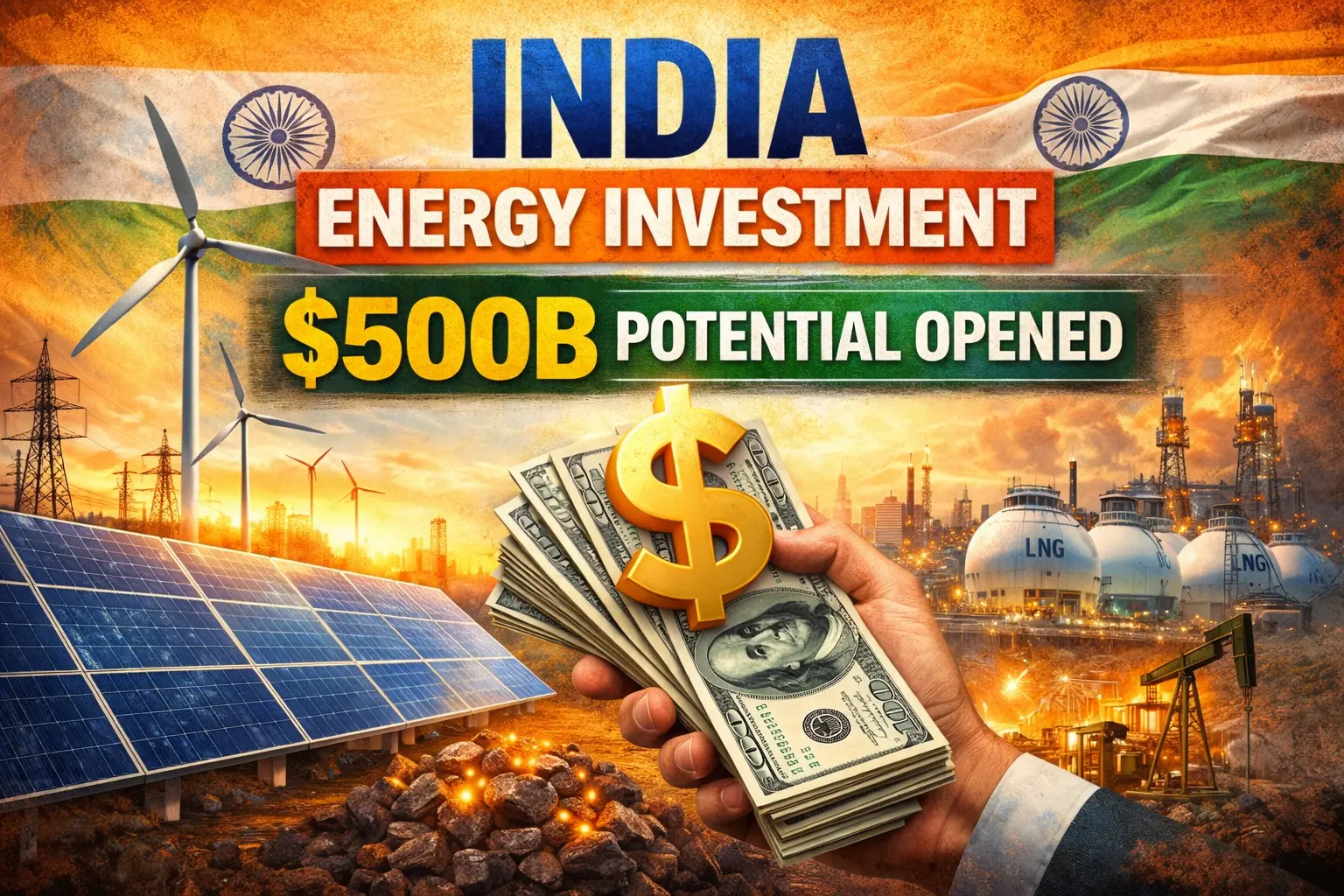
The energy sector of India is at the crossroads, as Prime Minister Narendra Modi indicates that it can invest up to 500 billion dollars to promote the transformation of energy security in the country to complete energy independence. This ambitious proposal was made at India Energy Week 2026 in Goa where Modi challenged the players across the world to make in India, innovate in India, scale with India and give India an investment.
The Vision of Vision 2010 by Modi on energy.
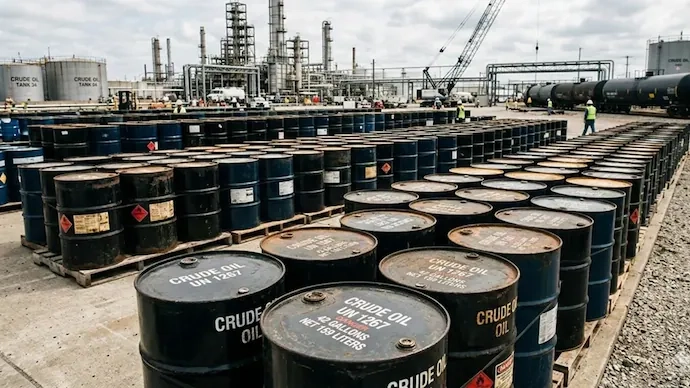
Speaking virtually, Modi emphasised the booming demand for energy in India which is caused by an 8 percent GDP and a population of almost 1.5 billion. Existing refining capacity of 260 million tonnes per annum (MTPA) will increase to 300 MTPA in the near future making India the largest refining hub in the world surpassing China and the US. The oil exploration focuses on 100 billion inflows by the year 2030, with coverage of 1 million sq km, such as the Andaman blocks, and more than 170 of them are already awarded.
The demand for natural gas is skyrocketing as well, and the investments in the LNG value chains such as pipeline, terminals and city gas distribution are open. Modi emphasised the local production of LNG vessels in order to reduce importation expenses. This ecosystem will be an affordable source of exporting refining, combining the needs of the locals with competitive factors all over the world.
Sector-Wise Opportunities
The energy mix in India transforms at a fast rate. Renewables gained 200 GW installed capacity, yet transmission is lagging – it requires 68 billion of its own. Power Minister Manohar Lal estimates generation of 346 billion dollars, storage such as batteries of 35 billion dollars to support 500 GW non-fossil by 2030.
By decade’s end, there is a focus on oil and gas of $100 billion through Deep Water Mission upstream. The scale-up of green hydrogen is through green hydrogen pilots that are prepared in electrolyser manufacturing hubs in Gujarat and Tamil Nadu. EVs require charging infrastructure, which connects to smart grids.
According to the draft policy, the power sector alone has ₹50 lakh crore ($546 billion equivalent) by 2032 with a preference to nuclear small modular reactors as well as solar parks.
Why Investors Eye India Now
Geopolitics is in favour of India: EU free-trade agreement increases technology imports; US alliances reduce Chinese dependency. PLI schemes and other stable policies have 15-20% IRR. Renewable has a high ROE at 16% compared to 10% in Europe.
Risks? Monsoon disturbance, rupee fluctuation–but rupee bonds and green financing counteract. In FY25 energy alone, FDI inflows were already at $15 billion, a 30% increase over the previous year.
Investment Breakdown Table
| Segment | Investment Potential | Timeline | Major Drivers. |
| Optimizing Expansion | 100B+ | By 2030 | 300 MTPA capacity |
| Oil&Gas E&P | 100B | End of a decade | exploration 1M sq km |
| LNG Infra | 50B | 2026-30 | City gas, terminals |
| Power Generation | $346B | 7 years | Renewables, storage |
| Transmission/Distro | $68B | Next decade | Grid modernization |
| Total | $500B+ | 2030+ | Demand growth |
International Environment and Problems.
India is a major user of oil, but a significant importer, accounting for 5 percent of the world’s oil. Self-reliance would reduce yearly expenditures on oil by 150 billion U.S. Saudi Aramco scout refinery JVs: TotalEnergies looks at green H2. There are skill labour shortage issues, NEP 2020 educates 10 lakh workers, and issues with delays in acquiring land.
But the appeal of Modi rings: “Power at the centre of Indian growth. New Adani-US deals of $10B act as an indication.
Road Ahead for Investors
Short term: Bid on OALP-XII rounds, LNG terminal EPCs. Long term: Offshore wind JV in Gujarat, gigafactories of battery. SEZ status sweetens deals, tax holidays. In the case of Bangladesh’s neighbours, power trade is open with cross-border grids.
It is not a hypothetical pie of this $500 billion which is India’s demographic pie combined with the energy hunger. The world capital needs to move quickly to fuel the growth of the third-largest economy.