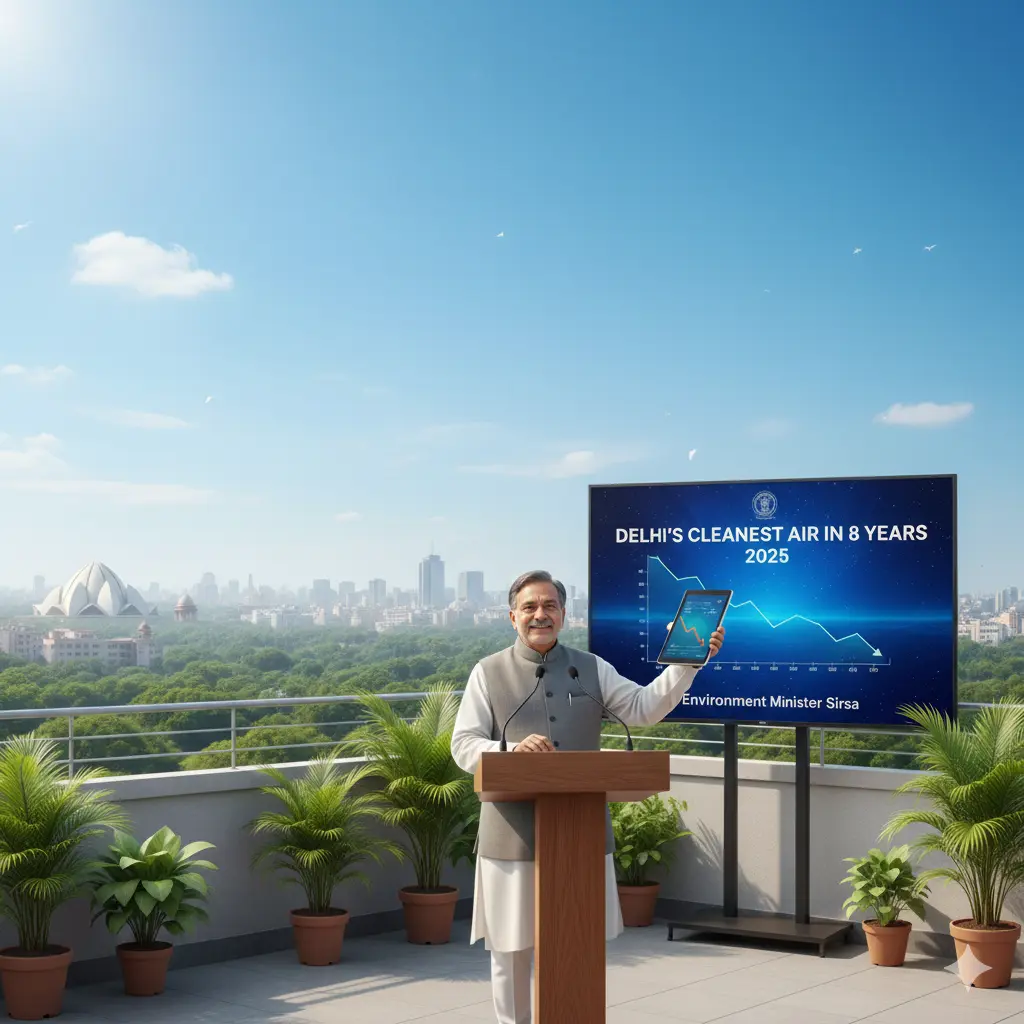
The quality of air in the city of Delhi improved by 2025 years as announced by the Environment Minister Harsh Deep Singh Sirsa on Thursday indicating that it is the cleanest year that the city has seen in the past eight years. The statistics of Air Quality Index (AQI) offered by the Central Pollution Control Board (CPCB) reflected the substantial decrease in the quality of the pollution level, which reflected the outcomes of the ongoing activity of the Delhi government and the presence of the citizens.
According to official statistics, in Delhi, a good and moderate air quality was recorded on 215 days in 2025, the last time such quality could be recorded since 2017. Comparatively, only 160 and 180 suchdays were experienced in 2023 and 2024 respectively. The average AQI was also lowered to under 200, and, though this is an indicator of moderate, it is an important step of the city that has never ceased to be overwhelmed by smog and hazardous air.
During a press conference, Minister Sirsa clarified the change due to a combination of multidimensional contributions towards incorporation of more stringent pollution control, infrastructure upgradations and increased clean energy transition. The Indian government has done everything in its efforts to make the air of Delhi breathable. Other efforts like cutting down the emissions of vehicles to rising the green cover and promoting the use of clean fuels have also contributed to this phenomenal turn around as he said.
The minister referred to some of its flagship projects, including expanding the electric buses, new and stricter industrial emission standards, and dust construction control, the real-time monitoring. Introduction of 50 additional smog towers, renovating the waste management measure, and collaborating with the neighboring states in the regulation of the crop residual burning were also material.
The environmentalists agreed with the government analysis but indicated that the city must not slow the pace because it may revert. This year was a good year as far as weather was concerned and the amount of enforcement had risen too. But in order to maintain this development, there will come the need to work hard, as pointed out by Dr. Anu Mehta, an environmental scientist.
Residents have also been affected by the difference. Many of them reported the existence of clearer skies that were visible and decreased respiratory illnesses compared to the earlier winters. The social network was overwhelmed with the pictures of the colorful sunsets and blue skytops, which is not a usual thing associated with the Delhi air.
Minister Sirsa concluded that the government promise to be pollution free by year 2030 in Delhi was reinstated. He claimed this was just a start of the cleaner healthier and greener Delhi.