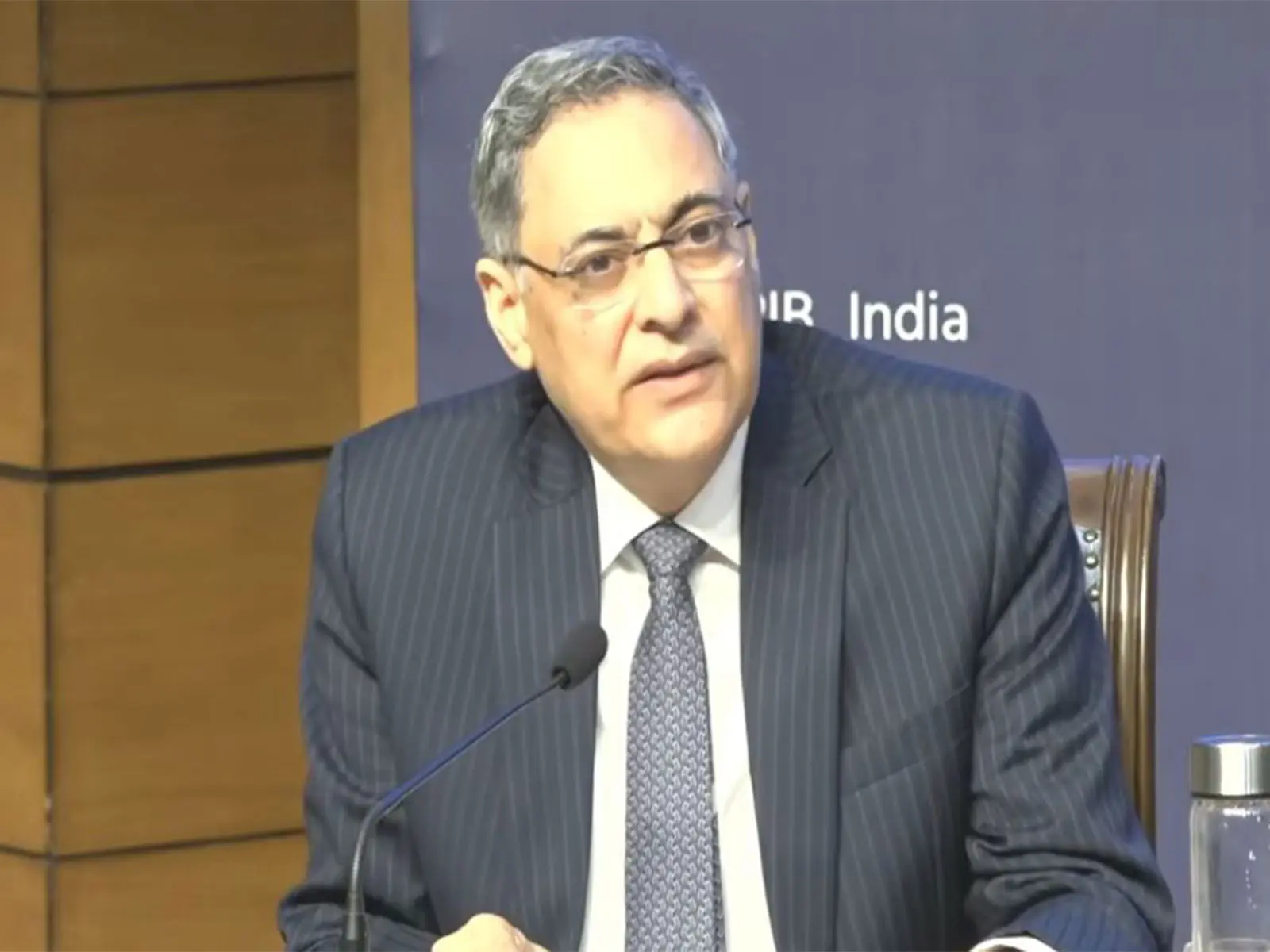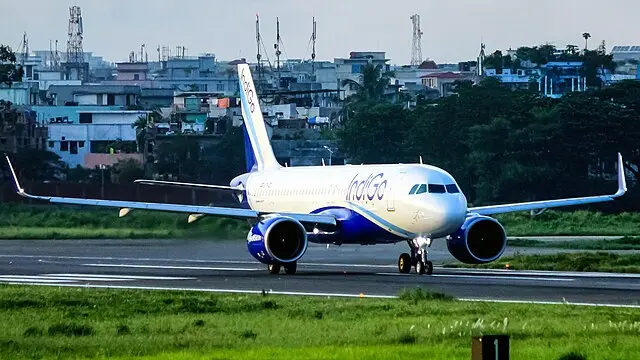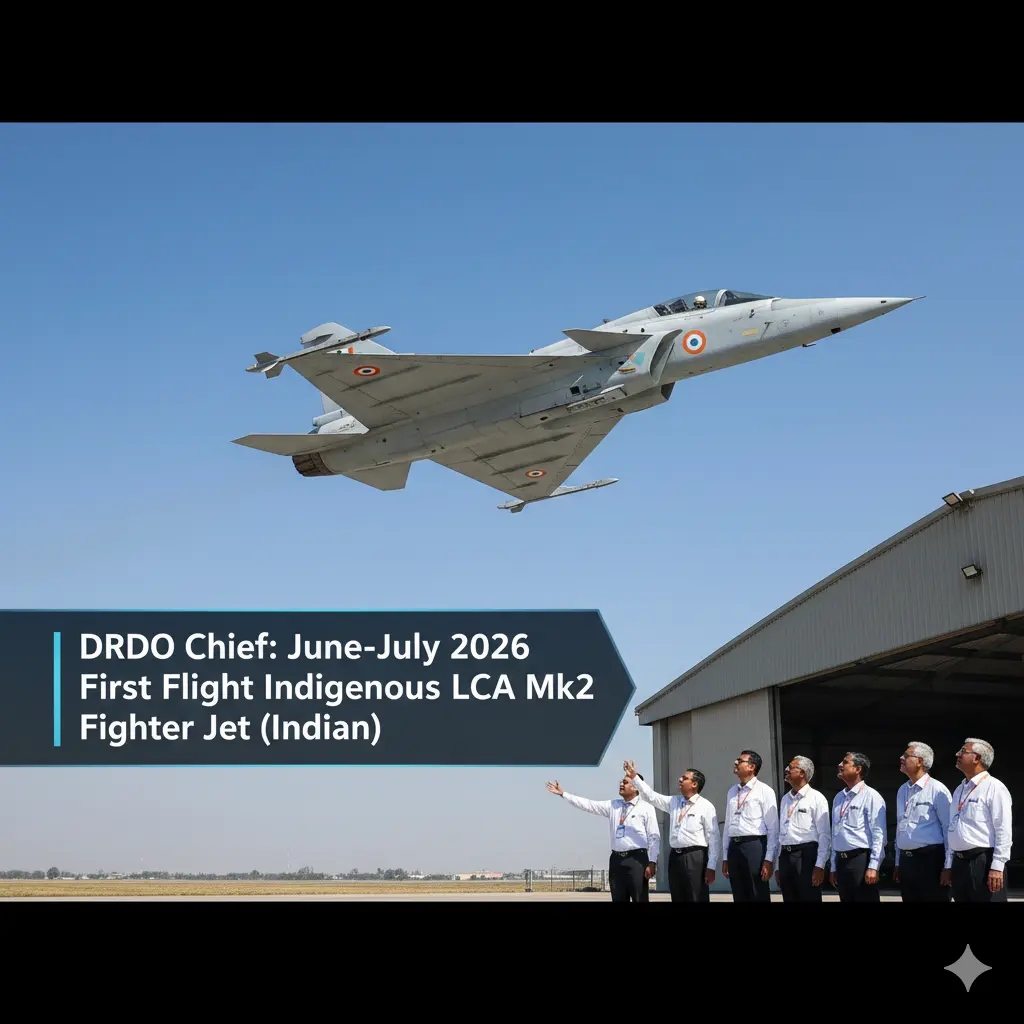
According to the official confirmation of DRDO Chief Dr. Samir V. Kamat, the maiden flight of the Tejas Mk2 Lightweight Combat Aircraft (LCA) in India will be held between June and July 2026, a great deal quickening up the program development timeline. The development of this announcement indicates a fast forward in the Indian struggle towards self-sufficiency in terms of the next-generation fighter jet technology making the 4.5 generation platform a foundation of the future air power of the Indian Air Force (IAF).
Increased Developmental Milestones.
The 10,000 crore prototype development Tejas Mk2 program has already achieved major technical milestones before schedule after being sanctioned in 2023. The first prototype (PT1) fuselage was finished at the HAL Nashik in November 2025 and wing and empennage assembly proceed at Bengaluru. Wind tunnel tests that confirmed canard-delta configuration surpassed previous expectations and proved that it had low radar cross-section (RCS) and supercruise capability to Mach
Both engines are GE F414-INS6 engines, which is a 98kN co-developed version, as noted by Dr. Kamat during Aero India 2026 previews, and the trials at high altitude have been passed in Russia. Vibration testing on the ground and weapon bay integration will start Q1 2026 and taxi trials will start by March. Kamat said that the infusion of the privatized sector was compressing up to 30 months of work over 10 years.
Technical Advantage over the regional competitors.
LCA Mk2 LCA Mk1/Mk1A shortcomings include a larger airframe (14.2m length, 8.5m span), an internal fuel five times greater (3,200kg), and a 6,500kg weapon load in 11 hardpoints. Key features include:
| Function | LCA Mk2 Specs | Competitive Advantage |
| Max speed | Mach 1.8 (Supercruise) | Beats JF-17 Block III |
| Combat Radius | 1,500 km | Equal to Rafale C/D |
| AESA Radar | Uttam GaN (1,000 T/R) | Better than J-10C of China |
| EW Suite | DARE HMS + Jettison Pods | Indigenous over Gripen E |
| Avionics | Triple digital FBW | Net-centric IACCS connected |
The Uttam GaN AESA radar has a range of 200km to detect 4m 2 targets and the integrated EW suite (Dhruti jammer, MAWS) allows it to survive against S-400/PL-15 missiles. BVR armament will will have Astra Mk2 (160km) and ASRAAM by 2028.
Production /IAF Induction Roadmap.
Hindustan Aeronautics Limited (HAL) aims to achieve initial production series (LPS) in 2029, and 16 jets/year by 2032 with Nashik-Bengaluru plants. Indigenous partners, L&T (fuselage), Dynamatic (wings), Tata (composites) contribute 82 percent indigenization, reducing the level of imports compared to Su-30MKI.
IAF’s 18-squadron plan includes:
- 120 Mk2 jets (8 squadrons) by 2035
- 210 overall and with Mk2A variant (Astra Mk3, DRAL integration)
- Induction of Bridge to AMCA stealth fighter.
The cost-per-unit unit decreases to 350 crore as compared to Rafale 1600 crore with a 40 years life cycle saving of 2 lakh crore.
Strategic Situ in the Conditions of Regional Tensions.
The ambitions of J-35/J-20 by China in the LAC and the J-31 by Pakistan requires the urgency of Mk2. Mk2 (85 percent local content) uses the synergy between DRDO and HAL-PSU unlike Tejas Mk1A (73 percent indigenous). Export potential Vietnam, Philippine, Armenia less than 50 billion defense pipeline.
Difficulties and Risk aversion.
The validation of flight control software is important, and by May 2026 the iron bird rig tests should give a simulation of 10, 000 flight hours. GE engine supply chain risks were addressed through co-production clause which requires 80 percent local production by 2028. The SWiFT tech demonstrator by DRDO confirmed fly-by-wire autonomy which de-risked first flight.
Kamat pointed out: June-July 2026 is not inspirational, it is written with hard outcomes. Kiran jet engines runs in case of weather delays are covered under contingency.
Aerospace Triumph of Aerospace by Atmanirbhar Bharat.
With 25,000 high-skill jobs, tejas Mk2 will be Make in India 2.0, and an AMCA/DECA ecosystem. The program shortens traditional schedules by half, i.e. paper sketches (2010) to flight-ready prototype (2026), by implementing iDEX startups and MSME integration.
When DRDO closes the June-July window, LCA Mk2 becomes a reality, once again asserting the aerospace revival in India. Successful first flight will stimulate 48,000 crore serial production contract, establishing the 5th-gen route of IAF and threatening global duopoly of light fighters.