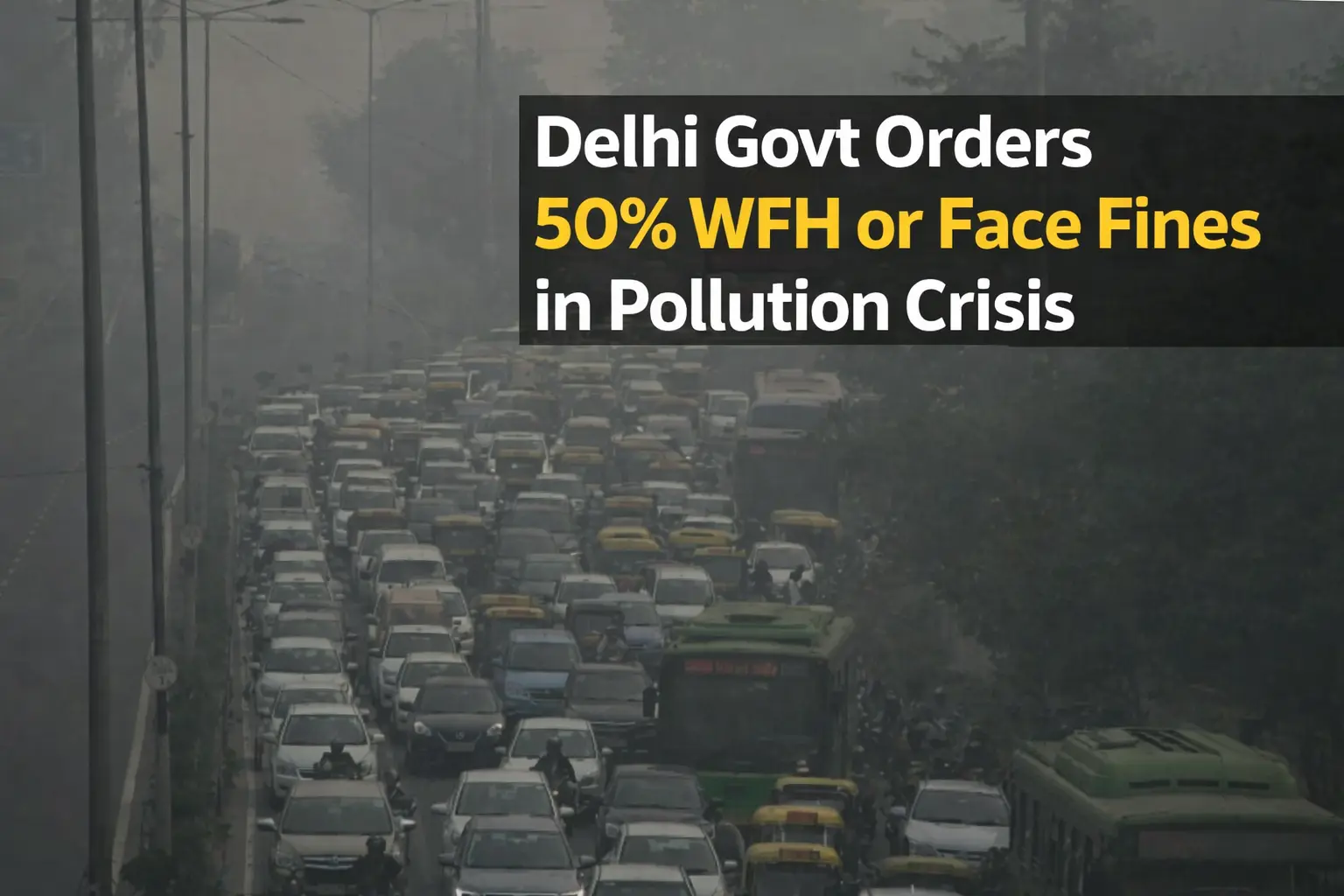
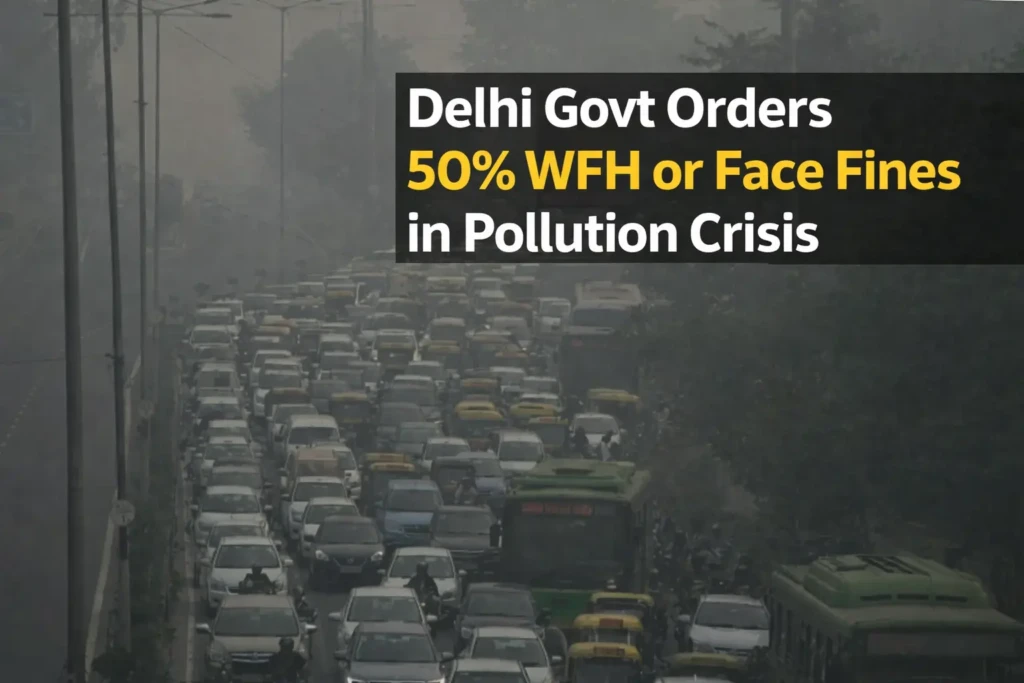
In an effort to use a harsh approach in addressing the growing menace of air pollution in the national capital, the Delhi government has placed a strict requirement that all offices adopt 50% working-from-home (WFH) as mandatory to its employees. Failure to comply will be met with hefty penalties and even closure of premises, which means that there will be no tolerance in this regard, as a health emergency.
Mandate Information and Implementation.
According to the latest Graded Response Action Plan (GRAP) Stage III, when Air Quality Index (AQI) rates are above 350, every private establishment will have to guarantee at least half of its staff works remotely starting right now. Government offices are already fully occupied to 50 per cent and only necessary personnel may attend physically. Delhi Disaster Management Authority (DDMA) will perform random checks and charge a penalty of up to 2 lakh rupees in case of violation.
This is in addition to Supreme Court dictates that call on states in the NCR to act in concert. Exemptions are given to essential provision of services such as healthcare, deliveries via e-commerce and manufacturing facilities with pollution controls but even they are to favour WFH where possible. The order will reduce vehicular emissions that cause 30-40% of vehicular emissions in Delhi.
Pollution Crisis Context
The AQI in Delhi has been reported to be ranging between 350-450 days on end due to stubble burning in other states, low wind, and winter inversion that traps the toxins. According to hospitals, the cases of respiratory illness have increased significantly and children and elderly are the most exposed to more than 1,000 cases per day that are attributed to bad air. The requirement repeats 2023-24 requirements but increases enforcement following criticisms of non-enforcement in the recent past.
GRAP III also prohibits inter-state buses, and limits Bs-III petrol and Bs-IV diesel cars, and hybrid learning in schools is mandatory. The government refers to the statistics according to which WFH decreased peak-hour traffic by 25% during previous rounds, which directly positively influenced air quality.
Challenges and Reactions
The employers encounter logistic challenges in monitoring WFH compliance, which has led to requests of online reporting through a portal. Commuters embrace a smaller congestion volume on the roads but fear decreased productivity. AAP leaders justify the action as life-saving, claiming that farm fires are caused by Haryana and Punjab, whereas the opposition wants the central government to intervene to make permanent solutions such as cleaner fuels.
Environmentalists advocate long-term measures outside of winters, such as EV subsidies, and city greenery. As AQI prediction deteriorates, the people of Delhi prepare to be limited even more, which highlights the yearly campaign against harmful air.