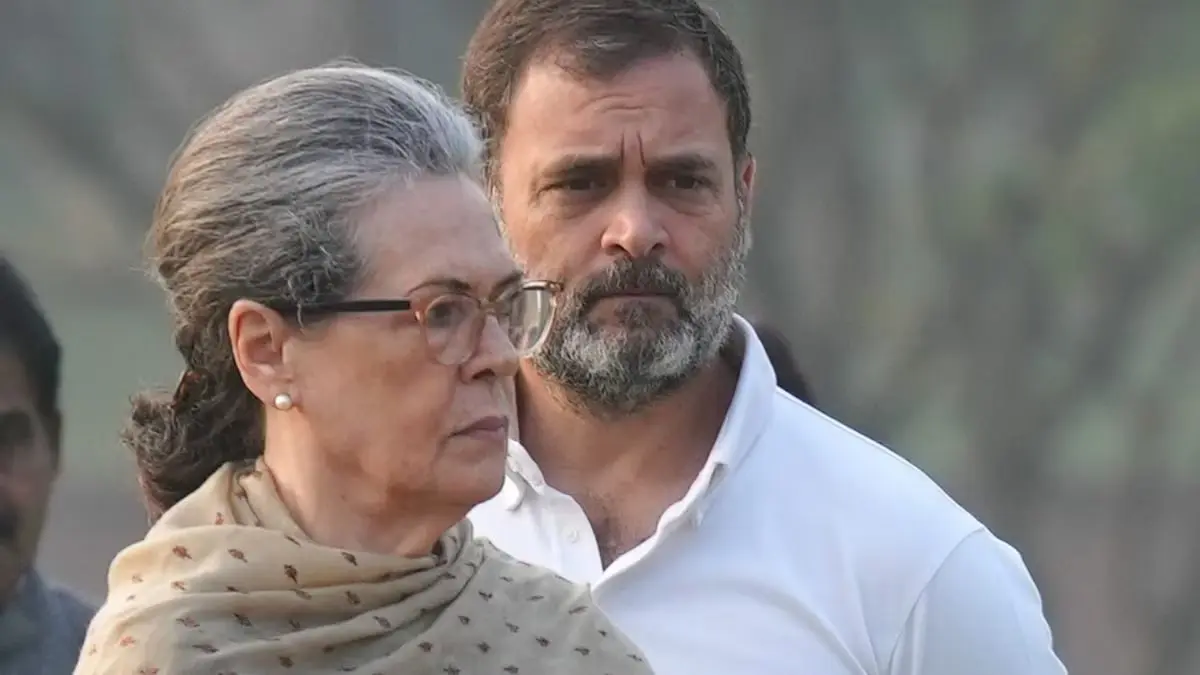
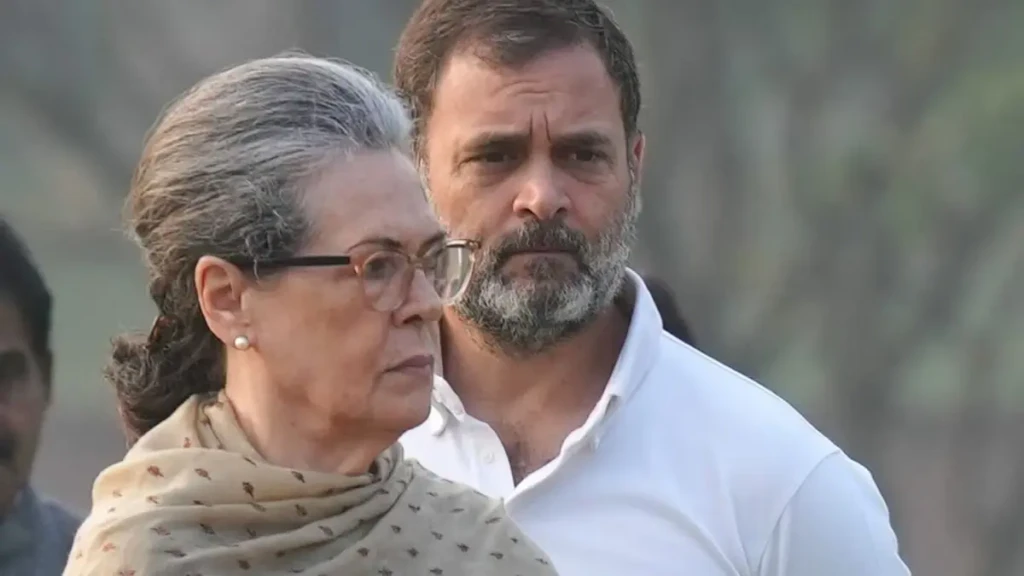
The temporary relief granted to sonia Gandhi and Rahul Gandhi by a Delhi court through denying cognisance to the prosecution complaint filed by Enforcement Directorate (ED) against them in the National Herald money laundering case was quite substantial. The order has put the criminal proceedings based on Prevention of Money Laundering Act (PMLA) on hold at the initial level, but the larger investigation on the charges remains open.
What the court decided
The Delhi Rouse Avenue court ruled that the prosecution complaint of the ED under PMLA was not maintainable since it was not based on a formal First Information Report (FIR) in the predicate-offence, but on a private complaint filed by the BJP leader Subramanian Swamy. A money laundering case under PMLA has to typically be based on a scheduled offence which is documented by a FIR or charge sheet; the court believed that this very important legal condition was not present in the complaint filed by ED at this point.
This judge thus refused to assume the cognisance of the charge sheet brought by the ED, which implies that the court avoided going to the next phase of summoning Sonia Gandhi, Rahul Gandhi and other accused as PMLA-accused on this basis. This has been termed as a strong procedural reprieve in the short term since it halts the PMLA prosecution progressing to trial in the short run.
Why this is called “relief”
The political observers and experts in law consider the order as a blow to the ED, as without a valid FIR that forms the beginning, the money laundering prosecution lacks a solid legal foundation. To the Gandhis and the rest who have been charged, refusal of cognisance implies that they will not be summoned, charged, and tried, in this specific PMLA case at this moment in time.
The relief is, however, not an acquittal on merits. It has been pointed out by the courts reports that the court has not looked at the alleged transactions being money laundering; they have simply decided that the current complaint cannot be maintained in court without the proper underlying FIR. This order is thus being described as being temporary or procedural relief rather than a final clean chit in the wider National Herald scandal.
Background of the National Herald case.
The case of National Herald can be traced to the fact that the Gandhis and others plotted to acquire the control of Associated Journals Limited (AJL), the firm that published the now-closed National Herald newspaper, and acquire its valuable properties at a fraction of the market value. A grievance filed by former BJP MP Subramanian Swamy, claimed that a Congress loan to AJL was converted into equity and sold to Young Indian, a corporation tied to the Gandhis, and therefore made them effectively own properties worth hundreds or possibly even thousands of crores.
These allegations formed the foundation of the money laundering case that the ED submitted by stating that the funds and rental earnings that were present were proceeds of crime under PMLA. Over the years, Sonia Gandhi and Rahul Gandhi had been questioned by the ED and prosecuted in a parallel case as a private complaint, in which they were acquitted to be on bail, but not yet declared innocent.
Place of the EOW FIR and the way forward.
One important aspect of the court argument is that there was a separate FIR filed by the Economic Offences Wing (EDW) of the Delhi Police on which there was alleged cheating, misappropriation and criminal breach of trust in the National Herald dealings. The court noted that the EOW FIR is in existence and is still being investigated and therefore it would be premature and unwise to further the EDs prosecution complaint out of a private one in the first place.
Simultaneously, the court has made it clear that the ED is under no obligation to stop investigating and can use the EOW FIR in case it wants to construct a new, legally sound PMLA case. The agency has stated that it can either appeal the order or seek other legal avenues and this implies that the legal struggle of the Gandhis over the issues of the National Herald may not end this time.
The political implications of the order.
To the Congress, the decision has been a significant boost, with party leaders glorifying it as the confirmation of their position that the National Herald case was a politically motivated one that lacked legal basis. The party has pointed out the focus of the court on due process by claiming that the investigative agencies cannot skip the normal legal protections even on high profile cases.
Conversely, the ruling side leaders have emphasized that the relief is temporary and strictly procedural and that there are still serious issues of concern with the form of the Young Indian-AJL deal and the application of congress funds. However, in the months ahead, the subject matter of the attention will shift to the progress of the EOW probe and whether the ED files any new action on the basis of that FIR that will spell out the next phase of the National Herald case and how it will affect the Gandhis.