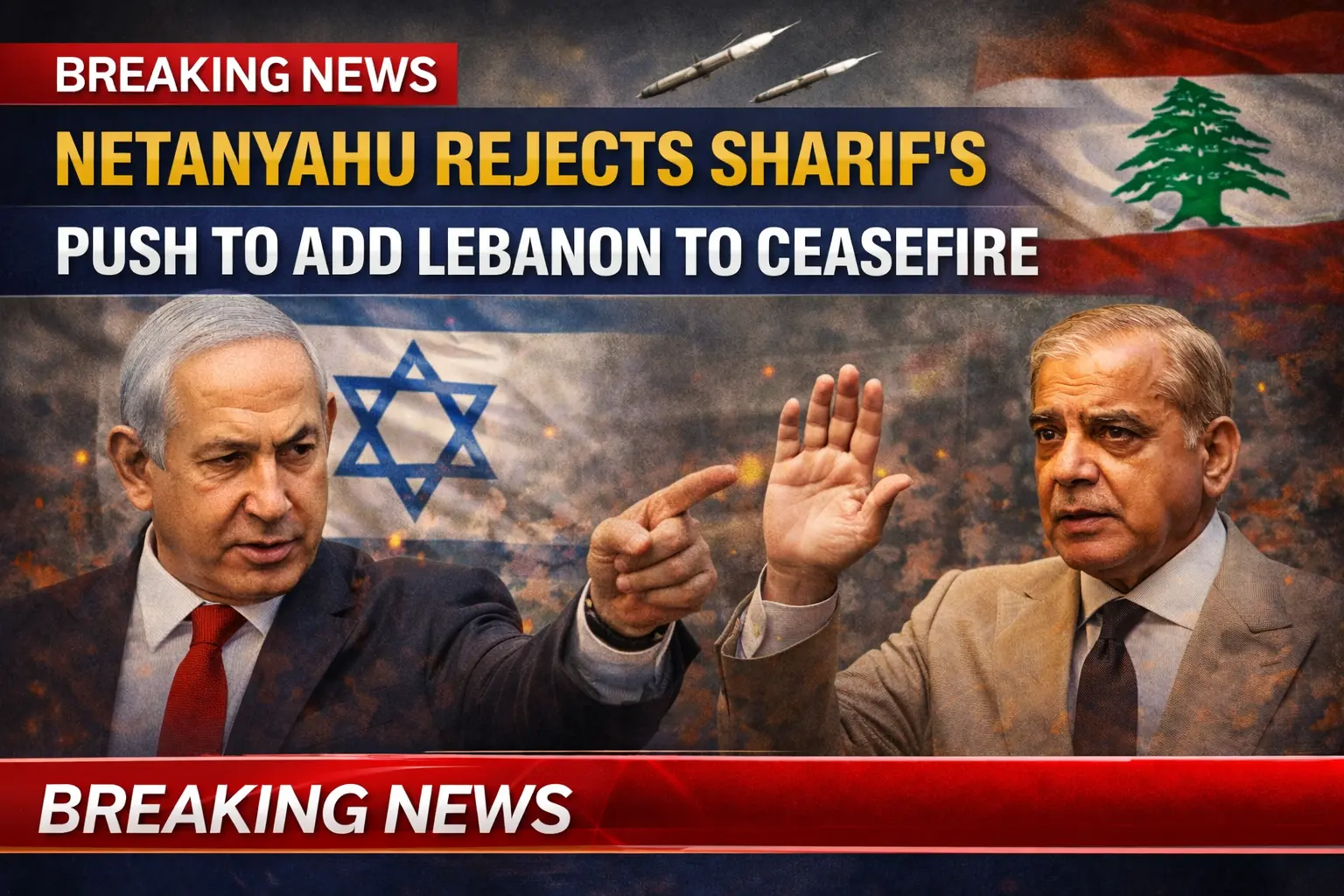
It started when Benjamin Netanyahu pushed back hard on comments from Pakistan’s Shehban Sharif. Not Lebanon, he stressed – that country has nothing to do with any possible U.S.-Iran truce plans taking shape behind closed doors. His words clipped, standing in front of officials, Netanyahu dismissed chatter about a wide halt to combat, chatter set off by Sharif’s optimistic post shared across platforms. He turned attention further down, past the Litani River, where fighters linked to Hezbollah continue clashing under constant push from Israeli troops. The air felt heavy in Jerusalem shortly after Donald Trump’s mentioned time limit came and went without strikes breaking out. Fresh warnings came from Iran’s Revolutionary Guard about movement through Hormuz water routes. Rail networks carried messages into Iran, sent by Israel, aimed at everyday citizens.
Why the Diplomatic Tension Started
Early in April, Sharif pointed to small shifts brought by Pakistan’s low-key contacts with Egypt and Turkey, tying progress on Iran, Lebanon, and Yemen to a short truce lasting six weeks, per Axios sources. Quiet steps surfaced behind the scenes about reviving access to Hormuz while slowing nuclear efforts, pulling Islamabad into sharper focus. Yet Netanyahu pushed back without delay – under his terms, Lebanon cannot join unless Hezbollah stops gathering firepower. That position took shape in actions rather than words: fresh airstrikes hit zones close to Beirut and along the coast at Tyre, targeting flows of weapons from Iran via Syria.
Far from straightforward, this divide began in February. After American and Israeli attacks on Natanz and Fordow, Iran responded forcefully. Following that, Trump extended the timeline. Backed by Pakistan’s ties to Shias and its interests in the Gulf, Sharif cast a broad net. The ripple started there. Still, Jerusalem pushes for barriers when trouble comes. Not at the same time, Hezbollah keeps 150,000 rockets ready – this issue links only to Resolution 1701.
Netanyahu Holds Position on Lebanon
Up north, safety shapes Netanyahu’s moves. When pagers blew up and soldiers crossed in 2024, Israel seized a ten-kilometer zone beneath the Litani River. Total disarmament must happen before calm returns, he said plainly, after violence claimed twelve hundred on one side, five hundred on the opposite. Back home, tension grows; letting go of Gallant aimed to signal strength. Intelligence hints Pakistan shares silent links with Tehran – though Islamabad denies it completely.
Out of sight, Washington backs Israel getting special treatment. Talks about Lebanon get called a situation between two countries by the State Department. When deadlines passed, Trump said “Deals cooking,” hinting at hidden slowdowns. Right then, envoy Witkoff reached out through messages to Iran’s Araghchi.
Sharifs Push Too Far And Face Consequences
Out of nowhere, Shehbaz sped up efforts to strengthen ties overseas right after smoothing relations between Iran and Saudi Arabia. Pressure had been rising – the IMF stood still, while trouble flared in Balochistan, making things feel off balance within the country. Then came loud backlash, pushing the cabinet into a sudden shift in direction. From her angle, Maryam Nawaz blamed rigid stances shaped by loyalty to Zionist ideals. Out by the coast, tempers grew sharper while Gwadar jostled with Chabahar for control. If trouble flares close to Hormuz, a flood of cash wired home by workers might stall without warning.
Something stirs among Gulf allies as oil nears 115. When Islamabad upset Cairo, nerves tightened; Turkey adjusted without fanfare. India says nothing, yet gains softly – Chabahar now lets them walk through gates once locked by enemies.
Multiple Conflicts and Peace Expectations
A sudden tilt could come from Hormuz if Iran’s Hajizadeh sticks to his new line. With support, forces like the Houthis along with Hezbollah test how far they can stretch defenses. The initial truce stands – only so long as traffic in the channel remains tight and energy routes untouched. Yet it trembles, lacking word from Beirut. Talks emerge behind closed doors in Oman even as Doha fades out.
Now smoke curls into the sky as words fail again. Even after pledges, faith still leaks out slowly. From up north, a fire gains strength each passing minute. With rising weight, one side will have to give way. Word hasn’t come from Washington yet. Perhaps quiet says more than noise these days. When borders shift, past agreements lose their grip. Stuck in place, what was bright turns stale. Dust piles up right where belief once stood.