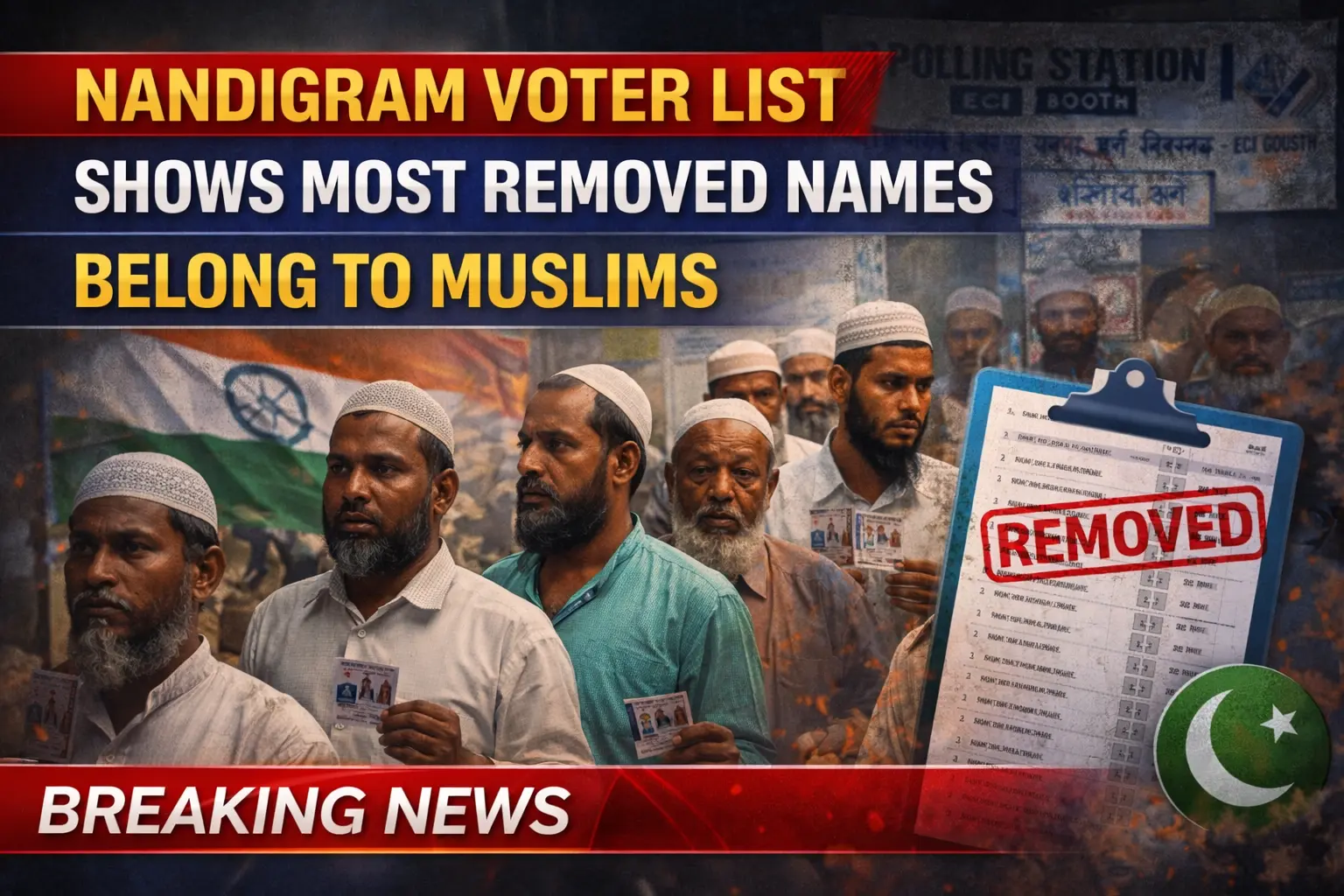
In Nandigram, where anger once flared over land fights linked to industry plans, a new dispute stirs ahead of national voting. Hidden inside an updated register for South Nandigram Industrial Region sits a missing piece – more than twelve thousand voters wiped out. Most affected? Nine out of every ten are Muslim, a key group shaping votes here. With elections closing in, suspicion rises fast. Accusations fly loud: BJP claims targeted removals aimed at Muslims; TMC says nothing more than standard corrections. Still lingers one hard question – how come nearly all erased names tilt so heavily in a spot won by Adhir Ranjan Chowdhury by just a thread last time?
The Supplementary List Surprise
Out of nowhere, the Election Commission put out its draft voter list on March 15, 2026, just before redrawing district lines began again. In Nandigram, nearly 13 thousand names vanished from the rolls – most being Muslim, about 12,205, which makes up over ninety-five percent, according to figures pulled by the BJP’s tech team from official election sites. These changes hit hardest in pockets like Sonachura, Kamalpur, and Simulberia – areas where Muslim families made up seven to eight and a half tenths of the population back in 2011. Reasons given? People moved away, duplicate records, or listed as deceased; yet locals whisper of pressure, fear, forced sign-offs. Clusters of polling stations show sharp drops, raising quiet questions beneath the surface noise.
Razia Bibi turns seventy eight. She lives in Bhekutia, seen walking near her home last Tuesday. Her name appears tagged as dead in voter records though. That entry came from a list pushed during aid handouts. A local lawmaker pointed fingers at ruling party workers – accusing them of using mismatched IDs to cut names. His brother, now serving as MP, stood beside him when they spoke about it. More than three thousand people filed complaints before April fifth. The office in Nandigram received every appeal. Officials begin checking claims on April tenth. Doubts spread faster than updates do.
Nandigram’s past turns up the heat. Back in 2007, unrest over a factory zone left fourteen dead, cracked the ruling party wide open, then cleared space for Mamata’s wave five years later. By 2021, Suvendu unseated a relative of Abhishek Banerjee – just barely, by under two thousand votes. Muslim voters, making almost half the area’s population, tipped things toward TMC; come 2024, that edge shrank to around six thousand. A fresh push to redraw boundaries promises more jobs, though some changes bend how people see who really lives here.
TMC Defends While BJP Attacks
Not one TMC leader seems worried. Cleaning up the rolls again, they say – it clears fake entries left behind since 2021. Officials in Purba Medinipur point across the open frontier near Bangladesh, just twenty kilometers off, whispering about Rohingya moving through. Most names struck off only began vanishing after 2018, right when talk of national registries heated up. Then comes a message from Abhishek: silence from election authorities while fear against Muslims grows louder under BJP rule
On April sixth, Adhikari took to the streets while the BJP fired back with RTI findings showing no house-to-house counts before drafting names. A legal complaint followed, filed at the Calcutta High Court citing disregard for procedure. Meanwhile, RSS gatherings began spreading through neighborhoods, echoing a call to guard both ballot and region. From the Minority Morcha came half a thousand sworn statements – many women said food supplies were held back if they appeared on what was called a pro-BJP roll.
Not just legal silence – this ECI matter stays under wraps, yet watchers spot warning signs. Back in 2019, Surat saw nearly nineteen thousand names vanish, a bulk of them Muslim voters – an event that later triggered Supreme Court intervention. Fast forward now: an industrial zone tied to petrochemicals pulls in Adani interest. Flawless voter rolls? They make it easier to shift people off land without pushback.
Ground Realities Fear and Forms
Down narrow palm-leaf lanes of Sonachura, fear hums low. Fatema Bi, fifty-two, grips a wrinkled Form 7 tight. “My husband passed in twenty-twenty, yet they pulled me off the list – how do I feed my children now?” Near tea stalls, voices rise – not just worry, but sharp anger too. Some say, “I voted TMC, still vanished without trace.” BJP teams hand out help with papers, stamping services. Rivals answer back with gatherings where belonging is measured loud
Getting ready for Census 2031 stirs trouble – Aadhaar links hit 92%, but fake entries still show up. Still, removals far outnumber actual deaths, which should be around 800. Observers now watch for booth capturing 2.0: clean out opponents, pack in supporters. The Calcutta High Court meets on April 12; a public case asks for a pause, complete review.
Political Chessboard 2026 Stakes
Looking ahead to 2026, Nandigram watches closely. Suvendu aims high, though whispers of being an outsider still follow him around. In villages, Muslim support holds strong after CAA fallout – yet voter list changes could shift things fast. Should the Election Commission act firmly, BJP hopes for a 35 percent lift. From across India, eyes turn to Bengal – could its path shape what comes in 2029?
A whisper moves through towns – the AITUC alongside SUCI now demand answers. Silence on screens? Newspapers nearby kill reports of rising waters. With voices stacking up, tension breathes in Nandigram – eyes land on 2027’s vote trial.
Twelve thousand shadows linger where trust should grow. Could ECI mend what anger has split apart? Rebellion once burned in Nandigram – today, its people eye the ballot with doubt. Unanswered riddles sit heavy on election day. When votes are cast, will they heal – or widen the crack?