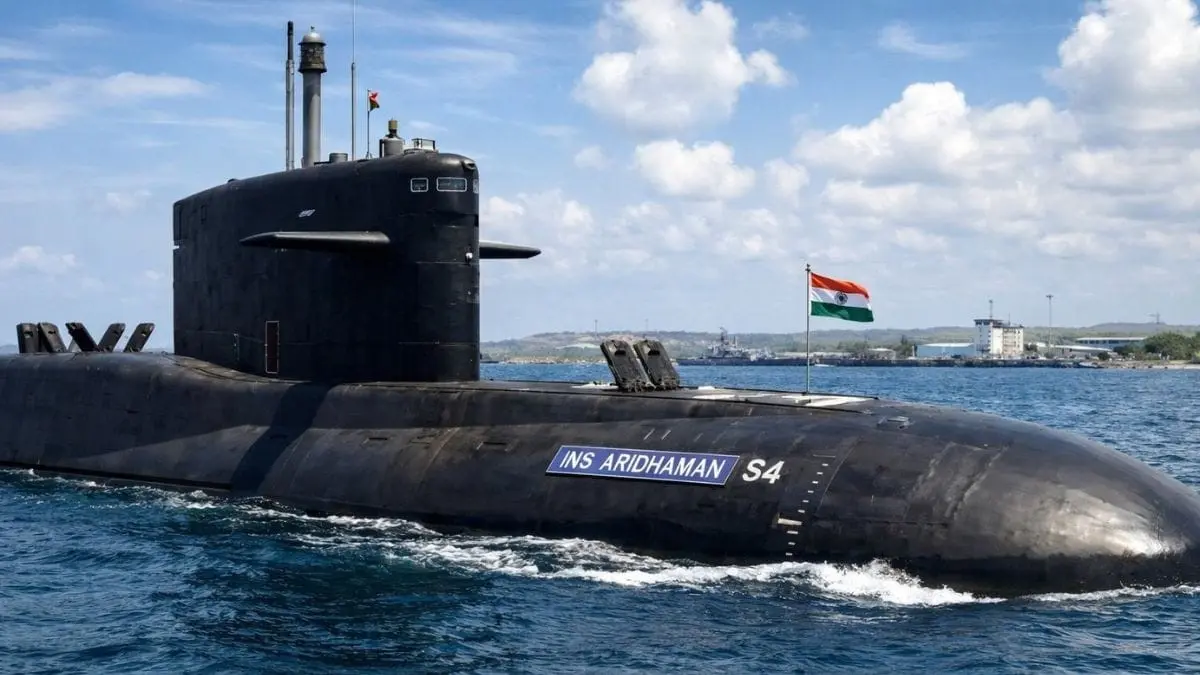
The Indian Navy on Friday commissioned its third nuclear-powered ballistic missile submarine (SSBN) INS Aridhaman, along with the stealth frigate INS Taragiri at Visakhapatnam. The induction of INS Aridhaman follows the same pattern as earlier Arihant-class submarines—INS Arihant (2016) and INS Arighaat (2024). The Defence Minister of India, Rajnath Singh confirmed the commissioning of the vessel in a cryptic post on social media. He wrote: “Shabd nahin, Shakti hai; Aridhaman.” The SSBNs were designed and manufactured under the super-secretive Advanced Technology Vessel programme. The induction of INS Aridhaman is significant for India as it strengthens the country’s sea-based nuclear deterrence, a crucial component in India’s strategic defence capability.
India is among the selected group of countries to have indigenously developed SSBNs; others include the USA, Russia, the UK, France and China. A fourth SSBN known as S* is currently undergoing trials. Rajnath Singh, Navy Chief Admiral Dinesh Tripathi, Chief of Defence Staff Gen Anil Chauhan, DRDO chief Samir Kamat were present at the commissioning of the Indian Navy’s latest stealth frigate INS Taragiri and an event to lay the foundation stone of the Large Cavitation Tunnel at DRDO’s Naval Science and Technological Laboratory in Visakhapatnam.
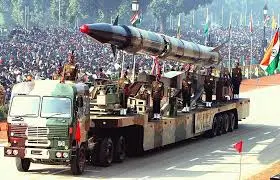
INS Aridhaman is India’s most potent platform with a high degree of indigenous content. It is armed with eight K4 submarine-launched ballistic missiles, each having a range of 3,500 km and carrying a nuclear warhead. It is designed to carry a greater number of long-range nuclear-tipped missiles compared to its predecessors—INS Arihant (commissioned in 2016) and INS Arighaat (2024). The induction of Aridhaman has further consolidated India’s nuclear triad i.e. the capability to launch nuclear weapons from land, air and sea.
- Land-based systems: Agni series missiles
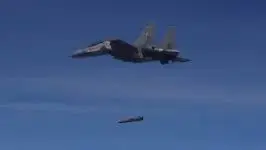
- Air-based systems: Fighter aircraft like Rafale, Su-30MKI, and Mirage 2000
- Sea-based systems: INS Aridhaman
INS Aridhaman is a 7,000 tonne nuclear-powered submarine equipped with eight vertical launch tubes, nearly double that of predecessors. It can carry a large number of nuclear capable missiles. The submarine can deploy K-15 SLBMs with a range of over 700 km and K-4 SLBMs with a range of around 3,500 km. With the deployment of another SSBN vessel, India is strengthening its military capability.