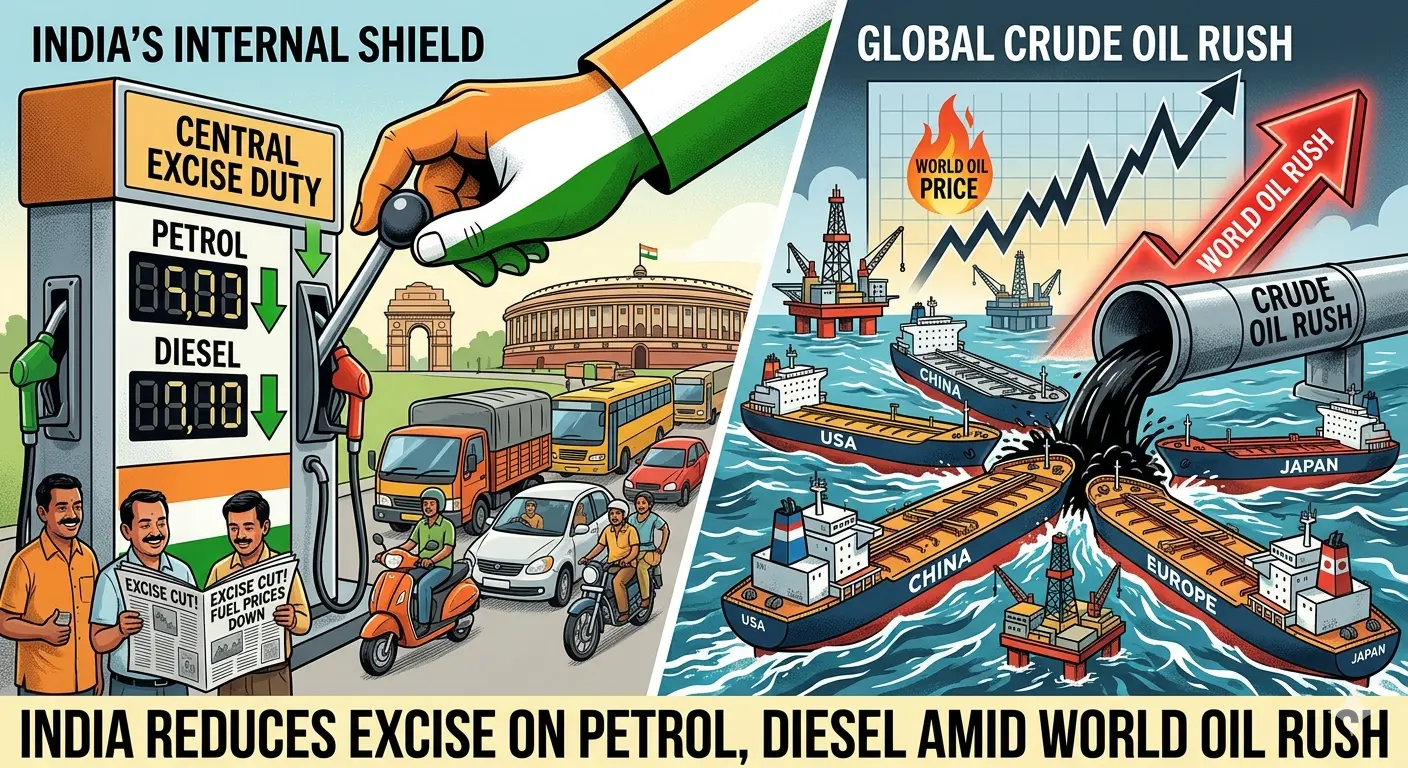
The Indian government has reduced excise duty on petrol and diesel in a drastic action to protect the consumers against the high fuel prices. The decision, announced on March 27, 2026, is made when world crude oil benchmarks such as Brent and WTI are going near 90 per barrel as a result of increasing geopolitical conflicts in the Middle East and continuous major economy demands.
The minister of finance Nirmala Sitharaman announced the reductions in an evening press conference in New Delhi. Excise on petrol is reduced by 5 litres per litre whereas on diesel, it is reduced by 7 litres per litre. This comes after a similar relief package in 2022, but at a very critical juncture as inflation is on the rise and the Lok Sabha elections are only seven years away in 2029. Sitharaman said in a statement that these measures will alleviate household pressures and enhance the economic impetus, but that the government remains determined to be in control of its fiscal policy in the wake of unstable energy prices.
It could not be any more urgent in time. The current war of Russia against Ukraine and Houthi interference with the Red Sea has escalated oil imports that form the bloodline of India, 85 percent of which forms all its imports. The fact that the rupee has weakened against the dollar has added to the agony in the pumps, where petrol in Delhi already costs over 105 per litre and diesel well over 95. After surgery, analysts say that retail prices would drop by 4-6 litres per a day depending on the changes in state taxation. Indian oil marketing companies such as Indian oil and BPCL are preparing on direct action.
This cut in the excise is not just an exercise in populism, but a stabilizing economic move. The petroleum industry in India is providing more than 10 percent of the GDP supporting transport, agriculture, and manufacturing. Inflation has been driven by high fuel prices that have eaten away farm profitability and increased demands on urban commuters. The shift would save the consumers an estimated 25,000 crore every year, which will put spending power in the hands of consumers and help RBI to meet its inflation target of 4-6 percent.
Yet, challenges persist. As global oil is probably not going down in the near future, notwithstanding the quotas of OPEC+, fiscal hawks fear the lack of revenues. Excise duties contributed 3.7 lakh crore in the previous financial year; this reduction could hurt it by 5-7 percent. The opponents with the criticism of the same have celebrated it as being welcome but long overdue, pushing states controlled by BJP allies to also reduce VAT.
The RBI Governor of the previous administration, Raghuram Rajan, is a proponent of the targeted intervention, making comparisons with post-COVID stimuli. It is a balancing shock; relief and macro stability, Rajan announced through twitter. In the meantime, the industry associations like FICCI forecast a ripple effect: the reduced logistics rates would take 0.5% off the food inflation and would spur automobile sales.
In the middle of this energy storm, India is facing the responsibility cut, and such responsibility cut is an imperative of a shift back toward people and not coffers. Will states follow suit? And is it sustainable in case oil goes beyond $100? Until the moment it is a much needed respirator in pump-line India.