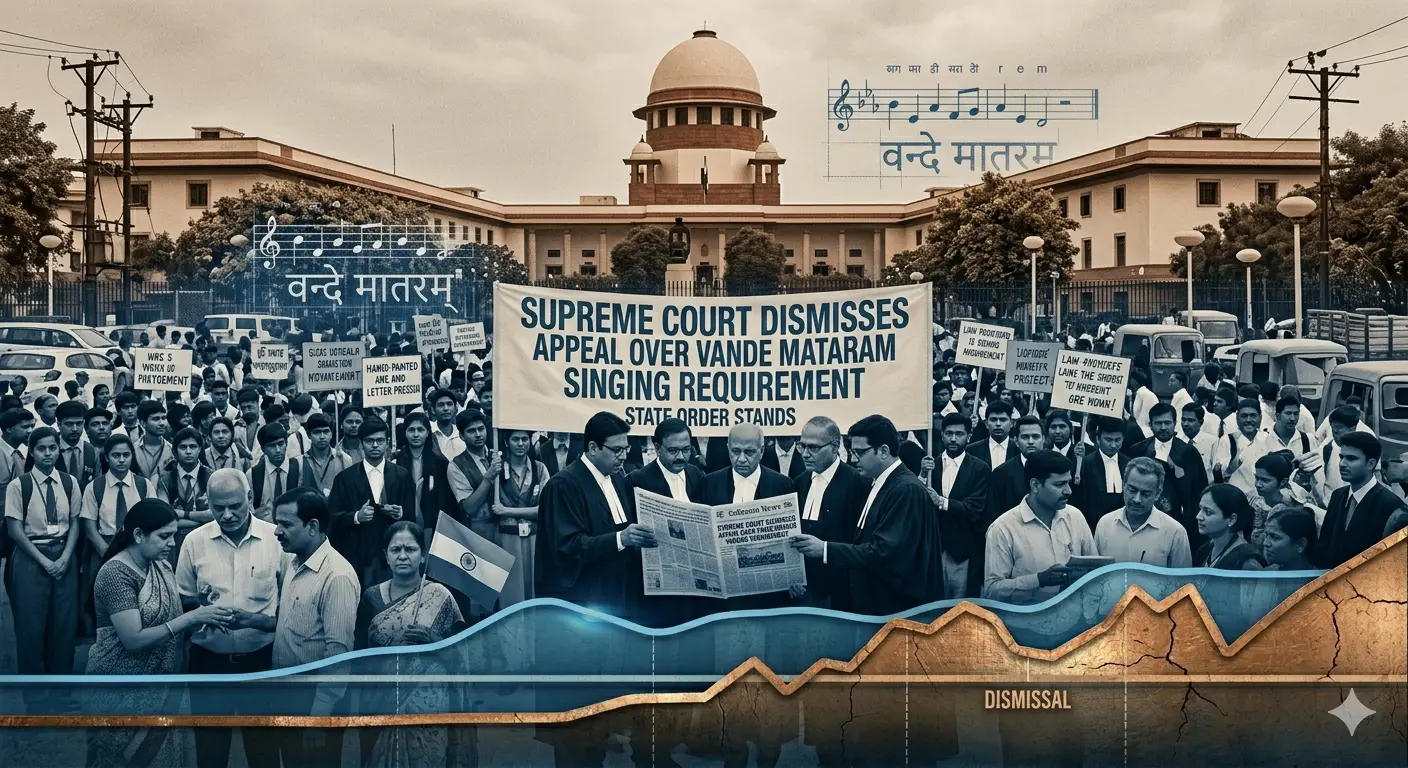
On March 25, 2026, India’s top court turned down a request questioning the home ministry’s guidance about Vande Mataram. Singing it is not required by law, judges made clear. The ruling stressed personal choice in showing loyalty to the nation. No punishment applies if someone stays silent during the song. Forced displays of patriotism drew little support from the justices. Tension had built up over whether participation was mandatory. Now, individuals may decide without fear of consequence. Officials will not penalize those who do not join in. This moment marked a shift toward honoring freedom within expression. Choice matters more than obligation when it comes to national symbols
Background Of The Dispute
A sudden uproar began after a notice from the Ministry of Home Affairs pushed for singing Vande Mataram during official gatherings, school programs, or community events. Yet Asaduddin Owaisi, leading AIMIM, stepped forward questioning that move – his point? It clashed with freedom of expression under Article 19(1)(a), dragging up old arguments from before India became independent about what role such songs should hold.
Starting off, Owaisi’s legal team pointed to how Vande Mataram was turned down in 1950 by the Constituent Assembly – its roots tied to a Hindu-themed novel by Bankim Chandra Chatterjee called Anandamath. Because of that link, they argued it carried religious tones unfit for a secular symbol. Moving on, the directive might push minority groups into uncomfortable positions. This pressure could breach Article 15, which guards against unequal treatment. The concern sits not just in intent but in real-world effect
Still, the ministry called it tradition, nothing more. From that point on, penalties like fines or dismissals never came up – unlike what happened sometimes with the national anthem, confirmed by a 1986 ruling in Bijoe Emmanuel against Kerala. Tushar Mehta, appearing for the government, made clear: zero enforcement followed. After all, symbols can carry weight without becoming rules. That case long ago set boundaries none have erased since.
Court’s Key Observations
A voice from the bench, headed by Justice Sanjiv Khanna, shut down the petition after pointing out that skipping Vande Mataram carries no punishment – singing it stays a personal choice. With calm words, the judges remarked how the order floated an idea without legal weight behind it.
From time to time, a quiet moment reveals more than noise ever could. One such instance came when Justice Khanna turned to an old document – the 2009 findings of Justice Verma’s panel – where a modest suggestion lived: let Vande Mataram play, but never force it. Instead of reacting to what might happen, attention shifted toward what actually exists. The courtroom questioned the idea of acting on imagined pressure, calling it a stretch. Real intervention begins where real force begins – not before. Thoughts form echoes; only some deserve space in law.
Still, the court backed the Ministry’s call within executive rules unless core rights were trampled. States got a nudge – no pushing people into forced pledges, they said, circling back to Shyam Narayan Chouksey vs Union of India (2017), where rising for the anthem wasn’t made mandatory.
Historical Context Revisited
Written in Bengal during the 1870s, Vande Mataram stirred the fight for independence yet caused disputes between Congress and the Muslim League in 1937 due to later lines honoring Bharat Mata as divine. Because of this tension, by 1947 Nehru’s administration allowed only the opening two stanzas for state functions – keeping India’s nonreligious foundation intact. Though rooted in poetry, its political weight grew until balance mattered more than full adoption.
After the 2016 decision on the national anthem, fresh appeals followed. By 2018, judges made clear: joining hands or voice wasn’t required when the anthem played – principles rooted in the Constitution mattered more than rituals. Now again, the outcome tips scales toward freedom without breaking bonds of togetherness.
Reactions Across Spectrum
A win for tradition, say BJP figures after court decision. Tweeting came Amit Malviya: freedom shapes real devotion, not force – the Supreme Court upholds respect for Vande Mataram. In response, Telangana’s chief minister stood behind allowing choice during ceremonies. Though voiced differently, each remark circles back to consent and honor.
A few opposition figures disagreed on the outcome. Some saw a chance lost to check rising dominance by one group. Others liked that there would be no punishment clear now yet asked for care around differences. One body appreciated courts staying cautious when religion is involved.
Free speech protection got praise from outfits such as PUCL. After Puttaswamy, court watchers expect less public interest litigation about national emblems, since attention now tilts toward core liberties – privacy included.
Patriotism Beyond National Pride
Nowhere does the ruling force pride through pressure. Backed by a 1962 judgment – Kedar Nath Singh vs State of Bihar – it draws lines between choice and compulsion in national expression. Free from legal threat, schools across India may include it without hesitation. Even as news swirls around Telangana’s latest fuel troubles, this shift slips quietly into practice.
Still sitting there, the circular means little for government offices – no real push to follow. School rules might shift a bit under the HRD Ministry, nudged by NEP 2020’s blend of culture without forcing it outright. In places such as Uttar Pradesh, where schools must hold it three times a week, questions are starting to rise.
What Shifts Could Happen in Politics by 2026
Far off in 2029, the election gives room to ease a heated dispute. From Washington, Trump’s team observes how India balances secular values while populism rises worldwide. Closer home, Congress and TDP find footing in Andhra and Telangana, shifting talk away from Hindu dominance themes. Though tensions linger, space opens for quieter politics beneath the noise.
Now comes the moment when judges may challenge regional authorities in top tribunals. This move underlines how the Supreme Court guards the Constitution, favoring exact wording instead of emotion. With India celebrating seven decades and a half since becoming a republic, precise rulings like these strengthen what holds self-rule together.
Future of National Symbols
Changes aren’t coming soon to the 1971 law on national symbols, even though it leaves out Vande Mataram while covering the anthem. Debate might flare up in Parliament about adding the song, yet current political alliances make sticking with today’s rules more likely. People are encouraged to take up the hymn by choice, letting shared spirit grow without pressure.
This March twenty five, when the case ended, marked an ending of sorts. Freedom feeds loyalty better than orders ever could. Even as the Petroleum Ministry pushed new pipeline plans, quiet acts of togetherness moved things forward. Pumps stayed open without lines forming. Courts did not fill up either.