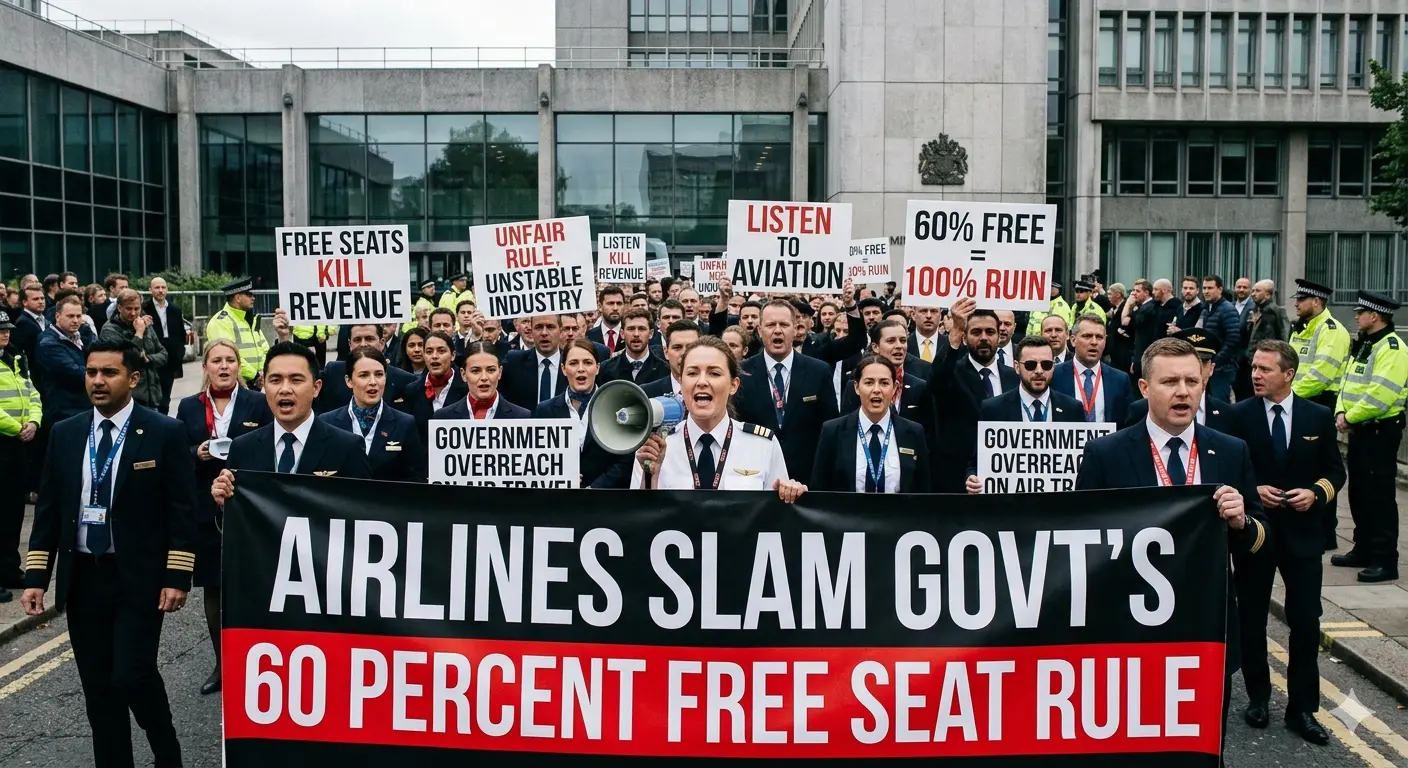
The leading airline companies in India Air India, IndiGo and Spice jet have retaliated against the radical decision by the government that 60 per cent of the seat on the flights must be kept free of charge, threatening to increase the prices of the tickets across the board. On behalf of these giants, Federation of Indian Airlines (FIA) fired a letter to the Civil Aviation Secretary, Samir Kumar Sinha branding the directive, a revenue killer and which does not consider airline economics. Published Wednesday through DGCA, the regulation is meant to prevent so-called hidden fees, but will also backfire against low-cost flyers, in their view.
Revenue Crunch of airlines revealed.
Seat charging goes off-the-scale- Rs 200-2,100 a window seat, aisle, or additional legroom, which aids in covering the sky-rocketing fuel and airport expenses at very thin profits. Compelling 60 percent gratuities cuts this side business and makes carriers increase base fares on all routes, FIA cautions. Their letter cries that passenger perks are being caused by pain to all passengers, including those who do not pre-book.
The low-cost-king IndiGo (60 market share) is ahead of the pack with full-service-based Air India and the budget problems of SpiceJet. They lament no industry huddle in the nod of DGCA as regulatory extravagance that scares away investors and creates bad precedents on extras such as baggage or meals. FIA continues: “Destroy market pricing, government must stay out of fares, politicians promise.
Govt’s Passenger Pushback
The directive of March 17 is aimed at flyer complaints: families are divided in rows, premium sessions are occupied by payers, which leaves economy people in the middle of the cabin. Today carriers are required to provide majority seats at booking free, as well as seat group passengers to travel without charge – music to ears of tormented parents and teams. This is what Aviation Minister looked into following social media furor regarding preferential pricing of under 1,000 plus short-haul flights.
But airlines will respond: free picks might appear even but reduce the options as upper-priced rows remain paid with the masses of people scavenging what leftovers they can grab. SpiceJet, losing cash, is terrified of serious cuts; web specials may be eliminated in IndiGo.
Fare Hike Fears Grip Flyers
Base fares could soar 1015 percentages to cover holes, forecasts analysts, and Delhi-Mumbai shuttles would be worst hit where seats could raise 20 percent of the profits. The unbundling is a success of low-cost airlines such as IndiGo, which charges only when they have a demand, but the unbundling is now jeopardized by blanket increases that are punitive to light packers. The resurgence of Air India under Tata is reluctant of additional losses during the international jet fuel spikes.
History has been follies in the past, such as 2011 fuel surcharges, which puffed up tickets; it repeats that mistake, carriers say. Flyers boast of short term victories but prepare to take revenge prices in routes such as Lucknow-Dubai.
Showdown Looms in Skies
FIA cries off, data smuggers bargain diktats. Ministry mum to date-DGCA enforcement begins April, penalty on defiers. This pits passenger pockets versus airline survival as IndiGo tweets their grievances and Air India halls echo their grievances.
The fight means hard calls to Rohtak commuters who are tempted with free seats on expensive tickets on IndiGo hops to Delhi. Govt is betting yes; carriers screaming no. It is now crunch time as summer rush approaches, will skies remain affordable or become premium?