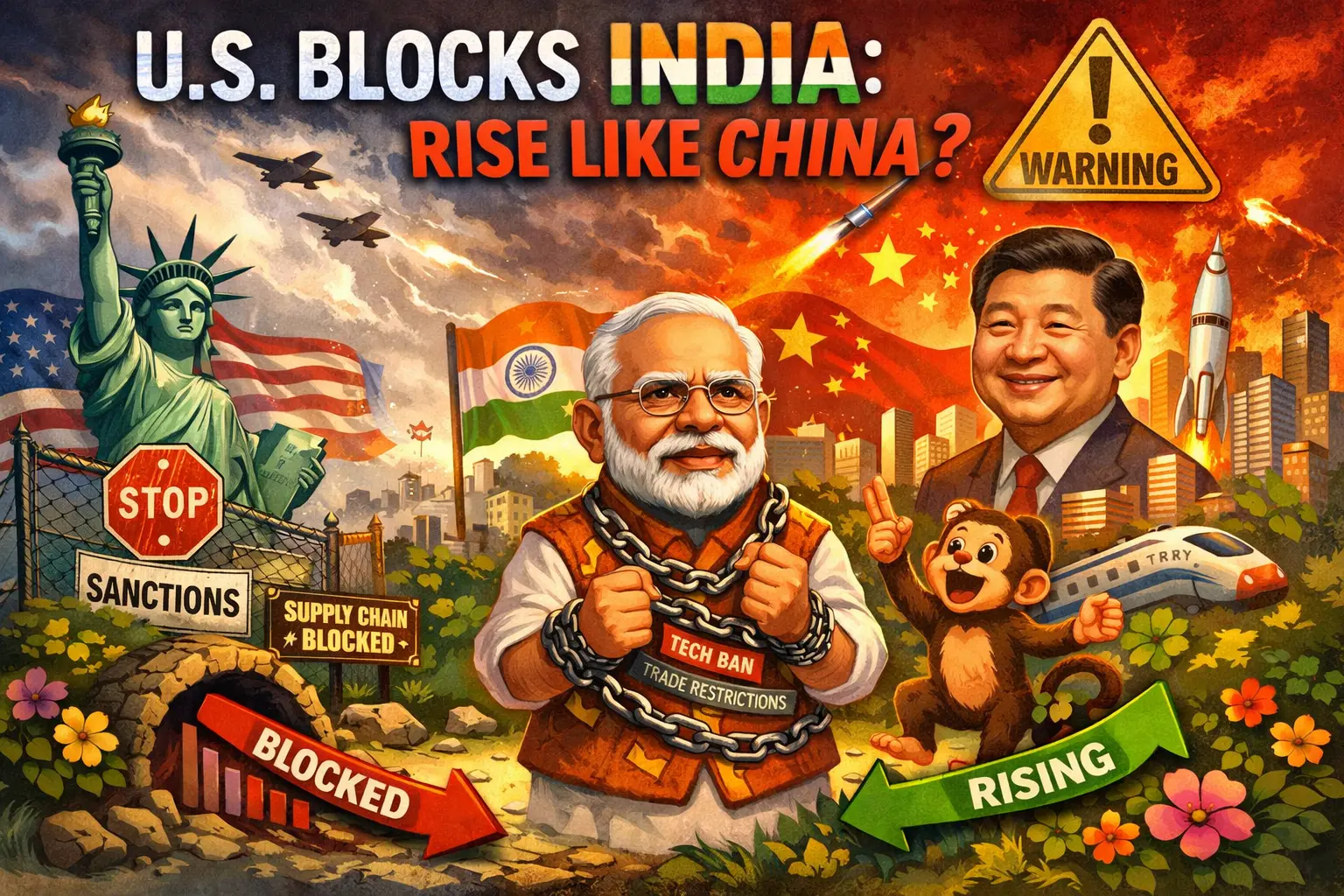
Washington/New Delhi: In an eye opener, one of the top officials of the US has said that America will not allow India to become a geopolitical competitor similar to that of China. This is an assertion that was delivered in a top secret briefing on security, a situation that highlights the escalating tension in the US-India relations despite several years of strategic ties such as the Quad alliance.
In an off record conversation of March 5, 2026, the US State Department official pointed out that the Biden-Harris administration appreciates India as an offset to the influence that Beijing exerts over the Indo-Pacific but that it draws the line. It should be a partner, not a peer competitor as observed by the official of India. We have witnessed how when such a power as China defies the rules-based order, that we have not seen a repeat performance with India.
This is against rising tension with regards to India having an independent foreign policy. The unwillingness of the New Delhi to go all the way with US sanctions against Russia as well as the booming military relationships this city has established with Moscow has annoyed Washington. The S-400 purchase that India recently made and the oil imports that Russia has made in India despite the calls of the West after the invasion of Ukraine have caused suspicions. On top of that India is neutral about Taiwan and expanding its trade with China (135 billion in 2025) and US policymakers are raising red flags.
The scholars attribute this to the Indo-Pacific strategy of America which places India at the frontline against China at the expense of allegiance. India has a warning sign of 3.7 trillion economy which is projected to reach 5 trillion in the year 2028, think tanks such as the Center of Strategic and International Studies (CSIS) are on the alert that India can become a serious threat to US interests in case the growth is not prevented. The US desires an Indian market that is opened up and its pastures limited, according to Ashley Tellis, an analyst at Carnegie Endowment.
This is nothing but neo-colonialism in the eyes of India. External Affairs Minister S. Jaishankar has already made such claims several times, most recently telling the UN last year: “India does not play in anyone’s jersey. However, the US deeds are much more revealing, as recent visa restrictions on Indian technologists and the stalling of the sale of F-35 jets are indicative of areas of pressure.
In economic terms, the trade deficit between the US and India escalated to 40 billion dollars in 2025, as American companies were lobbying against the data localization regulations in India and Indian subsidies on semiconductor products. India has a stinging CHIPS Act exclusion because New Delhi is promoting its own 10 billion chip incentive initiative.
With Trump planning to come back in 2028 with America First 2.0, hawks in Congress are demanding more, such as WTO challenges to Indian tariffs. Will this tear the bromance of the largest democracy in the world with the US? In the case of India, the great power competition together with the leapfrog is a challenge that is yet to be tested.
India is not only emerging economically, but it is a civilizational revival. However, should US containment resonate with Cold War measures, New Delhi will swing to the east and befriend the BRICS members. The official’s blunt words? Something to wake up or something to fulfill itself?