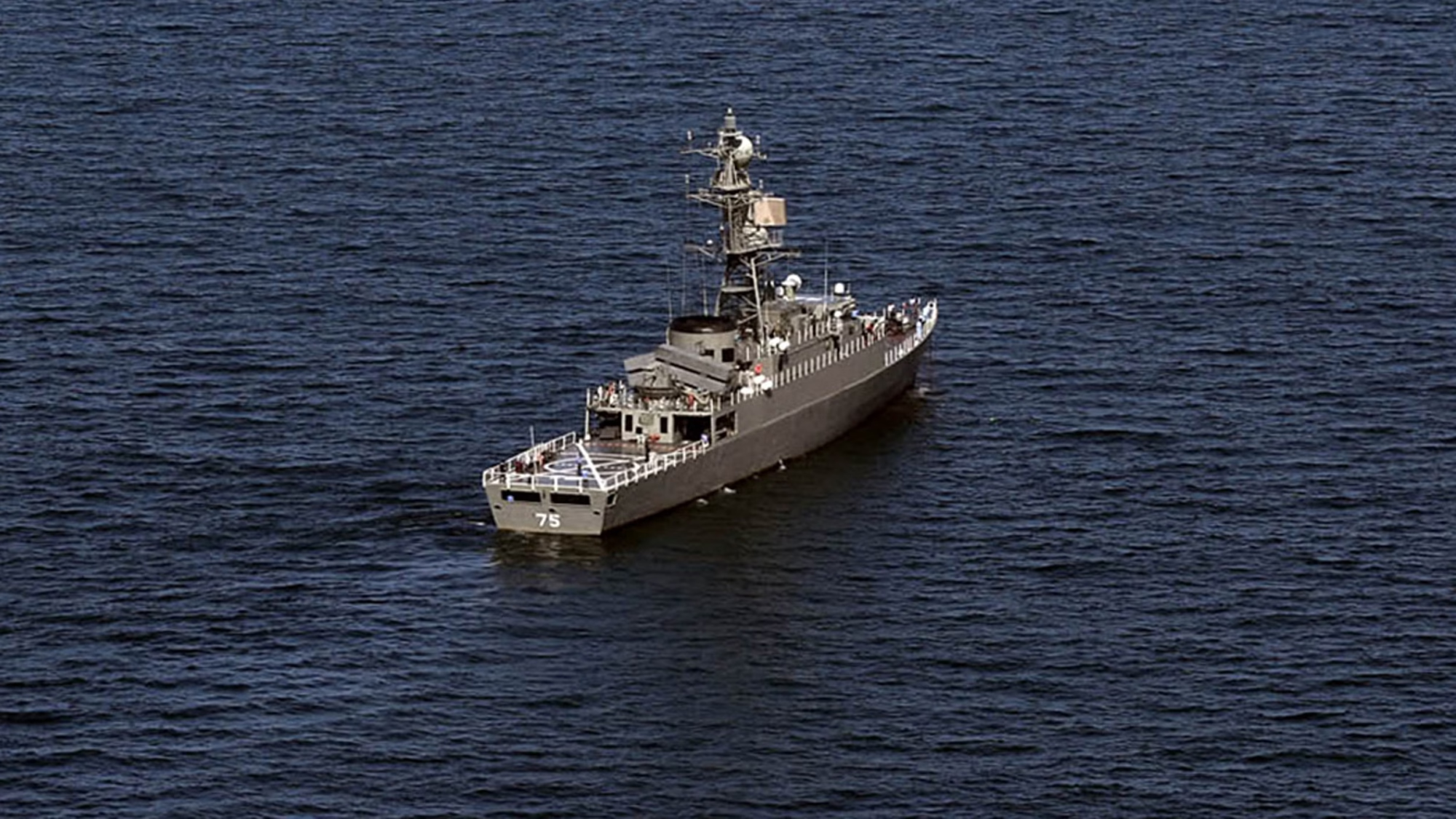
A US submarine torpedoed and sank IRIS Dena, an Iranian warship on Wednesday off the coast of Sri Lanka in the Indian Ocean, bringing the West Asian conflict closer to the Indian subcontinent. At least 83 people were killed and 100 went missing in the torpedo attack. IRIS Dena had participated in two exercises organised by the Indian Navy and was returning to Iran. The Sri Lankan Navy rescued 32 sailors and recovered the bodies after a distress call from the Iranian frigate, IRIS Dena. A ccording to sources, IRIS Dena has a capacity of 180 personnel but, around 140 people were on board at the time of incident.
How did IRIS Dena sink?
IRIS Dena, a frigate which belongs to the Iranian Navy’s Southern Fleet, participated in the International Fleet Review (IFR) and the multilateral exercise, MILAN-2026. The Iranian fleet was warmly welcomed by India’s Eastern Naval Command in Vishakhapatnam on February 16, 2026. Nearly 74 countries participated in the exercise, except the US. The US cancelled its participation at the last moment, as USS Pinckney, the US Navy’s guided-missile destroyer was expected to participate. The IRIS Dena was returning home from Visakhapatnam on March 04, when it was attacked off the southern coast of Sri Lanka.
Opposition attacks Modi
The Opposition party attacked the ruling government saying, it is the closest that the war has come to India. India’s MAHASAGAR vision envisages India as a key player in the Indian Ocean. The presence of a US submarine in the region raises serious questions about India’s strategic capabilities. So far, the government has maintained silence on the issue but it has rejected the claims of US using Indian ports for attacking Iranian vessel. The development comes amid India being silent on US-Israeli attacks on Iran. The Iranian ship did not seek any help from the Indian Navy in international waters.
International Convention on Maritime Search and Rescue
The International Convention on Maritime Search and Rescue (SAR) is an international agreement adopted in 1979 under International Maritime Organization (IMO). It aims to ensure that people receive prompt rescue assistance in distress. It divides the world into SAR regions and each coastal state is then given the responsibility to coordinate rescue operations in its area. The coastal states assit in the rescue operations, regardless of the nationality or status. India ratified SAR in 2001. The Indian Coast Guard (ICG) coordinates the rescue operations in the region.