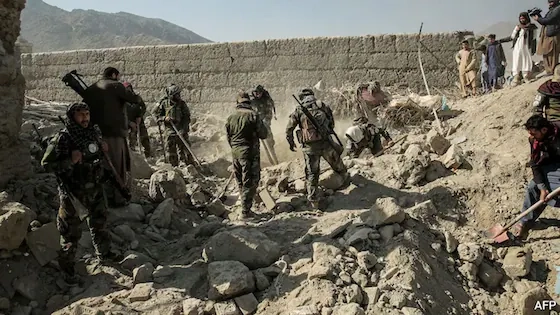
Pakistan and Afghanistan have entered into a new phase of war, with Pakistan attacking Kabul and other provinces of Afghanistan. On February 21, 2026, Pakistan launched airstrikes on alleged military establishments in provinces of Afghanistan, claiming to target Tehrik-i-Taliban Pakistan (TTP) and ISIS-K elements. Afghanistan responded on February 26 with ground attacks on Pakistan across six provinces. Following the attacks from both sides, tensions have escalated since then and ground situation worsening with both the forces adamantly standing on the battlefield. Islamabad has accused Kabul of sheltering militants responsible for attacks in Pakistan. The bitter relations between the countries is rooted in a much longer history.
What led to war?
Regime change in Afghanistan
Monarchy in Afghanistan ended in 1973, following a nationalist phase and 11 years of communist rule backed by the Soviet Union, which intended to stabilise the economy, but failed to do so.
President Najibullah led the government for three years after the withdrawal of the Soviet Union. When his administration collapsed in 1992, it paved the way for internal conflicts.
The Taliban, formed in 1992 was supported by Pakistan, captured Kabul in 1996 and took control of the majority of the country. US invaded Afghanistan in 2001, following the September 11, 2001 attacks. US ousted Taliban and established the Islamic Republic of Afghanistan. However, US failed to maintain stability in the region and it withdrew in 2021. Following the withdrawal of US, the Taliban swiftly defeated Afghan government forces, regaining control of the entire country. Pakistan backed the Taliban forces in regaining their control over Kabul.
Durand Line dispute
The roots of the crisis lie in the unresolved question of Durand Line. Afghanistan has refused to formally recognise the Durand Line as the international border, fuelling recurring tensions over sovereignty and territorial claims. The 2,640 km line between Pakistan and Afghanistan was drawn in 1893 by Sir Mortimer Durand, dividing territories of Afghan ruler Amir Abdul Rehman Khan. The demarcation was initially meant to define spheres of and it did not act like permanent international border. The line bisects Pashtun tribal lands, embedding a historical grievance into the geography of the modern state system. The issue related to Durand Line remains unresolved to date.
India’s stance in war
In recent times, India’s improved relations with Afghanistan have added to Pakistan’s security concerns. Islamabad seeks to limit Kabul’s ties with New Delhi. For India, the war has provided both opportunity and risk. New Delhi has criticized Pakistan for externalising its internal security failures and on the other hand emphasised Afghanistan’s sovereignty. Sustained India-Taliban ties could narrow Pakistan’s diplomatic options over time.