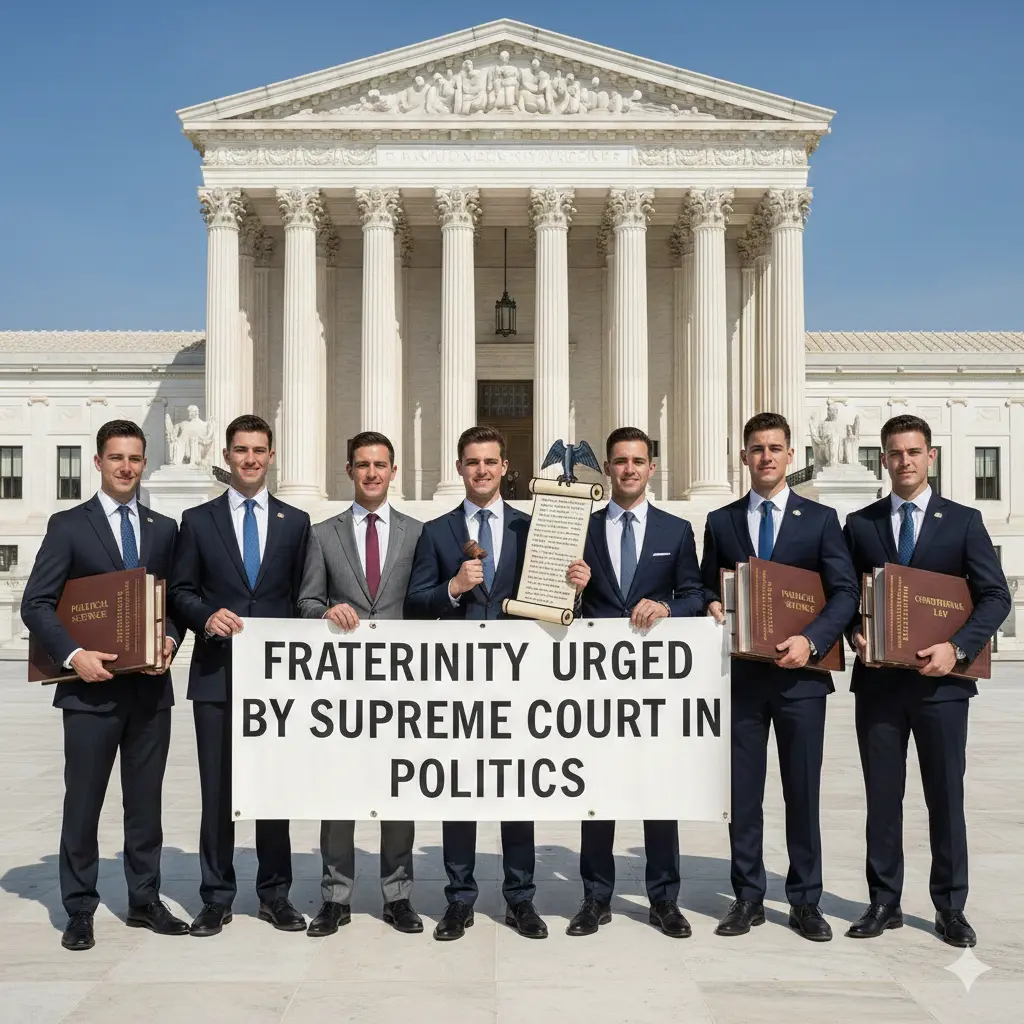
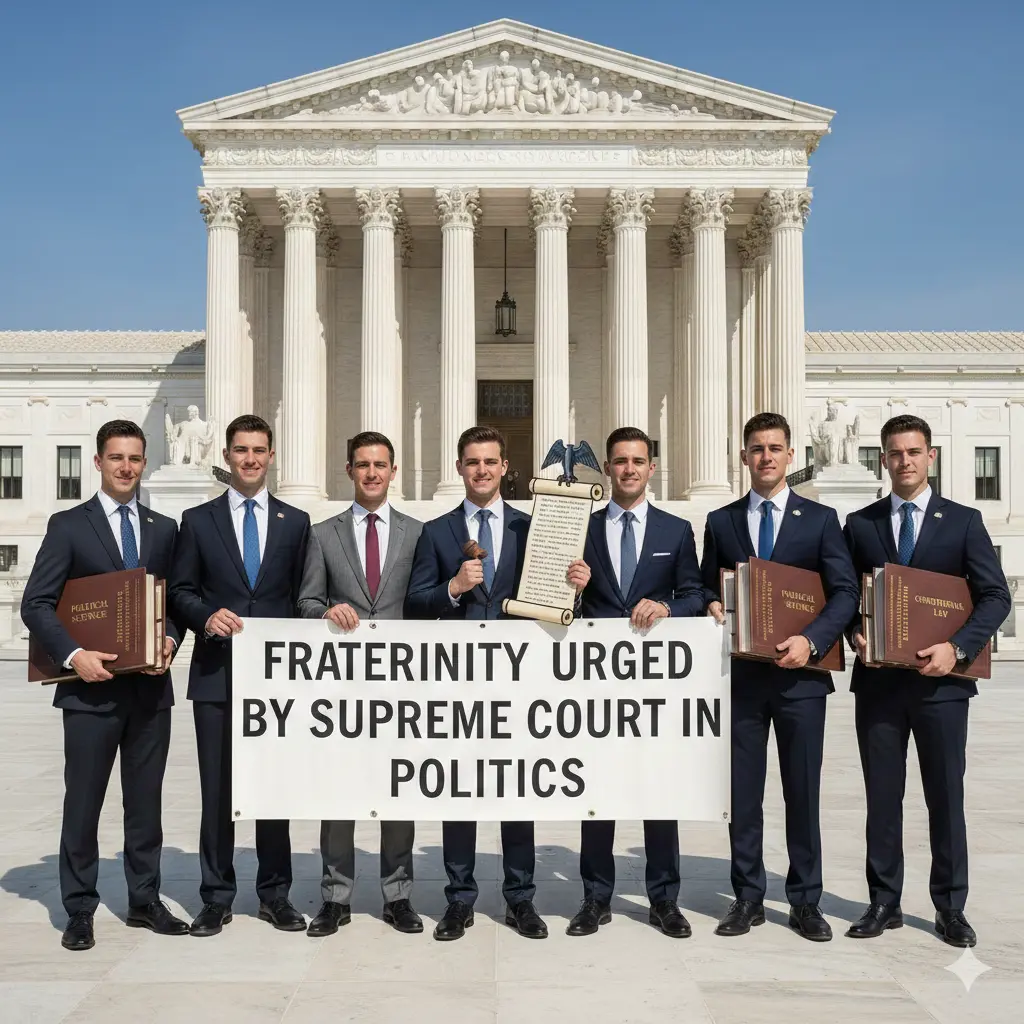
A Supreme Court of India insisted on the issues of promoting fraternity of the nation by the political leaders and contesting elections with regards to each other. This was as observed in a hearing on a community interest litigation on its request to have guidelines to be applied on divisive political speeches.
Hearing Context
Chief Justice Surya Kant, who is the lead judge, and his deputies, B.V. Nagarathna and Joymalya Bagchi, heard a petition filed by 9 individuals. The plea required rules among politicians and media in escalating speeches purportedly prejudice on constitutional values such as fraternity in Article 51A.
The court did not proceed directly with the PIL requesting petitioners to re-file a fresh plea on a clearer frame. CJI Kant verbally noted that political parties have a duty of maintaining constitutional morality, which brings cohesion and not division.
Key Judicial Observations
The bench asserted that, elections should not be based on antagonism but rather on mutual respect in developing fraternity within the country. Justices emphasized on the degradation of secular fabric in India through inflammatory rhetoric and urged the self-restraint amid the mounting hate speech.
This is in line with the previous rulings such as the 2024 assembly polls where the court signalled money and muscle power and hate mongering. The bench was associated with fraternity, which warns that unrestrained barbs breed the foundation of democracy.
Citing recent examples of leaders using religion or caste which was being virally heightened, petitioners mentioned it as a threat to harmony. They wished to have an oversight organ that resembled the model code enforcer of the Election Commission.
Broader Implications
The position of the apex court is an indication of judicial weariedness with banal cries but strong belief in ethical campaigning. This directive was issued in the wake of similar suits filed in courts across the country over viral clips that were taking place in Uttar Pradesh up to Kerala following 2024 Lok Sabha polls.
Scholars consider it as a call to action by parties before state elections. BJP, Congress, and regionals are under fire; the statements made by Assam CM Himanta Sarma received criticism, and they reverberated in similar petitions.
The role of media also mentioned, the courts require balanced reporting, but not echo chambers. This is based on Tehseen Poonawala (2023) guidelines on mob violence that is motivated by hate.
Historical Precedents
Fraternity has been long advocated by Supreme Court. In S.R. Bommai (1994), it associated the concept of federalism to unity; Kaushal Kishor (2023) was able to find a balance between free speech and limits of harmony. Polls in Haryana and Maharashtra in the recent past were interfered with in attempts to check appeals.
The bench of CJI Kant that heard cases that were back to back constitutional cases struck out hasty PILs but seeded the ground on systematic change. It is now time where petitioners need to polish arguments that may spawn nationwide protocols.
Political Reactions
The sermon was widely favorable in ruling coalition and BJP spokespersons have described the sermon as a wake up call to opposition. Congress responded by saying that partisan indignation should not apply only to the slips of ruling parties.
Related case petitioners such as Jamiat Ulema-i-Hind celebrated it as essential to the minorities. Analysts anticipate Election Commission amends, requiring fraternity pledges on affidavits.
Challenges Ahead
The application of such ideals is still a challenge in the colorful Indian democracy. As 2026 state polls approach, including West Bengal and Assam, the leaders of the two states are balancing between mobilizing the base and holding back. The social media increases risks, beating regulators.
New filings of pleas put the petitioner to the test. Through success, a Fraternity Code would be developed, which would impose fines on violators or candidacies, which are resembling fairness principles in the United States.
According to critics, judicial overreach exists; according to supporters, these are the constitutional guardianships. The court is right in its appeal on the eve of the Republic Day in India: the fraternity is not optional, it is structural.
The case highlights the role of judiciary in curbing the wilder tendencies of politics so as to have elections that inspire and not divide. The issue of political maturity is now based on listening to this prudence.