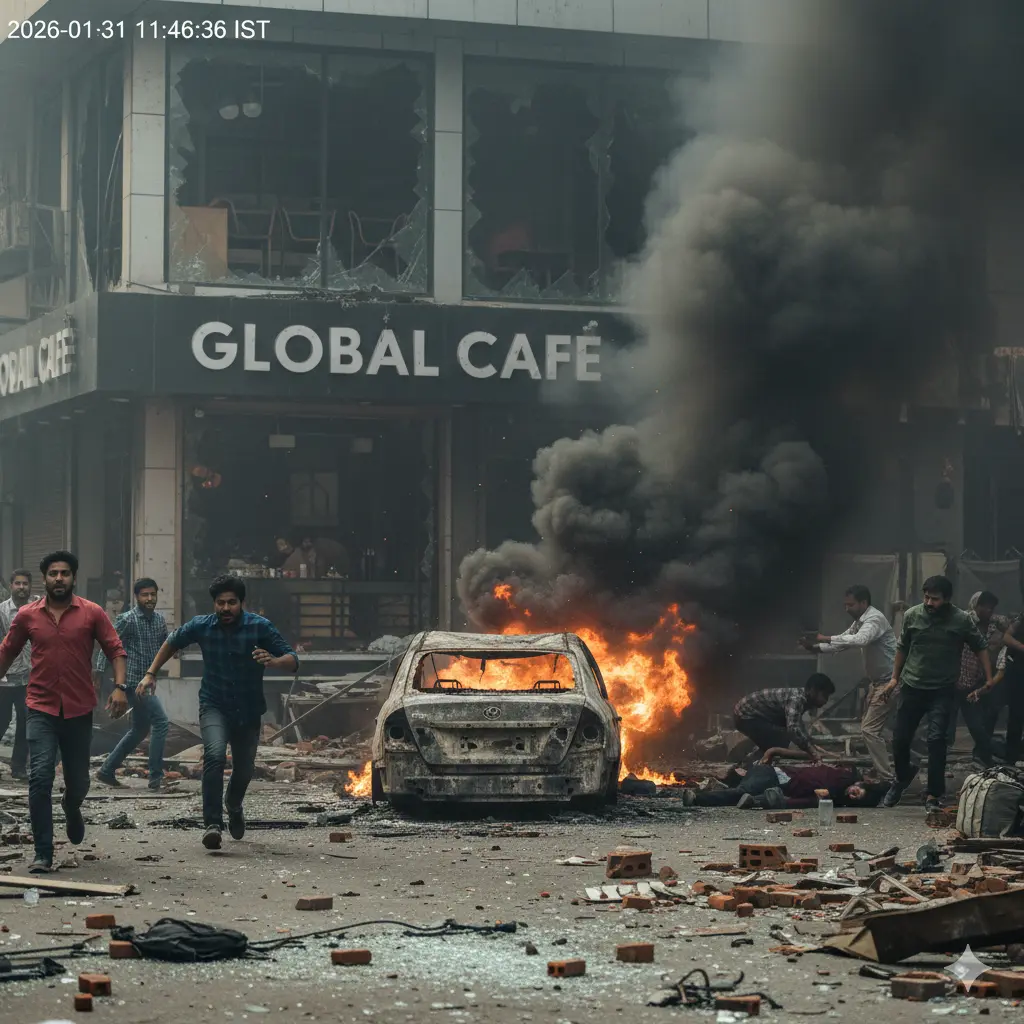
In a startling disclosure that has sent shivers down the spine of the national capital of India, an evil terror group has been found by the Delhi Police plotting low-technology car bombings on high-ranking global coffee chain outlets. The unsuccessful plan was that a sleeper cell was to be financed by Pakistan to convert the common areas of hangout to killing fields and groups of the youth were to be targeted during the peak hours.
This was the landmark which was established on a late Thursday night after a regular car check-up inspection in the Najafgarh area of the outer Delhi as literally as possible. In the car, the officers of the Special Cell found a suspicious car with a modified chassis and 8-10 kg of RDX or a military-grade explosive was hidden in the car. This check resulted in a small explosion which injured two constables when one of the wires of the detonator went off earlier warning to the crew members about the greater danger. It was not accidental, but a time bomb that was on its way to the carnage and the Deputy Commissioner of Police (Special Cell) Ravindra Singh Yadav admitted it at a jittery press conference.
The driver of the car was found to be a 28-year-old, Asif Khan of the Kashmir region of the Lahore district, who had been radicalised on encrypted Telegram channels by the Lashkar-e-Taiba (LeT) operatives in the same region. Investigations were inevitable with all dripping details: the squad was canvassing the traffic areas, such as Starbucks, Café Coffee Day and Costa Coffee outlets in Hauz Khas Village. Their modus operandi? The bomber parked the car and blew it up using a mobile and made away with the commotion as was the case in the Pulwama attack in 2019 when 40 CRPF jawans were butchered in an attack.
On his part, Khan admitted that he smuggled RDX through Nepal and mixed it with fertiliser ammonium nitrate, which he purchased in the area. Reconnaissance was conducted and footprints of coffee shops and the escape route were photographed by two accomplices Tariq and Nadeem Ahmed who were brothers and lived in Uttar Pradesh. The fourth suspect was a technological genius, Zubair Malik who coded the blast timers on an open source basis. LeT member, a leader, Abu Hamza is also still on the loose and is believed to be arranging the same with PoK.
This is an unhealthy change of urban means of terror manifested in this plot line. Compared to the big game attacks directed at the security forces, these soft targets utilise the fact that Indians have a huge cafe culture that is sustained by the presence of millennials who have to drink lattes unaware that there is a threat looming over them. Delhi police have reached the point of 50 plus station of CCTV cover, bomb squads and K9 troops. It has been superseded by the National Investigation Agency (NIA) and is now a larger nexus that was busted in Jaipur last month.
The threat of the copycat risks is a threat since it is carried out by security experts. Counter-terror analyst Ajai Sahni thinks that coffee chains symbolize western influence and jihadists regard it as gold of propaganda. The Prime Minister’s office led by Narendra Modi denounced the plot alleging that they would not overlook them. The city is on high alert because the city of Delhi starts to go back to leading normal lives and this is also another ugly truth because the terror is in your face.