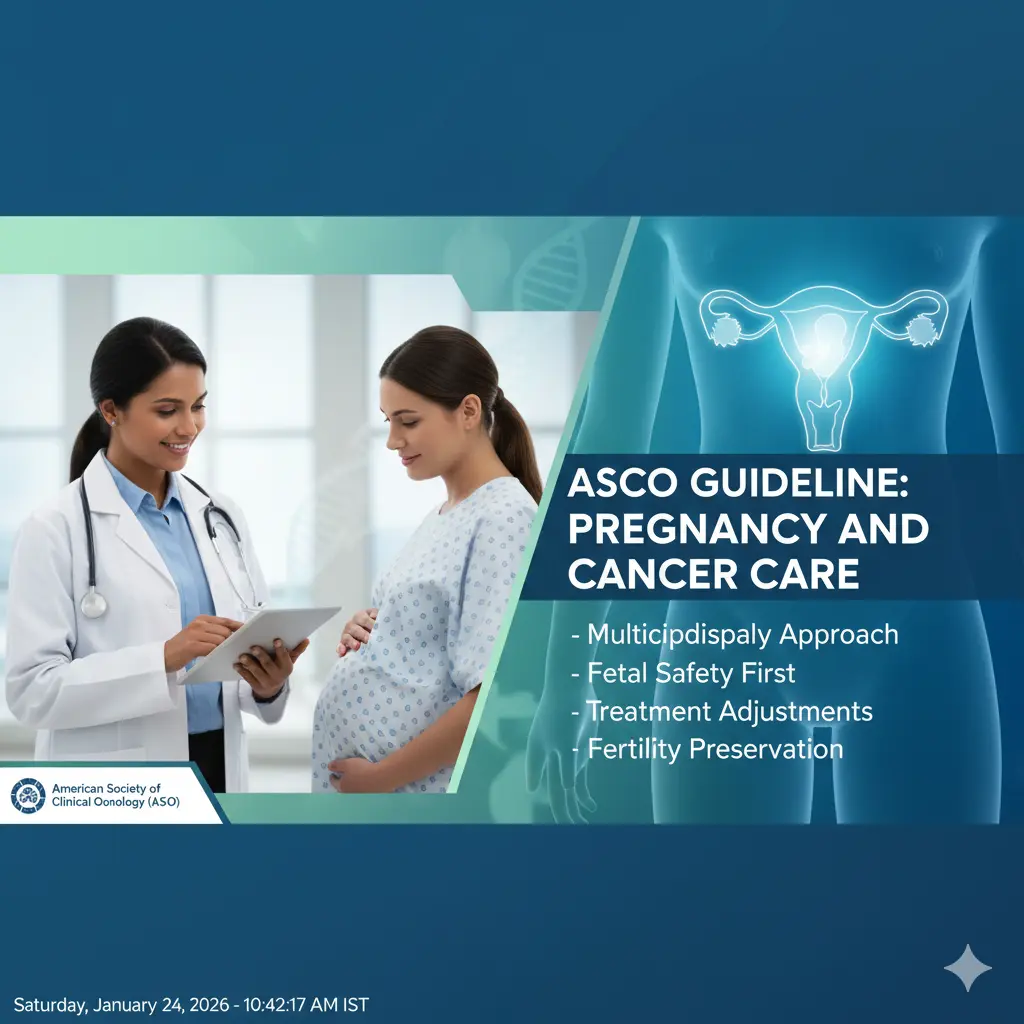
The first general guideline that was issued by the American Society of Clinical Oncology (ASCO) in the course of treating cancer during pregnancy even up to the time the survivor lives. It was created with the assistance of a group of multidisciplinary specialists so that the oncologists, obstetricians and maternal-fetal specialists have the means to strike a balance between maternal survival and fetal safety taking into consideration the rising rates of delayed childbearing cancers and early-onset cancers.
Incidence on the Rise requires Leadership.
The incidence of the top in breast, cervical, thyroid and hematologic malignancies is a complication seen in 1/1000 pregnancies. The advanced age and lower age of onset of the cancer increases frequencies when the mother is older. The guideline summarises data on observations, case clusters, and reports – evidence at times colossal yet limited – to produce shrewd recommendations that would maximise two results.
The decisions rely on patient autonomy: informed consent is a trade-off between risks of cancer, the type of treatment, fetal harms and continuity/discontinuation. An adjustment of a specific plan and re-examination at different phases of pregnancy will be implemented in multidisciplinary teams comprised of pharmacists, neonatologists and ethicists.
Diagnosis Strategies Safety Focused.
Adhere to ALARA (as low as possible) of radiation. The leaders in imaging are ultrasound and non-contrast MRI but CT/MRI, in the event that it has already elapsed the first trimester but is shielded. PET-CT spares except life-saving. Biopsies -safe throughout all of the trimesters, core needle, bone marrow- safe throughout all trimesters; postpone the unnecessary.
In the case of early assessment of a person, such as in a case of leukaemia/lymphoma in the blood, the fallacy of delay can be neglected. The non-pregnant peers would be opposed to the survival of the normal procedure based on the stress of guideline which deal with early confirmation of tissues.
Temporality and Modalities of Treatment.
The intervention of systemic therapy does not occur until the second/third trimester and eliminates the threat of teratogens. During chemotherapy, regular regimens are employed (after the organogenesis (week 14+) and cease 2-4 weeks before birth to prevent neonatal myelosuppression. The birth will be 37 weeks or more since there is a need to give birth due to maternal emergencies. When the surgery is possible, laparoscopic is preferable. Adjusted protection of the unborn child against radiation. Oral agents/targeted therapies: Beware, do not have a strong data base, which attracts registries. The hematologic cases lean towards the utilisation of transfusions and anti-microbials for the well-being of the mother.
A form of breast cancer: breast neoadjuvant chemo during the second trimester is harmless; postpartum the HER2 and the hormone therapy. In the case of protocols, survival is like being non-pregnant.
Postpartum planning.
The most appropriate time is the time that will be a compromise between the maturity of the cancer and the fetus. C-section is not needed in case of cancer; a pleasant vaginal delivery where no obstetric complications. The last cycle of chemo before birth at the 3 -4 weeks is used to minimise the complications such as neutropenia.
The benefits of the excretion of the drugs are estimated against the breast feeding; the majority of the chemo suspension is eliminated following the treatment. The Fertility preservation talks about the pre-therapy. The registries are linked to the maternal/fetal long-term outcomes of the cardiac and neurocognitive outcomes through Survivorship.
Ethical, Legal Imperatives
The US abortion restrictions are value-based, with consent being one of them. Termination can be granted in case the life of the mother is in danger due to an emergency in the treatment, no pressure either. Struggle against disparities – rural low-SES patients.
There are different nuances of law; the decision on documents submitted. A suggestion to the training of clinicians on subtle risks/benefits talks is put forward by the panel.
Hemo Oncology Highlight.
The case of leukaemia/lymphoma suggests the guideline greenlights which promotes the care of standard: there is no difference in inducing safety with chemotherapy beyond the first trimester and survival. Postremission Multidisciplinary delivery of huddles. Prevention – blood transfusion, infection prophylaxis – no harm to the baby.
Research Gaps and Future Horizons.
The paucity of evidence sets demands for new clinical trials, toxicology trials, and registries. The post-exposure fetal/neonatal monitoring should be standardised. Very skewed data with high resources was the only one that could be applied globally.
The ASCO blueprint endows the evidence-based care that assumes the emphasis on the maternal life, which is the cornerstone of fetal viability. It turns the beautiful crisis into the voyage of redemption making the time of the learned benevolent oncology in pregnancy.