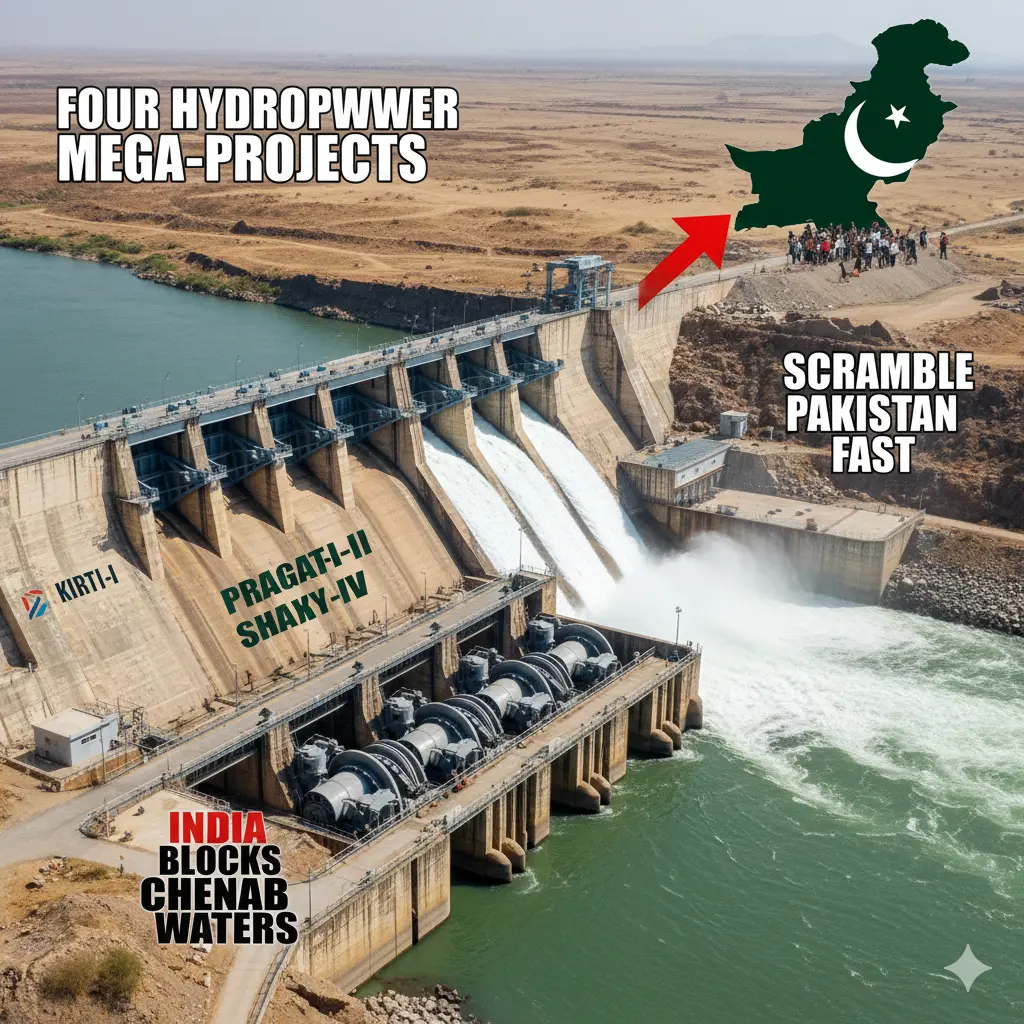
The key move by India comes with claiming the Chenab River, which is a crucial tributary of Indus originating in J&K and manipulating water relations with Pakistan by speeding up four large-scale hydropower projects on an iron deadline despite the suspended Indus Waters Treaty (IWT). The non-negotiable targets of a January 2026 visit to J&K by Union Power Minister Manohar Lal Khattar included Pakal Dul and Kiru by December 2026, Kwar by March 2028 and Ratle ramp-up. These 3,500+ MW dams not only utilize the right of the Hindu religion of India to run of the river, but also allow the flow to be controlled, which reduces the bargaining power of Pakistan down the river.
Chenab Basin: Chenab Strategic Lifeline.
Chenab, Marusudar with their tributaries drain 30 billion cubic meters of the J&K water into the Punjab plains of Pakistan every year, which irrigate 80 percent of its agriculture. Non-consumptive India India, as a non-consumptive party, under 1960 IWT, has a right to Western Rivers (Indus, Jhelum, Chenab), without storage/diversion. However, there are storage facilities such as Pakal Dul (167m dam) which can hold a surge to the power generation to forestall monsoonal floods to which Pakistan is dependent.
Objections by Pakistan such as violation of treaty fail without IWT arbitration. Locking the upper basin dominance in India will produce 15% of grid power in the north and change the seasonal flows.
Project Timelines and Portfolio.
| Project | Capacity | Type/Height | Deadline | Key Milestone |
| Pakal Dul (Kishtwar) | 1,000 MW | storage/167m | 12.2026 | River diverted; top Indian dam |
| Kiru (Kishtwar) | 624 MW | RoR/135m | Dec 2026 | Headrace tunnel at 80 percent complete |
| Kwar (Kishtwar) | 540 MW | RoR/109m | Mar 2028 | Chenab diversion realised 2024 |
| Ratle (Kishtwar) | 850 MW | 133m/RoR | Accelerated | Foundation laid; spillway dispute resolved |
The Chenab Valley Power Projects Pvt Ltd (CVPPPL)- NHPC-PGREL JV is being done on a 35,000 crore and will provide employment to 20,000 people and will increase the GDP of J&K by 5%. Pakal Dul pondage controls 1.7 BCM, which affects the sowing of Kharif in Pakistan.
The Shrinking Room to Maneuver in Pakistan.
Indus-dependent Pakistan is in acute deficit: Canal inefficiencies were revealed during 2025 floods, and storage dams such as Diamer-Bhasha fall behind. The dams in India facilitate the peaking (low flows) in winter and storing of monsoon, thus interfering with the Rabi irrigation of the wheat belt in Punjab. In the event of no revival of IWT, the mediation of World Bank remains stalled; diplomacy of unilateral Pakistani falls.
Islamabad shouts water terrorism, but run-of-river obedience kills legal assertions. Analysts predict that the variability of the flow of the Chenab will be 20 percent after 2028, and Pakistan will be compelled to switch to groundwater and conservation.
Energy Security and Regional Impetus.
These projects will contribute to a clean baseload as India will be growing at 7-percent in demand reducing coal imports (20 B/year). The benefits to J&K include irrigation (50,000 ha), tourism through reservoirs and flood control- lessons learnt after 2014 deluge. NHPC is aimed at 100% commissioning, using 5000 crore MoP infusion.
Difficulties: geological risks (seismic Zone V), land purchase (5,000 ha), eco-clearances. The underworld of Pakal Dul alleviates; the diversion of Kwar was successful, in spite of objections.
Geopolitical Power Shift
India IWT halt (45 soldiers killed) after Pahalgam first since 1960 is full basin potential. The redesign of the spillway by Ratle accommodated Pak concerns before the stoppage; it is no longer impaired. Cascade synergy: the downstream RoR is fed by upstream storage, maximizing 20,000 MU/year.
The choices of Pakistan are limited to either diplomatic isolation or reforms or risks of escalation back home. The message of India: waters start here; use is royal. Chenab cascade operationalizes the Atmanirbhar energy and re-hydraulically re-draws hydro-diplomacy by 2028