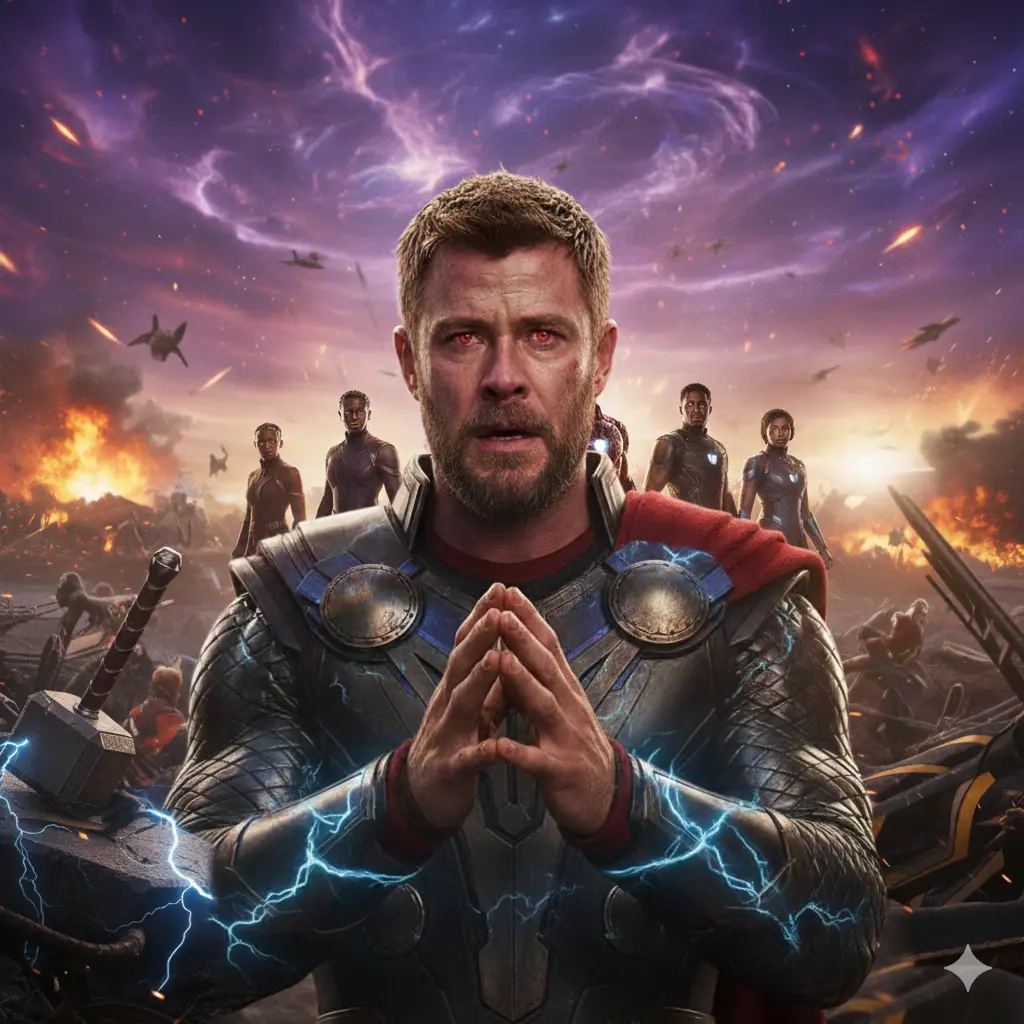
As the massacres of Avengers: Endgame culminate in a final, raw and heartfelt cry of Thor on the verge of annihilation, this is one of the most gut-punching moments in the Marvel Cinematic Universe. As Thanos deals his deathly blow of devastation, destroying half of everything alive, the God of Thunder does not only face the annihilation of the world around him, but he also has to face his own lost soul. It is not a superhero scene, but one of the scenes that explores grief and redemption and the desperate wail of a fallen hero begging to have one more crack at saving the world.
The Cost of Failure in the Shoulders of Thor.
The arc of Thor that ends with Endgame creates an image of a king who has lost his way. He becomes depressed and hates himself as a result of the destruction of Asgard in Infinity War and the destruction caused by the snap. Still in New Asgard, he squanders away drinking ale and playing video games, a very different personage to the mighty warrior who once held Mjolnir like it was nothing but air. As the Avengers are gathered to make their last fight with Thanos, Thor shows up late, fat and disheveled, with Stormbreaker in his hand but his heart broken in pieces.
This weakness makes the god human. The Russo brothers were able to make Thor appear more akin to the struggles of failure and mental health seen in real-life through the use of Chris Hemsworth as an actor and his own dedication to authenticity. When the fight is still going on the destroyed Avengers compound, Thor is a brave fighter, fighting with Iron Man and Captain America, but the burden of his past errors, of not being able to stop Thanos on his ship, of being unable to save his people, kills him.
The Plea Takes Place During Doomsday.
The focal moment breaks out as Thanos portals into the scene with his army, the turning point being an utter doomsday. The heroes are overwhelmed, interdimensional portals barely keeping the line. Thor, Iron Man, and Cap are summoning all the strength to make a final attack. However, as Thanos picks up the Infinity Stones and clicks with his fingers once more, he loses. The snap does not finish this time -Tony Stark takes the stones- and the damage is accumulated.
In rage, Thor runs to Thanos and grabs him by the neck. It is only when the truth hits him that Thanos is dead, the stones have been stolen, but the world is on the brink of doomsday. Thor gets on his knees and cries on the corpse of the Mad Titan and releases his cry: Mother… It is the cry of a little girl, and the cry is calling to Frigga, the one person who ever noticed his heart behind the manliness.
This is not anger or protest, it is raw, naked hopelessness. Thor cries when he pleads that a long dead mother of Hela should help him out. The cry resonates with his most painful psychological trauma, which is abandonment and inadequacy. At that frozen moment and about to face doomsday, Thor is not the ruler of New Asgard or the two-hammered warrior, he is a son who lost his father, begging to be spared in a world that is out to destroy him.
Imagery and Introspection.
Mother cry is a testament to the regression of Thor to innocence, during the times of apocalypse. Screenwriters Christopher Markus and Stephen McFeely intertwined it with allusions: Frigga being a wise woman in Thor: Ragnarok, her death in the alternate timeline. The performance by Hemsworth takes it to a higher level when his eyes are wide with terror and his voice cracking like thunder suppressed. It was taken as the highest emotional payoff by the fans who were even more excited at the sacrifice of Tony.
Here, Doomsday is not only the snap of Thanos, but also the apocalypse of Thor. The plea highlights the concept of endurance: despite the fact that even divinity is fragile, exposure to vulnerability makes people strong. This continues to develop after Endgame as Thor grows in Love and Thunder without trying to fix his imperfections.
Reactions by Fans and Cultural Effect.
The release led to social media explosion. The trend was: #ThorsMother, where the memes were mixed with a delight and heartbreak. Critics acclaimed it as being anti-heroic–there is no heroic clamor to it, but naked humanity. The scene is based on fatherhood, which was made more real, as Hemsworth told in interviews.
This complaint reinstitutionalized MCU emotional stakes, with the hits of the doomsday coming with deadest desperation. It is left behind like a ticking time bomb: heroes bleed, grieve, plead. When Thor has his moment, it guarantees the legacy of Endgame and a thunderclap of the soul, the blockbuster glory.
A franchise of spectacle, the cry of doomsday Thor makes us realize why we are related: fragility together before the annihilation.