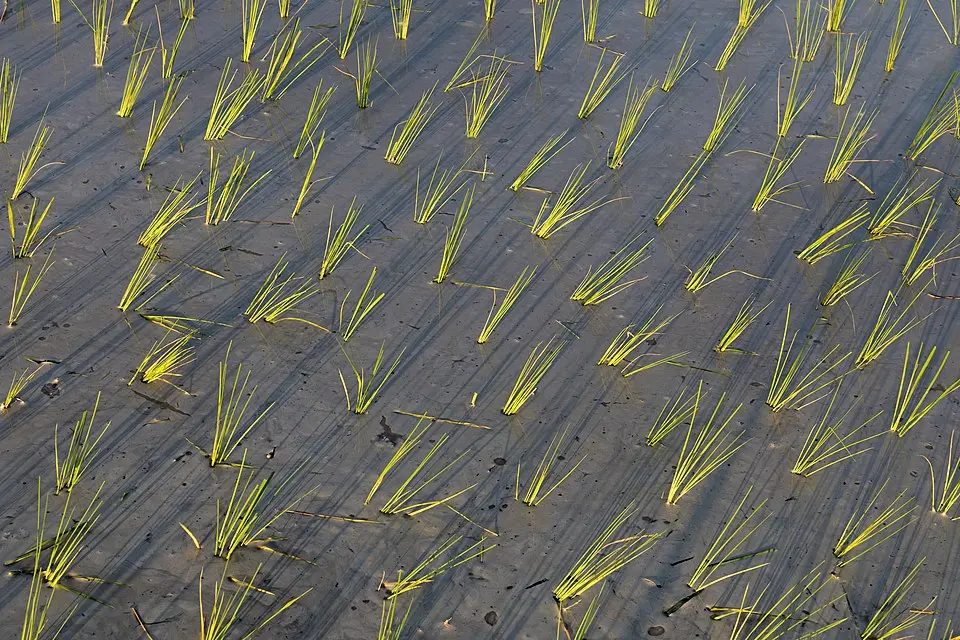
India has emerged as the world’s largest rice producer and shattered China’s dominance that had continued for years in the field of rice. The United States Department of Agriculture (USDA) has also acknowledged India’s achievement and said India’s rice production has reached 152 million metric tonnes, while China’s output stands at 146 million metric tonnes. Rice has been a staple food in India since ancient times. This is the first time India has overtaken China in rice production. This shift is largely driven by India’s consistent expansion in cultivation area, improved irrigation coverage, and the adoption of high-yielding and climate-resilient rice varieties. India exported agricultural produce worth a record Rs 450,840 crore, with rice accounting for the largest share of about 24% in 2024-25. India also leads the world in basmati rice production, with exports crossing ₹50,000 crore. Varieties such as Pusa Basmati-1121 are globally recognized for their unique characteristics, including exceptionally long grains. By exporting basmati and non-basmati rice, India earned foreign exchange worth Rs 105,720 crore in a single year. At least 15 other Indian rice varieties have received the Geographical Indication tag. This highlights the importance of rice in India’s economy.
Challenges
- India’s yield per hectare is significantly lower than China’s. Fragmented landholdings, limited mechanisation, and uneven access to technology restrict productivity gains.
- Rice being a water-intensive crop, affects the groundwater availability in the region especially in states like Punjab, Haryana, and western Uttar Pradesh.
- Excessive use of fertilizers affects the soil health and long-term productivity, it can also pollute water bodies. Stubble burning in North India causes severe air pollution during winters.
- Rice cultivation is concentrated in a few states, increasing regional stress on water and soil resources, while other regions with potential remain underutilised.
- Despite high production, many farmers earn low incomes due to rising input costs, limited value addition, and dependence on MSP rather than competitive market pricing.
India surpassing China in rice production reflects its agricultural capacity and policy support, while highlighting the need for sustainable farming practices to maintain long-term productivity.