ISRO’S LVM3 launches a 6,100 kg AST SpaceMobile satellite under BlueBird Block-2 Mission
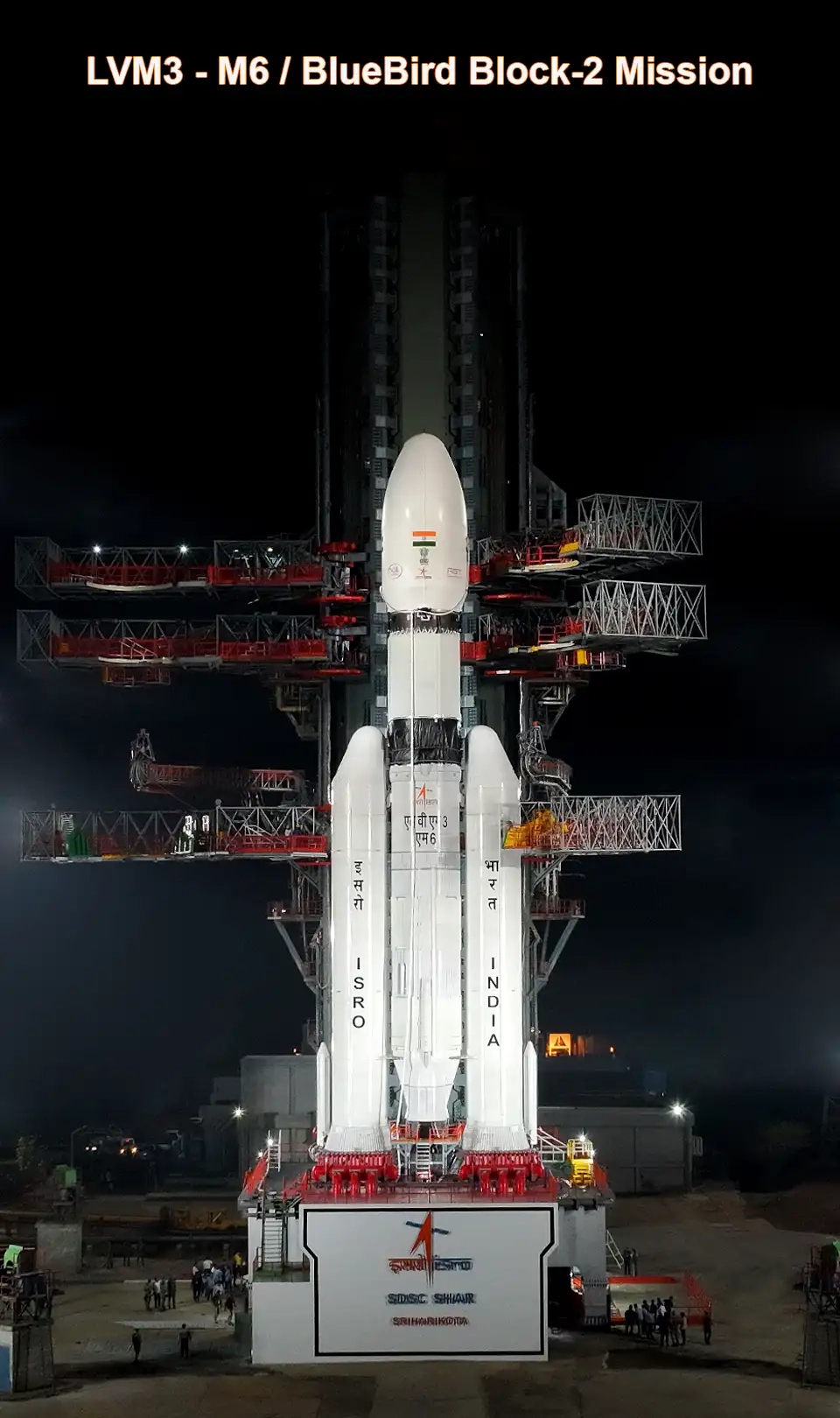
ISRO achieves a significant milestone by launching BlueBird Block-2 communication satellite of AST SpaceMobile, USA, enabling direct-to-mobile 4G/5G connectivity from low earth orbit (LEO). This mission marked the sixth operational flight of LVM3 (Gaganyaan-class heavy-lift rocket). LVM3, developed by ISRO is a three-stage launch vehicle comprising two solid strap-on motors, a liquid core stage and a cryogenic upper stage. It has earlier launched Chandrayaan-2, Chandrayaan-3 and two OneWeb missions carrying 72 satellites. BlueBird Block-2 is the largest commercial communications satellite to be deployed in LEO. It will also be the heaviest payload to be launched by LVM3 from Indian soil.
What is BlueBird Block-2?
It is a next-generation space-based cellular broadband satellite developed by AST SpaceMobile, USA. BlueBird Block-2 is designed to deliver direct-to-mobile connectivity which will enable ordinary smartphones to connect to satellites without relying on terrestrial infrastructure. It will offer global coverage 24/7. The BlueBird Block-2 mission is a part of global LEO constellation to provide direct-to-mobile connectivity through satellite. This will enable 4G and 5G voice and video calls, texts, streaming and data for everyone.
LVM3-M6
LVM3-M6 is a three-stage launch vehicle which weighs about 640 tonnes and stands 43.5 metres tall.
Stage 1: S200 solid strap-on motors
This is the first stage which comprises of two S200 solid propellant boosters, making it one of the most powerful solid rockets in use worldwide.
Stage 2: L110 liquid core stage
In this stage, the L110 liquid stage takes over after the separation of the booster, using hypergolic propellants.
Stage 3: C25 cryogenic upper stage
In this last stage, the C25 cryogenic stage burns supercooled liquid oxygen and hydrogen stored below -180 degrees C.
Significance of BlueBird Block-2 Mission
- Direct mobile connectivity: it will enable the ordinary smartphones to connect directly to the satellite without relying on ground towers which will benefit the remote areas and enhance inclusivity.
- India’s capability to launch heavy commercial payloads: this mission was executed through NewSpace India Ltd., which demonstrates India’s capability to launch heavy commercial payloads.
- Global cellular coverage: it becomes the part of global LEO constellation.
- India’s technological demonstration: as India launched LVM3, it showcased India’s advanced launch vehicle technology.
- Strategic importance: it will support telecommunication, disaster management and connectivity in remote areas.
Conclusion
The launch of largest commercial communications satellite by India is a significant step towards Viksit Bharat 2047. It demonstrates India’s self reliance and global leadership. This launch exemplifies the convergence of scientific prowess with strategic national developmental goals.