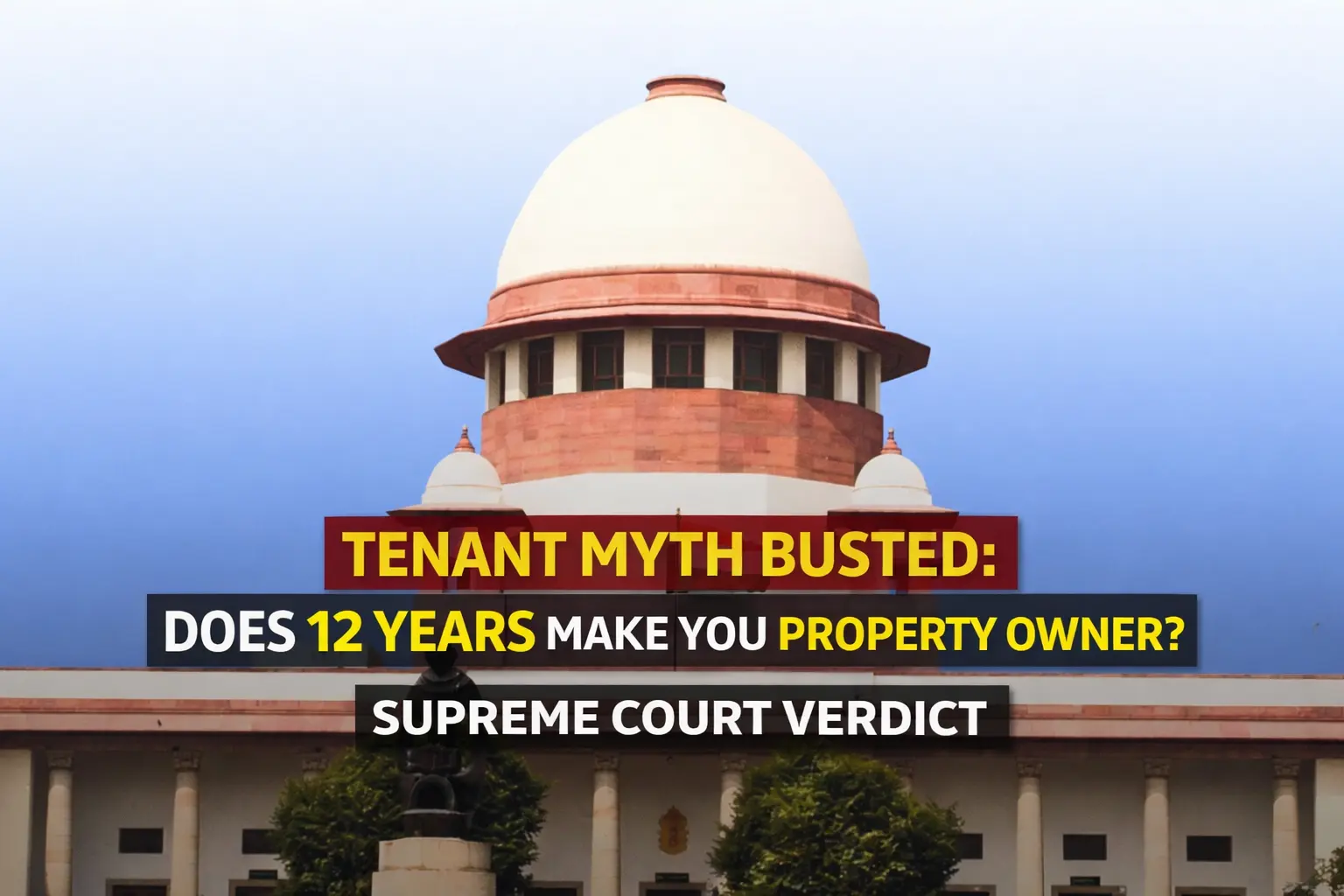
It is beyond myth to believe that just because a tenant has occupied a property of rental value, that at the expiration of a given number of years, he/she automatically becomes the owner of that property. The Supreme Court of India has always decided that simple long possession as a tenant is not transformed into ownership rights. This explanation dispels the common misinformation caused by social media and unreliable assertions and reiterates that tenancy is tenancy unless the legal requirements of adverse possession are followed to the letter.
Clear Stance of Supreme Court on Possession of a tenant.
In several of these leading cases, the Supreme Court has emphasized that the possession of a tenant is not more than permissive – given to the tenant by a rent agreement or implied consent on the part of the landlord. Justices have consistently ruled that such lawful possession could not be changed into hostile possession without overt rejection of the title of the landlord. As an example, the court in Vidya Devi vs. Prem Prakash, explained that tenants who pay rent or have legitimate leases have the protection of rent control laws, but not the actual title to the property.
According to the highest court, adverse possession is considered a brutal and oppressive doctrine, which can only apply to trespassers or those people who openly dispute the rights of the owner. When the owner is still in awareness even though inactive the tenant must satisfy the requirements of 12 years of continuous, open and hostile possession (under Article 65 of Limitation Act, 1963). Silence or lack of rent collection is not enough as determined in Hemaji Waghaji Jat vs. Bhikhabhai Khengarbhai Harijan.
Adverse Possession: Wigorous Requirements Much Adverse to Tenants.
Adverse possession involves four important elements and the Supreme Court enlisted these four elements in Ravinder Kaur Grewal vs. Manjit Kaur:
- Actual possession: Not nominal but physical.
- Open and conspicuous: Open to the owner such as changes or special usage.
- On the hostile basis: The evident refusal of the title of the owner, expressed explicitly.
- Constant and incontrovertible: Throughout the entire duration of 12 years without the interference of the owner.
The tenants do not pass this test since permission is the initial step of their stay. Courts insist on an absolute evidence like a notice before the public, renouncing tenancy or withholding rent whilst asserting possession. In the case of State of Haryana vs. Mukesh Kumar, the Supreme Court denied a claim of a 20-year tenant and said that permissive possession never graduated into adverse possession. Even utility bills or voter ID in the name of a tenant are evidence of residence but not ownership.
State Rent Control Laws: Your Property, Not Mine.
The rent laws of India such as Maharashtra Rent Control Act, Delhi Rent Control Act or Karnataka Rent Act protect the tenants against arbitrary eviction, excessive increment of rent and harassment. They permit life time occupancy of certain tenancies made prior to 1995 but they do not permit the transfer of ownership. Indicatively, the law of Delhi allows eviction in only certain exceptions such as non-payment or bona fide need but once the property is vacated, it goes back to the landlord.
The tenancy laws that have been established after the year 2000 pursue equal rights in that, there should be written agreement and restrictions to the protection. Tenants are not turned into owners by state law after a set number of years: these are usually based upon a misinterpretation of old Bombay Rent Act cases, where statutory tenants had been granted hereditary occupancy, but never title.
Popular Myths and Fallacies in Life.
The buzz in the social media such as 30 years tenant = owner, disregards the judicial review. A 40 years old occupant lost possession in P.T. Munichamma vs. R. Ganesan due to possession being permissive. Inactive landlords are at risk of complications, yet they are favored by courts in case they have rent records.
Occasionally tenants who illegally sublet or cease paying rent assert adverse possession, however this practice was struck down by the Supreme Court in Sonia Bhatia vs. State of UP, who found it bad faith. Altered documents or oral claims hardly work without mutation in revenue books through court decree.
Real Life Tenants and Landlord tips.
For Tenants:
- Registered secure written agreements where they have a duration of more than 11 months.
- Keep bank transfers, rent receipts.
- Do not make unmet changes or unauthorized subletting.
- Go to rent tribunal over disputes, not property.
For Landlords:
- Renew agreements annually.
- Put out the receipts; use electronic payments.
- Take action immediately on defaults either through civil suits or eviction applications.
- Maintain property records in order to avoid encroachments.
Greater Consequences and Current Changes.
The 2023 decisions of the Supreme Court put more stress on adverse possession since it shifted the burden onto claimants and encouraged owners to use it or lose it. This in urban India helps to guard real landlords against the opportunistic tenants, as rentals go higher. NRIs and absentee owners need to ensure constant vigilance of the properties through agents or regular visits.
Registered sale deeds under Transfer of Property Act, 1882 are necessary to qualify as the owner. Proven owners receive possession in courts with mesne profits (back rent). With the increased urbanization, the knowledge of such verdicts averts expensive lawsuits. The misinformation still stands but what is still the gold standard of the Supreme Court is the precedent of the court: time is not the title of the trespassor.